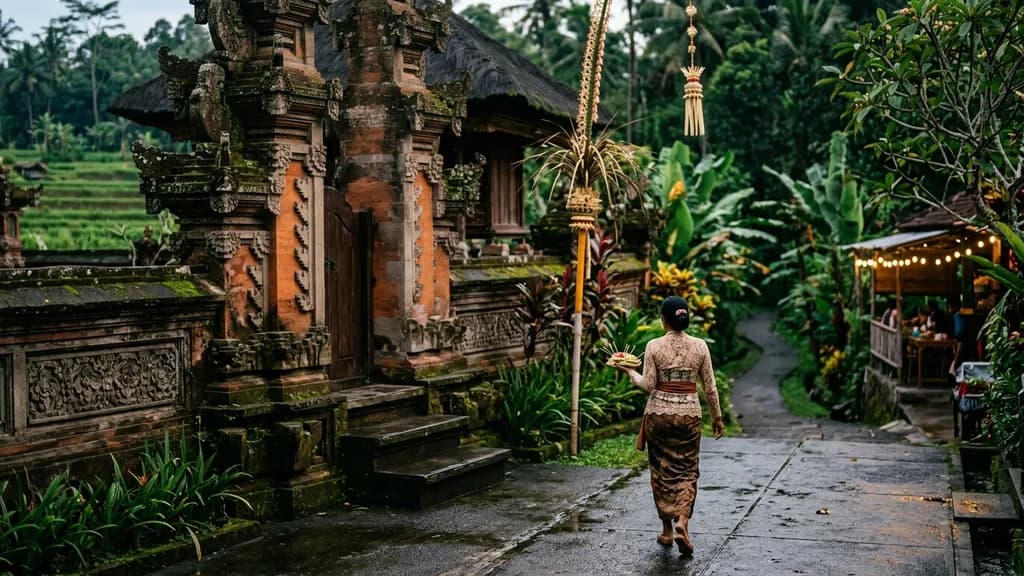
Vietnam vs Thailand for Tourists: Honest 2026 Comparison
You have one Southeast Asia trip in 2026, and you are torn between Vietnam and Thailand. Good problem to have, because both are legitimately world-class. But they are not interchangeable, and picking wrong can cost you the trip.
This guide compares them honestly across 10 dimensions: cost, food, beaches, mountains, temples, culture, nightlife, infrastructure, safety, and visas. We use USD as the primary currency (with VND and THB references) and include four decision tables. Where one country clearly wins, we say so. Where it is a tie, we say that too.
By the end, you will know which country fits your trip, or whether you should just do both (the answer is often yes, and we explain how).
TL;DR: The 10-Dimension Verdict
For the impatient, here is the headline scorecard.
| Dimension | Winner | Margin |
|---|---|---|
| Cost | Vietnam | Clear (20 to 30% cheaper) |
| Food | Tie | Both world-class, different styles |
| Beaches | Thailand | Clear |
| Mountains & scenery | Vietnam | Clear |
| Temples & Buddhist heritage | Thailand | Clear |
| Culture & authenticity | Vietnam | Clear |
| Nightlife | Thailand | Clear |
| Infrastructure smoothness | Thailand | Moderate |
| Safety | Tie | Both very safe |
| Visa ease | Thailand | Moderate (30 days visa-free) |
Thailand wins 5, Vietnam wins 3, two ties. But the raw score is misleading because dimension weight depends on your trip. If you want beaches and smooth logistics, Thailand is your country. If you want scenery, cost-efficiency, and a less-filtered experience, Vietnam is it.
How to Decide in 60 Seconds
Pick Thailand if you want: idyllic tropical beaches, temple-hopping, polished hotels, easy English, lively nightlife, and a lower stress first-trip-to-Asia experience.
Pick Vietnam if you want: mountain scenery that looks unreal, a 20 to 30 percent cheaper trip, street food culture on every corner, a rawer and more authentic daily texture, and a country that is still on its way up rather than fully packaged.
Pick both if you have 18+ days and want a full Southeast Asia arc. Most first-timers who plan for both end up loving Vietnam more, simply because Thailand meets expectations while Vietnam exceeds them.
Cost Comparison: Vietnam Wins by 20 to 30 Percent
Both countries are cheap by Western standards, but Vietnam is meaningfully cheaper than Thailand in 2026. The gap is not huge on flights or premium hotels but it is significant on food, mid-range hotels, and domestic transport.
| Item | Vietnam (USD) | Thailand (USD) | Vietnam savings |
|---|---|---|---|
| Street food meal | 1.50 to 2.50 | 2.00 to 4.00 | 25% |
| Mid-range restaurant | 6 to 12 | 10 to 18 | 35% |
| Local beer (330ml) | 0.80 to 1.50 | 1.50 to 3.00 | 45% |
| Hostel dorm bed | 6 to 10 | 10 to 16 | 35% |
| Mid-range hotel | 25 to 40 | 40 to 70 | 40% |
| 4-star hotel | 50 to 80 | 80 to 140 | 35% |
| Domestic flight | 30 to 60 | 40 to 90 | 25% |
| Overnight sleeper train | 18 to 30 | 25 to 40 | 25% |
| Grab ride (3km city) | 1.50 to 2.50 | 2.50 to 4.00 | 35% |
| Massage (1 hour) | 6 to 12 | 10 to 18 | 35% |
| Coffee shop coffee | 1.20 to 2.50 | 2.50 to 5.00 | 45% |
A realistic budget traveler spends 35 to 50 USD per day in Vietnam versus 45 to 70 USD per day in Thailand. A comfortable mid-range traveler spends 70 to 110 USD per day in Vietnam versus 100 to 160 USD per day in Thailand. Over a 14-day trip, Vietnam saves most travelers 300 to 700 USD, which translates into longer trips or better hotels.
For a detailed Vietnam cost breakdown by traveler style, see our Vietnam budget breakdown.
Where Thailand is actually competitive
On a few items Thailand is close to or cheaper than Vietnam. Domestic flights on low-cost carriers (AirAsia, Thai VietJet) sometimes undercut Vietnamese equivalents on short notice. Massage and spa services in Bangkok and Chiang Mai are excellent value. And premium beach resorts in Thailand often get better at scale than Vietnam's beach properties.
Food Head-to-Head: Different Flavors, Both Elite
Arguing Vietnamese versus Thai food is like arguing Italian versus French. Both are top-tier, both have global reach, and the differences are in philosophy more than quality.
Vietnamese food is built around freshness, herbs, and balance. A bowl of pho is clear broth, rice noodles, thin beef, and a side plate of basil, mint, bean sprouts, lime, and chili you assemble yourself. Banh mi stacks French baguette heritage with pate, pickled carrot, cilantro, and grilled pork. Bun cha is grilled pork over vermicelli with fish sauce. Fresh spring rolls (goi cuon) are translucent rice paper wrapped around shrimp, pork, and herbs. The overall flavor profile is bright, fresh, and mild with heat added by the eater.
Thai food is bolder, spicier, sweeter, and leans on coconut milk and curry pastes. Pad thai is sweet, sour, and nutty. Green curry is coconut-heavy and herbaceous. Tom yum is sour, hot, and perfumed with lemongrass. Som tam (green papaya salad) is knockout spicy with dried shrimp and lime. Massaman curry is rich and warm with peanuts and potato. The flavor profile is assertive and pre-assembled on your plate.
Street food density
Vietnam wins on sheer street food volume. In Hanoi's Old Quarter or HCMC's District 1, every second doorway is cooking something. Plastic stools at 5 pm, and you are eating the best meal of your trip for 2 USD.
Thailand still has great street food (Bangkok's Yaowarat, Chiang Mai's Sunday market) but the 2014+ crackdowns cleared many iconic stalls, and a lot of street food has migrated to food courts and restaurants. It is still superb, just less in-your-face.
Explore Vietnam's street food scene in our best street food in Vietnam guide.
Coffee versus tea
Vietnam is a coffee country. French colonial legacy plus the world's second-largest coffee export. Vietnamese drip (ca phe sua da), egg coffee, salt coffee, coconut coffee, coffee on every corner. Third-wave specialty cafes in Hanoi and Saigon rival anything in Berlin.
Thailand historically skewed toward tea (Thai iced tea is iconic) but the specialty coffee scene in Bangkok and Chiang Mai has exploded. Still, if coffee is core to your trip, Vietnam is the move.
Beaches: Thailand Is the Clear Winner
If your priority is postcard beaches with turquoise water and limestone karsts, Thailand wins, full stop. This is the dimension where the gap is largest.
| Beach destination | Country | Highlights |
|---|---|---|
| Phi Phi Islands | Thailand | Cliffs, snorkeling, Maya Bay |
| Krabi / Railay | Thailand | Climbing, karsts, kayaking |
| Koh Lipe | Thailand | Clear water, small island vibe |
| Koh Samui | Thailand | Full-service resort island |
| Koh Lanta | Thailand | Quieter, family-friendly |
| Phu Quoc | Vietnam | Biggest Vietnam beach, resorts |
| Con Dao | Vietnam | Remote, unspoiled, turtles |
| Nha Trang | Vietnam | Urban beach, party scene |
| Da Nang / My Khe | Vietnam | Urban, wide sand, surfable |
Thailand has roughly 3,200 km of coastline facing two seas (Andaman and Gulf of Thailand) with hundreds of islands. Vietnam has 3,260 km of coastline but the water is often silty in the north (Gulf of Tonkin), and the best beaches cluster in the south. Vietnam's best beach, arguably, is Con Dao (see our Con Dao islands guide), but it is logistically harder to reach than any Thai island.
That said, Vietnam's coastline wins on one thing Thailand cannot match: Ha Long Bay and its 1,600+ limestone islands. It is not a swim-beach destination, it is a cruise-through-karsts experience, and it is extraordinary. If you want mountain-meets-sea scenery on a cruise, Vietnam wins. If you want sun-sand-snorkel, Thailand wins.
Mountains and Scenery: Vietnam's Clear Win
This is Vietnam's strongest non-food card. The mountain scenery in northern Vietnam is genuinely world-class and largely undiscovered by mass tourism.
Sapa and Bac Ha offer terraced rice paddies that cascade down valleys, Hmong and Dao ethnic minority villages, and multi-day trekking routes through landscapes that look like a Studio Ghibli film. Ha Giang province, further north, is even more dramatic: the Ha Giang Loop is a 350 km motorbike route through karst mountains, river valleys, and border villages, and it ranks among the world's great motorcycle trips. Our Ha Giang Loop 4-day motorbike itinerary walks through it day by day.
Central Vietnam has Da Lat (see our Da Lat French hill station guide), Phong Nha caves (including Son Doong, the largest cave on earth by volume), and the Hai Van Pass. Ninh Binh is limestone karsts on land, often called "Halong Bay on land."
Thailand has mountains too. Chiang Mai and Pai in the north offer forest-covered peaks, Doi Inthanon national park, and hill tribe trekking. Khao Sok national park in the south has jungle, lake, and karsts. But nothing in Thailand matches the scale and drama of Ha Giang, and nothing matches the terraced rice landscapes of Sapa.
If you are a scenery-first traveler (hiking, photography, landscapes), Vietnam wins decisively.
Temples and Buddhist Heritage: Thailand Wins
Thailand is a deeply Buddhist country and it shows everywhere. Wat Pho, Wat Arun, and the Grand Palace in Bangkok are bucket-list monuments. Ayutthaya, the former capital, is a UNESCO archaeological park with hundreds of ruins. Chiang Mai has 300+ temples, and a few days there is a temple-hopping immersion that nothing in Vietnam matches.
Sukhothai, Sukhothai Historical Park, and Si Satchanalai are smaller-scale but equally essential for temple lovers.
Vietnam has temples and pagodas but religion in Vietnam is a three-way mix of Mahayana Buddhism, Confucianism, and Taoism plus significant Catholic influence from French colonization. The religious visual footprint is lighter. The Perfume Pagoda near Hanoi, the Marble Mountains near Da Nang, and various pagodas around Hue are beautiful but they do not dominate the landscape.
If temples and Buddhist heritage are why you travel to Southeast Asia, Thailand is your country.
Culture and Authenticity: Vietnam Feels Realer
This is subjective, but most travelers who do both countries say Vietnam feels more authentic and less curated. Three reasons.
First, raw tourist numbers. Thailand welcomed roughly 35 million international visitors in 2024, returning to pre-pandemic highs. Vietnam welcomed about 17 million. The gap shows up in how places feel. Phuket, Koh Samui, Phi Phi, Pattaya, and chunks of Bangkok are built for tourists. In Vietnam, even major destinations like Hoi An and Hanoi still feel like cities where Vietnamese people live and work, with tourism layered on top.
Second, the pace of development. Thailand has been a mass tourism destination since the 1970s. Vietnam only really opened after 1994 and the tourism scene is about 20 years younger. Many experiences in Vietnam (Ha Giang, the Mekong, rural Mai Chau) still feel like you are one of few foreigners around.
Third, the daily texture. Vietnamese cities are louder, faster, more chaotic. Motorbikes, street vendors, sidewalks converted into restaurants, people living outside because the climate lets them. Thailand's cities are calmer and more infrastructural.
If you travel to experience daily life in another culture at full intensity, Vietnam delivers. If you travel to relax in another culture with the rough edges smoothed off, Thailand is better suited.
Nightlife: Thailand Dominates
Not close. Thailand is a premier global nightlife destination and Vietnam is not.
| Scene | Thailand | Vietnam |
|---|---|---|
| Mega-clubs | Bangkok (Route 66, Sing Sing), Phuket (Illuzion) | Limited, mostly HCMC (Lush, Apocalypse Now) |
| Rooftop bars | Bangkok (Sky Bar, Vertigo, Octave) | HCMC (Chill Skybar), Hanoi (Twilight Sky Bar) |
| Beach parties | Full Moon Party (Koh Phangan), Phuket | Phu Quoc and Nha Trang, much smaller |
| Backpacker zones | Khao San Road (Bangkok) | Bui Vien Street (HCMC) |
| Red light / adult | Extensive in specific zones | Very limited |
| Live music | Bangkok, Chiang Mai strong scene | Hanoi and HCMC have pockets |
| Closing time | Generally 2am, some later | Most places 12am, some 2am |
Vietnamese nightlife has its charm (Bia Hoi corner in Hanoi at 6 pm is legendary, and Hoi An's lantern-lit riverside is magical) but it is earlier, quieter, and smaller in scale. HCMC's Bui Vien Street is the closest thing to Khao San Road in Vietnam, and it is a fraction of the size.
If your trip is organized around nightlife, Thailand is your country. If you are a light-nightlife traveler who wants a beer at a rooftop bar and then an early morning, either works.
Infrastructure: Thailand Is Smoother, Vietnam Is Catching Up
Thailand has been building tourist infrastructure for 50 years and Vietnam for 25. The gap is visible, though narrowing.
Roads: Thailand's highways and rural roads are better paved and better signed. Vietnam's highway network has improved dramatically since 2015 but urban traffic in Hanoi and HCMC is genuinely chaotic. Motorbike crossings are an acquired skill.
Airports: Suvarnabhumi (Bangkok) and Chiang Mai are more polished than Noi Bai (Hanoi) or Tan Son Nhat (HCMC). Both countries have fine domestic flight networks.
Trains: Vietnam's reunification line (north to south) and sleeper trains are atmospheric but slow. Thailand's trains are similar in condition. Neither has the high-speed rail that China has built.
Hotels: Mid-range hotels in Thailand tend to have better finishes, consistent hot water, and fewer minor maintenance issues. Vietnamese mid-range hotels are improving fast but a 40 USD hotel in Thailand is usually more polished than a 40 USD hotel in Vietnam. Four and five star hotels are essentially equivalent.
English: Widely spoken in Thai tourist zones (Bangkok, Chiang Mai, islands, Phuket). In Vietnam, English is strong in tourist-facing roles (hotels, restaurants, tours) but weaker with taxi drivers and in rural areas. Download Google Translate offline for both.
If smooth logistics are a top-three factor for your trip, Thailand is the safer pick. If you enjoy a bit of controlled chaos, Vietnam is more fun.
Safety and Scams: Both Safe, Different Risk Profiles
Both countries are very safe by global standards. Violent crime against tourists is rare in both. Petty theft (pickpocketing, bag snatching by passing motorbikes) exists in both but is not common. Our Vietnam safety guide covers the details.
The difference is in scam style.
Thailand has a more developed and more polished scam industry in specific tourist zones. The main scams to know:
- Tuk-tuk detour scams: driver "knows a better temple" that is actually a tailor shop paying commission
- Jet ski damage scams: rented jet ski operator claims you damaged it and demands payment
- Grand Palace closed scam: stranger tells you the palace is closed and offers a cheaper tour
- Gem scams: pressurized gem sales pitches disguised as tours
Vietnam has scams too but they are rougher and less coordinated:
- Cyclo and taxi overcharging: fixed by using Grab or agreeing the price in advance
- Fake taxi meters (Vinasun and Mailinh are trustworthy)
- Shoe shiners who start "fixing" your shoes and demand payment
- Motorbike rental damage disputes (take photos before renting)
Street pricing in Vietnam is more honest day-to-day than in Thai tourist hotspots. In Thailand, expect dual pricing (tourist price vs local price) more often.
Traffic is the real safety issue in Vietnam. Hanoi and HCMC have legendary motorbike chaos. Crossing the street means walking slowly and predictably into a flow that goes around you. It works, but it takes 48 hours of mental adjustment.
Solo female travelers
Both countries rank among the safest in Asia for solo female travel. Harassment levels are low. Thailand has a larger solo traveler ecosystem (more hostels, organized tours, digital nomad scenes) and stronger English. Vietnam is equally safe but in rural areas you may feel more visible. In both countries, dressing modestly at temples, traveling by day when possible, and using registered rideshare (Grab, Bolt) are the baseline best practices.
Visas: Thailand Is Simpler
Visa policies change, so always verify with your home country's embassy, but in April 2026:
| Factor | Vietnam | Thailand |
|---|---|---|
| Visa-free entry | 15 to 45 days for ~25 countries | 60 days visa-free for ~90 countries (2024 expansion) |
| E-visa | 90 days, single or multi entry, ~25 USD | Not needed for most |
| Visa on arrival | Limited, not recommended | Available for some non-visa-free countries |
| Extensions | Possible but bureaucratic | Possible in-country |
Thailand extended visa-free entry to 60 days for most Western passports in 2024. Vietnam still requires an e-visa for many nationalities (including most Europeans, Americans, Australians, and Canadians) but the online process is straightforward: apply at the official evisa.xuatnhapcanh.gov.vn site, pay 25 USD, receive within 3 to 5 business days.
For a full first-trip Vietnam walkthrough including visa steps, see our first time Vietnam guide.
Doing Both in One Trip: The 21-Day Ideal
Most first-time Southeast Asia travelers who have the time should do both. Flights between Bangkok and Hanoi or HCMC are cheap (50 to 100 USD one way) and short (about 1h 45m). You can fly AirAsia, Thai VietJet, Vietnam Airlines, or Bangkok Airways.
The ideal split depends on your total days.
14 days: pick one country. You cannot do justice to both in two weeks. Our two-week Vietnam itinerary shows why a full Vietnam trip needs 14 days on its own.
18 days: 8 days Thailand, 10 days Vietnam. Thailand focus on Bangkok plus one beach (Krabi or Phi Phi). Vietnam focus on Hanoi, Ha Long Bay, and Hoi An.
21 days: the sweet spot. 10 days Thailand (Bangkok 3, Chiang Mai 3, Krabi or Phi Phi 4) plus 11 days Vietnam (Hanoi 3, Ha Long cruise 2, Sapa or Ninh Binh 2, Hoi An 3, HCMC 1). This gives you beaches, temples, mountains, food, and two capital cities.
28 days: now you can actually breathe. Add Ha Giang Loop in Vietnam (4 days) and a second Thai island (Koh Lanta or Koh Lipe, 4 days).
Routing logic
Fly into Bangkok (cheaper and more international connections than Vietnam), spend your Thai days, then fly Bangkok to Hanoi or HCMC, work your way through Vietnam, and fly home from the opposite Vietnamese city. Most international flights out of Vietnam to Europe, the US, and Australia are competitively priced, so you are not forced to return through Thailand.
The Cheap Flight Between Them
Bangkok to Hanoi and Bangkok to HCMC are two of Southeast Asia's most competitive routes. Expect 50 to 100 USD one way booked 2 to 6 weeks out. Low-cost carriers dominate (AirAsia, Thai VietJet, VietJet Air). Bangkok Airways and Vietnam Airlines offer slightly pricier full-service options with free bags and meals.
Flight time is 1h 45m. There is no rational case for overland between Thailand and Vietnam unless you are going through Laos or Cambodia as part of the route, which adds weeks.
Where to Stay: Booking Is Your Friend in Both Countries
Hotel bookings are where Vietnam's 20 to 30 percent cost advantage is most visible. A 40 USD a night hotel in Vietnam is often a 60 USD hotel in Thailand. Both countries have excellent Booking.com coverage with hotels starting at 8 USD a night for hostels and climbing to resort prices.
For tours, day trips, and activities (Ha Long cruise, cooking classes, Ayutthaya day trips, Phi Phi boat tours, Mekong delta), GetYourGuide consolidates reviews, prices, and booking in one place. Skip the street touts in both countries and book online.
The Honest Verdict
Vietnam is not a better or worse country than Thailand. They are different. Thailand is Southeast Asia with the edges sanded down: comfortable, photogenic, tested. Vietnam is Southeast Asia with more texture: cheaper, rawer, with some of the region's most dramatic scenery and a food culture that goes toe to toe with anywhere on earth.
The closest-to-universal advice we can give is this.
If it is your first trip to Southeast Asia and you have under 14 days, go to Thailand. It meets expectations efficiently.
If you have been to Thailand before and want to push deeper into the region, go to Vietnam. It will probably become your new favorite.
If you have 18+ days and it is your first Southeast Asia trip, do both, start in Thailand, end in Vietnam. You will appreciate Vietnam more coming from Thailand, and flights home from Vietnam are just as good.
Whichever you pick, you are going to have a great trip. Southeast Asia is the best travel region in the world in 2026, and Vietnam and Thailand are its two crown jewels.
Next Steps for Vietnam
If you are leaning Vietnam or doing both, start here:
- First time Vietnam guide: full walkthrough from visa to airport to first dinner
- Vietnam 2 week itinerary: day by day route north to south
- Vietnam safety guide: scams, traffic, street crossings, insurance
- Vietnam budget breakdown: daily costs by traveler style
Book accommodation early for peak season (November to February), do the e-visa at least 10 days before departure, and download Grab before you land. Beyond that, Vietnam rewards travelers who show up open and hungry. The pho will be there when you arrive.
Sources & References
This article is based on first-hand experience and verified with the following official sources:

Exploring Vietnam since 2020 | 40+ provinces visited | Updated monthly
We are a team of travel writers and Vietnam enthusiasts who explore the country year-round. Our guides are based on first-hand experience, local knowledge, and verified official sources.
More about us →People Also Read

Vietnam E-Visa 2026: How to Apply, Costs & Processing Time
Complete guide to Vietnam e-visa in 2026: step-by-step application, exact costs, processing times, and common mistakes to avoid.

Vietnam E-Visa 2026: How to Apply, Costs & Processing Time
Complete guide to Vietnam e-visa 2026: step-by-step application, exact costs, processing times, and eligibility. Apply online in minutes.
Vietnam E-Visa 2026: How to Apply, Costs & Processing Time
Complete guide to Vietnam E-Visa 2026: step-by-step application process, exact costs, processing times, and everything you need to know before traveling.
Vietnam E-Visa 2026: Complete Guide to Application, Costs & Processing Time
Step-by-step Vietnam e-visa guide for 2026: application process, exact costs, processing times, and answers to common questions.
Plan Your Vietnam Trip
Book hotels, transport, activities, and get connected with an eSIM
Some links are affiliate links. We may earn a commission at no extra cost to you.