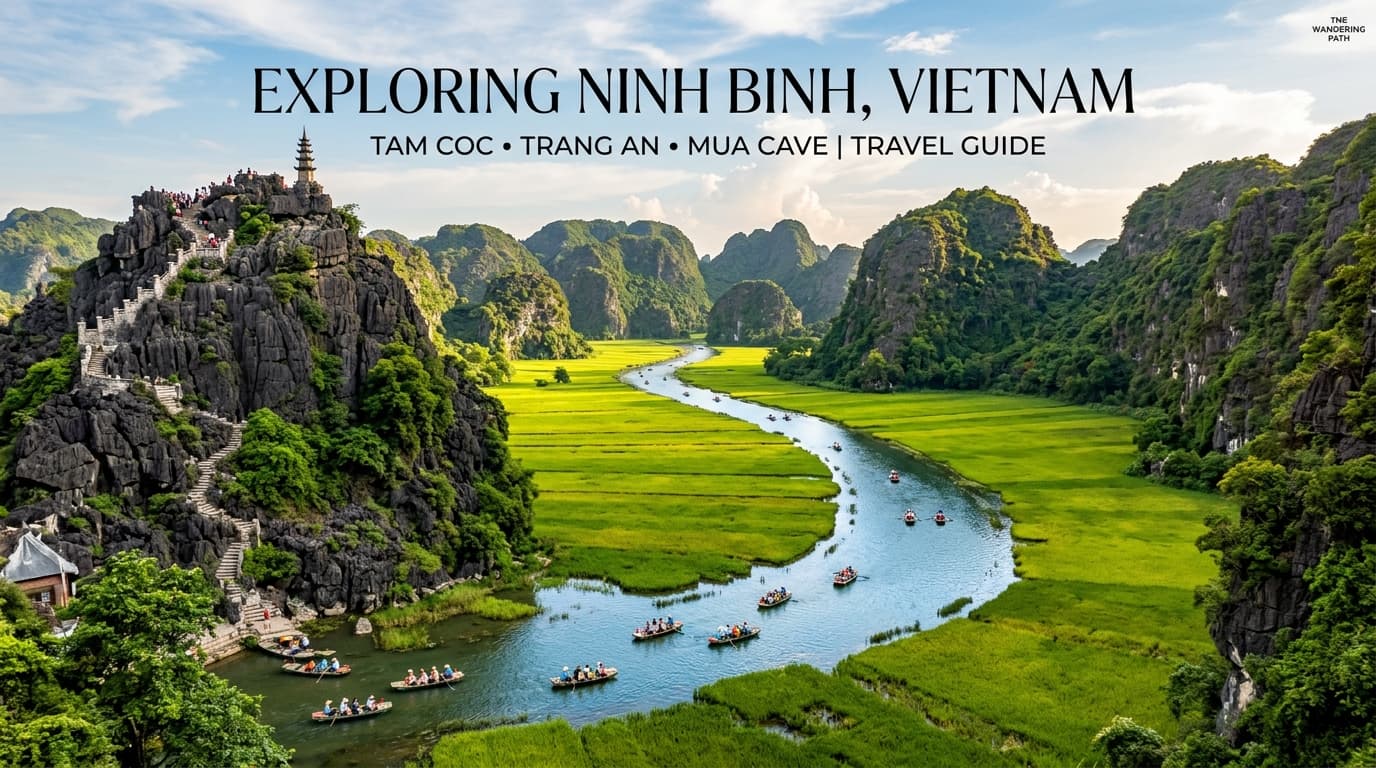
Ninh Binh Guide: Tam Coc, Trang An & Mua Cave – Vietnam's Hidden Gem
Limestone peaks rise dramatically from emerald rice paddies, narrow wooden boats glide silently through flooded caves, and centuries-old villages remain largely untouched by mass tourism—welcome to Ninh Binh, Vietnam's "Halong Bay on land." Located 100km south of Hanoi in Central Vietnam, this UNESCO-listed region has quietly become one of Southeast Asia's most enchanting destinations, yet remains far less crowded than its more famous neighbors.
Key Takeaways
| Question | Answer |
|---|---|
| What is the best time to visit? | October to April (dry season, cool weather, best for boating and hiking) |
| How much does it cost? | Budget: 300,000–500,000 VND/day; Mid-range: 500,000–1,000,000 VND/day; Splurge: 1,000,000+ VND/day |
| How do I get there? | Bus from Hanoi (2–3 hours), or private driver; trains also available |
| Is it safe? | Very safe; petty theft rare; standard precautions apply |
| What should I book in advance? | Boat tours during peak season (Nov–Dec); hotels in Tam Coc village; Mua Cave tickets |
| How many days do I need? | 2–3 days minimum; 4–5 days ideal for a relaxed pace |
| What's the main draw? | Scenic boat tours, cave exploration, rice paddy hikes, and authentic village life |
1. Understanding Ninh Binh: The Landscape & Layout
Ninh Binh is not a single town but a region spanning roughly 1,400 square kilometers, encompassing several distinct areas. The province's dramatic geography—formed by limestone karst formations rising from flat agricultural plains—creates a landscape that feels almost otherworldly. When we explored the region, we were struck by how the scenery shifts within minutes: from bustling market towns to silent river valleys to steep jungle-covered peaks.
The main tourist areas are clustered around three primary attractions: Tam Coc (the "Three Caves"), Trang An (a UNESCO World Heritage Site with 13 caves), and Mua Cave (famous for its 500+ stone steps and panoramic views). Each offers distinct experiences, and most visitors spend time at all three during a 2–3 day visit.
Geography & Climate
The region's limestone karst landscape was shaped over millions of years by water erosion, creating the dramatic peaks and hidden cave systems you see today. The Ngo Dong River winds through this terrain, making boat tours the primary way to experience the caves and valleys. The climate is subtropical, with October to April offering the most pleasant conditions—cool, dry weather perfect for hiking and boating. From May to September, monsoon rains bring humidity and occasional flooding, though prices drop significantly during this off-season.
Getting Oriented
Most travelers base themselves in one of two locations: the village of Tam Coc (closer to the caves, more atmospheric) or the town of Ninh Binh City (larger, more amenities, 15km away). In our experience, staying in Tam Coc village itself offers a more immersive experience—you'll wake to rooster calls and rice paddies, and boat tours depart directly from your accommodation. However, Ninh Binh City offers more dining and nightlife options if you prefer a livelier base.
Compare hotels, resorts, and guesthouses across Vietnam with free cancellation on most bookings.
Search Hotels on Booking.com → Scan me
2. Tam Coc: The Three Caves Experience
Tam Coc translates to "three caves," and this is the region's most iconic attraction. The experience involves a 2–3 hour boat journey down the Ngo Dong River, passing through three caves (Hang Ca, Hang Giua, and Hang Cuoi) while surrounded by towering limestone cliffs and traditional Vietnamese village life. It's often called "Halong Bay on land," and the comparison is apt—though far more intimate and less touristy.
The boats themselves are traditional wooden vessels, typically rowed by a single boatman using their feet in a distinctive Vietnamese rowing technique. When we took the boat tour at sunrise, the mist rising off the water and the silence broken only by birdsong made it feel like stepping into another era. The caves themselves are modest—you'll duck under low limestone ceilings as the boat glides through—but the journey through the landscape is what makes Tam Coc magical.
The Boat Tour: What to Expect
The standard Tam Coc boat tour departs early morning (around 6:30–7:00 AM) and lasts 2–3 hours depending on water levels and your pace. You'll be paired with a boatman who navigates the shallow river with remarkable skill, often pushing off rocks with a pole when the water is low. The route takes you through rice paddies, past villages where locals fish and wash clothes in the river, and finally through the three caves. The caves are decorated with stalactites and stalagmites, though they're less dramatic than some Southeast Asian caves—the real attraction is the journey itself.
Practical tips for the boat tour:
- Early morning advantage: Book the first tour of the day (6:30–7:30 AM) to avoid crowds and enjoy the best light and mist
- Bring sun protection: No shade on the boat; sunscreen and a hat are essential
- Wear comfortable clothes: You'll be sitting for 2–3 hours; avoid anything too restrictive
- Negotiate prices: If booking directly with boatmen in the village, expect to pay 200,000–300,000 VND per person for a shared boat, or 400,000–600,000 VND for a private boat
- Photography: Bring a good camera; the light during golden hour (sunrise) is exceptional
Beyond the Boat: Tam Coc Village
The village of Tam Coc itself is worth exploring. Narrow lanes wind between family homes, small restaurants, and guesthouses. Local women still wear traditional conical hats while working in the rice paddies, and the pace of life feels genuinely unhurried. During our stay, we wandered the village in late afternoon, stopping at a family-run café for Vietnamese coffee, and watched farmers return from the fields on bicycles laden with produce.
Did You Know? Tam Coc has appeared in several international films, including parts of the 2018 film Kong: Skull Island, which was partially filmed in the region.
Source: VnExpress International
Skip the hassle — book Vietnam day trips, cooking classes, and experiences in advance with instant confirmation.
Browse Activities on Klook → Scan me
3. Trang An: The UNESCO World Heritage Experience
Trang An is a larger, more developed attraction than Tam Coc, and it's a UNESCO World Heritage Site encompassing 13 caves and a much longer boat route (typically 2–4 hours). The landscape here is similarly dramatic, but the experience is more structured and touristy—you'll encounter more boats and organized groups. However, Trang An offers something Tam Coc doesn't: the ability to explore deeper into the cave systems and see more diverse geological formations.
The Trang An complex includes caves with names like Hang Mua (Flirting Cave) and Hang Sang (Light Cave), each with its own character. The boat route winds through a larger valley system, passing through more extensive cave passages and emerging into hidden valleys where you'll see ancient temples and local villages. When we visited Trang An, we were impressed by the scale—it feels less like a single attraction and more like an entire underground landscape.
The Trang An Boat Tour
Compare hotels, resorts, and guesthouses across Vietnam with free cancellation on most bookings.
Search Hotels on Booking.com →
Scan me
Trang An tours are more regulated than Tam Coc, with designated boat operators and fixed pricing. Tours typically cost 250,000–350,000 VND per person and last 2–4 hours depending on which route you choose. There are several route options: the shorter "scenic route" focuses on the most dramatic caves, while longer routes venture deeper into the system and include stops at temples and viewpoints.
Key differences from Tam Coc:
- More caves: 13 caves vs. Tam Coc's 3, offering greater variety and exploration
- Better infrastructure: Designated ticket office, clearer signage, more organized tours
- Higher tourist density: Expect more boats and group tours, especially mid-day
- Longer duration: Most tours take 3–4 hours vs. Tam Coc's 2–3 hours
- Temple visits: Some routes include stops at Hang Mua Temple, adding cultural context
Combining Tam Coc and Trang An
Many visitors do both attractions during a 2–3 day stay. In our experience, this makes sense: Tam Coc offers a more intimate, authentic experience, while Trang An provides more comprehensive cave exploration and a sense of scale. If you only have time for one, choose based on your preference—Tam Coc for atmosphere, Trang An for variety.
Book both boat tours for early morning (6:30–7:30 AM) to avoid crowds and enjoy the best light and mist.
4. Mua Cave: The Hike & the View
Mua Cave (also called Hang Mua) is famous not for the cave itself—which is modest—but for the 500+ stone steps that lead to the summit of the limestone peak. The hike takes 45 minutes to 1 hour, and the reward is a panoramic view over the entire Ninh Binh region: limestone peaks, rice paddies, villages, and the Ngo Dong River snaking through the valley below. On a clear day, the view is absolutely stunning and worth every step.
The hike is steep and can be challenging, especially in heat or humidity, but it's manageable for most fitness levels. The steps are well-maintained, and there are several rest points along the way. When we climbed Mua Cave in early morning, we had the summit almost entirely to ourselves—a rare privilege in such a popular destination. By the time we descended, tour groups were arriving by the busload.
The Mua Cave Hike: Practical Details
The entrance to Mua Cave is clearly marked and costs 50,000 VND per person. The site is open from early morning until dusk. Here's what you need to know:
Before you climb:
- Start early: Arrive by 6:30–7:00 AM to avoid crowds and heat
- Bring water: At least 1–2 liters; there are no vendors on the trail
- Wear proper shoes: The steps can be slippery, especially after rain; avoid sandals
- Check weather: The view is only worthwhile in clear conditions; avoid climbing in heavy rain or thick fog
- Fitness level: The hike is steep but not technical; anyone with basic fitness can manage it
At the summit:
- Allow 20–30 minutes: Spend time at the top enjoying the view and taking photos
- Bring a camera: The panoramic views are exceptional, especially at sunrise or sunset
- Respect the temple: There's a small temple at the summit; be respectful of worshippers
- Watch your footing: The summit area is crowded; be careful near edges
Sunrise vs. Sunset
The hike is popular at both sunrise and sunset. Sunrise offers better light for photography and fewer crowds, but requires an early start. Sunset provides dramatic lighting and a cooler descent, but you'll be hiking down in fading light. In our experience, sunrise is the superior choice—the light is clearer, the air is cooler, and you'll have the summit largely to yourself.
5. Where to Stay in Ninh Binh
Accommodation options range from basic guesthouses to upscale resorts, with most travelers choosing mid-range options in the 300,000–800,000 VND range per night. The choice between staying in Tam Coc village or Ninh Binh City significantly affects your experience.
Tam Coc Village: Authentic & Atmospheric
Staying in Tam Coc village puts you at the heart of the action, with boat tours departing steps from your accommodation. The village has dozens of small guesthouses and family-run hotels, many with riverside locations and views of the limestone peaks. Prices are typically 250,000–600,000 VND per night for a basic room with air conditioning and private bathroom.
Advantages:
- Proximity to boats: Tours depart from the village; no need for transfers
- Authentic atmosphere: Experience village life; eat where locals eat
- Early morning access: You can start boat tours at sunrise without traveling
- Evening walks: The village is charming in the evening; explore at your own pace
Disadvantages:
- Limited dining variety: Mostly tourist-oriented restaurants; fewer local options
- Fewer amenities: No major supermarkets, pharmacies, or services
- Noise: Some guesthouses are near the river and can be noisy at night
Ninh Binh City: More Amenities, Less Charm
Ninh Binh City (also called Ninh Binh Town) is 15km from Tam Coc and offers more facilities: restaurants, shops, pharmacies, and a wider range of hotels. Prices are similar to Tam Coc (300,000–800,000 VND per night), but the atmosphere is more urban and less immersive.
Advantages:
- More dining options: From street food to upscale restaurants
- Better services: Pharmacies, ATMs, convenience stores
- More hotel variety: From budget to luxury options
- Evening entertainment: Bars, karaoke, local nightlife
Disadvantages:
- Less atmospheric: More traffic, noise, and urban sprawl
- Transfers required: You'll need to arrange transport to Tam Coc and other attractions
- Less authentic: Fewer opportunities to experience village life
Mid-Range Recommendations
Based on our research, mid-range hotels in both locations offer good value. In Tam Coc, family-run guesthouses with river views are popular and often include breakfast. In Ninh Binh City, newer hotels offer more amenities and sometimes include tours or transfers to attractions.
Compare car rental prices across Vietnam. Pick up at airports or city locations with flexible cancellation.
Compare Car Rentals →
Scan me
6. Where to Eat in Ninh Binh
Food in Ninh Binh is simple, fresh, and delicious—heavily focused on local ingredients like fish, shrimp, and vegetables from the surrounding rice paddies and rivers. The region is famous for goat meat dishes (a local specialty), fresh fish, and traditional Vietnamese fare. Prices are very affordable: expect to pay 50,000–150,000 VND for a full meal at a local restaurant.
Local Specialties
Skip the hassle — book Vietnam day trips, cooking classes, and experiences in advance with instant confirmation.
Browse Activities on Klook →
Scan me
Goat meat (thịt dê): Ninh Binh is known throughout Vietnam for high-quality goat meat, served grilled, in hot pot, or in stews. Local restaurants often have goat meat as their specialty. When we tried it at a family-run restaurant in Tam Coc, it was tender and flavorful—a real local experience.
Fresh fish and shrimp: Caught daily from the Ngo Dong River, these are prepared simply—grilled, fried, or in soups. The freshness is remarkable.
Rice paddy vegetables: Local greens, morning glory, and seasonal vegetables are cooked simply with garlic and served as side dishes.
Where to Eat
In Tam Coc village:
- Riverside restaurants near the boat docks offer similar menus at similar prices (80,000–150,000 VND for a full meal)
- Family-run establishments often have better food than tourist-focused restaurants
- Breakfast is typically included with guesthouse stays; lunch and dinner are affordable at local spots
In Ninh Binh City:
- More variety of restaurants, from street food stalls to sit-down establishments
- Vietnamese street food is abundant; night markets are excellent for cheap, authentic meals
- Upscale restaurants cater to tourists and offer Western options at higher prices (200,000–400,000 VND)
Dining Recommendations
Budget-friendly: Eat where locals eat—small family restaurants, street food stalls, and market food. You'll spend 50,000–100,000 VND per meal and eat better food.
Mid-range: Tourist-focused restaurants in Tam Coc and Ninh Binh City offer familiar dishes and English menus at 100,000–200,000 VND per meal.
Splurge: A few upscale resorts and restaurants offer refined Vietnamese cuisine and Western options at 250,000–500,000 VND per person.
Did You Know? Ninh Binh Province produces some of Vietnam's finest rice, and the rice paddies surrounding the tourist areas are still harvested by hand using traditional methods.
Eat breakfast early (6:00–7:00 AM) at your guesthouse before boat tours. Most restaurants open late, and you'll want to be on the water at sunrise.
7. Activities Beyond the Big Three
While Tam Coc, Trang An, and Mua Cave are the main attractions, Ninh Binh offers several other worthwhile experiences for visitors with more time.
Cycling Through Rice Paddies
One of the best ways to experience Ninh Binh's landscape is by bicycle. Many guesthouses rent bikes (50,000–100,000 VND per day), and you can cycle through rice paddies, past villages, and along quiet roads. The terrain is mostly flat, making it accessible for most fitness levels. When we cycled through the paddies near Tam Coc, we encountered farmers, water buffalo, and stunning views with virtually no other tourists.
Cuc Phuong National Park
Located about 30km from Ninh Binh, Cuc Phuong National Park is Vietnam's oldest national park and home to diverse wildlife, including primates, birds, and reptiles. The park has hiking trails, a primate rescue center, and basic accommodation. A day trip or overnight stay is possible. The park is less developed than some Southeast Asian nature reserves, which adds to its authenticity.
Hoa Lu Ancient Capital
Hoa Lu was the capital of Vietnam during the 10th century and contains several ancient temples dedicated to Vietnamese kings. The site is less touristy than the cave attractions and offers cultural and historical context. Temples are carved into the base of limestone peaks, creating a unique setting. Entry is around 50,000 VND, and a visit takes 1–2 hours.
Bich Dong Pagoda
This three-tiered pagoda is built into a limestone cliff and offers views over the surrounding landscape. It's less crowded than Mua Cave and provides a quieter hiking experience. The pagoda is accessible via a short hike (30–45 minutes) and costs 20,000 VND to enter.
Discover the best guided tours and activities in Hanoi, Ho Chi Minh City, Da Nang and beyond.
Browse Tours on GetYourGuide → Scan me
8. Practical Information & Travel Tips
Getting to Ninh Binh
From Hanoi: The most common route is by bus (2–3 hours, 80,000–150,000 VND) or private driver (3–4 hours, 1,500,000–2,500,000 VND for a car). Buses depart regularly from Hanoi's main bus stations. Alternatively, trains connect Hanoi to Ninh Binh (3–4 hours), though buses are faster and more convenient.
From other cities: Da Nang (8–10 hours by bus), Ho Chi Minh City (12–14 hours), and Hoi An (6–8 hours) are all accessible by bus, though Ninh Binh is primarily visited as a day trip or short stay from Hanoi.
Best Time to Visit
October to April is ideal—cool, dry weather with clear skies for photography and hiking. November to December is peak season with the best weather but also the most tourists. May to September brings monsoon rains, humidity, and occasional flooding, but prices drop 20–30% and crowds thin significantly.
Money & Costs
Ninh Binh is very affordable. Budget travelers can eat, sleep, and tour for 300,000–500,000 VND per day (USD 12–20). Mid-range travelers should budget 700,000–1,200,000 VND per day (USD 28–48). ATMs are available in Ninh Binh City but less common in Tam Coc village—withdraw cash before heading to the village.
Health & Safety
Ninh Binh is very safe. Petty theft is rare, and violent crime is virtually non-existent. Standard precautions apply: avoid flashing valuables, be cautious on motorbikes, and drink bottled water. The main health concern is sun exposure during boat tours and hikes—sunscreen is essential.
Internet & Communication
Mobile coverage is good throughout the region. Consider purchasing a local SIM card or eSIM for data access. Many guesthouses and restaurants offer free WiFi, though speeds can be slow.
Get a Vietnam eSIM before you land. No physical SIM needed — activate instantly on your phone.
Get Saily eSIM for Vietnam → Scan me
9. Sample Itineraries
1-Day Itinerary (from Hanoi)
This itinerary is ideal if you're visiting Ninh Binh as a day trip from Hanoi, though it's rushed and doesn't do the region justice.
- 6:00 AM: Depart Hanoi by private driver or join an organized tour
- 8:30 AM: Arrive in Ninh Binh; breakfast at a local restaurant
- 9:30 AM–12:00 PM: Tam Coc boat tour (3 caves)
- 12:30 PM: Lunch at a riverside restaurant in Tam Coc
- 2:00 PM–3:00 PM: Mua Cave hike and summit views
- 3:30 PM: Return to Hanoi by car/bus
- 6:00 PM: Arrive in Hanoi
Verdict: This itinerary covers the highlights but feels rushed. You'll miss the early morning mist and crowds at Mua Cave will be heavy. If possible, stay overnight.
3-Day Itinerary (Recommended)
Compare car rental prices across Vietnam. Pick up at airports or city locations with flexible cancellation.
Compare Car Rentals →
Scan me
This itinerary allows a relaxed pace and includes all major attractions plus some local experiences.
Day 1:
- Arrive in Ninh Binh by bus or private driver from Hanoi (morning or early afternoon)
- Check into accommodation in Tam Coc village
- Afternoon: Explore Tam Coc village, visit a local market, cycle through rice paddies
- Evening: Dinner at a riverside restaurant; walk through the village at sunset
Day 2:
- 6:30 AM: Tam Coc boat tour (3 caves, 2–3 hours)
- 9:30 AM: Breakfast at guesthouse or local café
- 11:00 AM–1:00 PM: Mua Cave hike and summit views
- 1:30 PM: Lunch
- 3:00 PM–5:00 PM: Cycle through rice paddies or visit Hoa Lu temples
- Evening: Relax at guesthouse; optional cooking class or village walk
Day 3:
- 7:00 AM: Trang An boat tour (13 caves, 3–4 hours)
- 11:00 AM: Return to accommodation
- 12:30 PM: Lunch
- 2:00 PM: Visit Bich Dong Pagoda or Cuc Phuong National Park (if time permits)
- 4:00 PM: Depart for Hanoi or next destination
Verdict: This itinerary is well-paced and covers all major attractions while allowing time for local experiences and rest.
4–5 Day Itinerary (Leisurely)
Add an overnight trip to Cuc Phuong National Park, multiple cycling excursions, visits to lesser-known temples, and cooking classes or village homestays. This pace allows genuine immersion in local life and exploration of areas beyond the main tourist circuit.
Book buses, trains, ferries, and transfers between Vietnamese cities easily online. Compare routes and prices.
Book Transport on 12Go → Scan me
10. Insider Tips & Local Insights
Book boat tours directly with boatmen: Rather than booking through your hotel or a tour operator, negotiate directly with boatmen at the boat docks in Tam Coc. You'll often get better prices (200,000–300,000 VND per person for shared boats) and a more authentic experience.
Hire a local guide: For Mua Cave, Trang An, or cycling tours, hiring a local guide (300,000–500,000 VND for a half-day) adds context and helps you avoid tourist traps. Guides can also take you to less-visited spots.
Avoid midday: The sun is intense from 11:00 AM to 3:00 PM, and this is also peak tourist time. Plan activities for early morning or late afternoon.
Bring a headlamp: If you're exploring caves or hiking at sunrise/sunset, a small headlamp is useful for navigating dark passages and steep steps.
Learn basic Vietnamese: Locals appreciate effort to speak Vietnamese. Simple phrases like "Xin chào" (hello), "Cảm ơn" (thank you), and "Bao nhiêu tiền?" (how much?) go a long way.
Respect the landscape: Don't litter, stay on marked trails, and be respectful of local customs and religious sites. Ninh Binh's beauty depends on visitors treating it with care.
Frequently Asked Questions
How many days should I spend in Ninh Binh?
A minimum of 2 days allows you to see Tam Coc and Mua Cave. Three days is ideal, allowing time for Trang An, cycling, and local exploration. Four to five days allows a leisurely pace with side trips to Cuc Phuong or Hoa Lu.
Is it better to stay in Tam Coc or Ninh Binh City?
For an authentic, immersive experience, stay in Tam Coc village. For more amenities and dining variety, stay in Ninh Binh City. Many visitors split their stay between both.
Can I do Ninh Binh as a day trip from Hanoi?
Yes, but it's rushed. You'll spend 4 hours traveling and only 4–5 hours exploring. An overnight stay is strongly recommended to enjoy the region properly and experience sunrise boat tours.
What's the difference between Tam Coc and Trang An?
Tam Coc is smaller, more intimate, and less touristy (3 caves, 2–3 hour tour). Trang An is larger, more developed, and offers more cave exploration (13 caves, 3–4 hour tour). Both are worthwhile; many visitors do both.
Is Ninh Binh safe for solo travelers?
Yes, Ninh Binh is very safe for solo travelers. The region is well-established for tourism, and locals are accustomed to visitors. Solo travelers often meet other travelers at guesthouses and can join group boat tours.
What should I pack for Ninh Binh?
Essentials include sunscreen, a hat, comfortable walking shoes, light clothing, a light rain jacket (for monsoon season), and a camera. Bring a headlamp if you plan to explore caves or hike at sunrise/sunset.
Are there vegetarian/vegan options in Ninh Binh?
Yes, though options are more limited than in larger cities. Most restaurants can prepare vegetable dishes; communicate dietary preferences clearly. Larger towns like Ninh Binh City have more options than Tam Coc village.
Conclusion
Ninh Binh offers one of Vietnam's most rewarding travel experiences—a landscape of stunning natural beauty, authentic village life, and genuine hospitality, all without the crowds of more famous destinations. Whether you're floating through mist-shrouded caves in Tam Coc, exploring the UNESCO-listed Trang An complex, or climbing the stone steps of Mua Cave for panoramic views, you'll understand why locals call this region "Halong Bay on land."
Our team's experience in Ninh Binh reinforced what makes Vietnam special: the ability to find profound beauty and authentic culture in places that remain relatively undiscovered by mass tourism. A 2–3 day visit from Hanoi is easily arranged, and the region pairs perfectly with other Central Vietnam destinations like Hoi An and Hue for a longer itinerary.
For more inspiration on exploring Vietnam, check out our First Time Vietnam Guide or Two Week Vietnam Itinerary to see how Ninh Binh fits into a broader travel plan.
Ready to book your Ninh Binh adventure? Start by arranging transport from Hanoi, booking accommodation in Tam Coc village, and scheduling boat tours for early morning. The region's magic is waiting—and it's more accessible than you might think.
Go2Vietnam has extensively explored Ninh Binh and the surrounding region. Our team has stayed in local guesthouses, taken boat tours at sunrise, hiked Mua Cave, and eaten at family-run restaurants throughout the area. This guide reflects genuine first-hand experience and current travel conditions.
Sources & References
This article is based on first-hand experience and verified with the following official sources:

Go2Vietnam Team
Exploring Vietnam since 2020 | 40+ provinces visited | Updated monthly
We are a team of travel writers and Vietnam enthusiasts who explore the country year-round. Our guides are based on first-hand experience, local knowledge, and verified official sources.
More about us →People Also Read
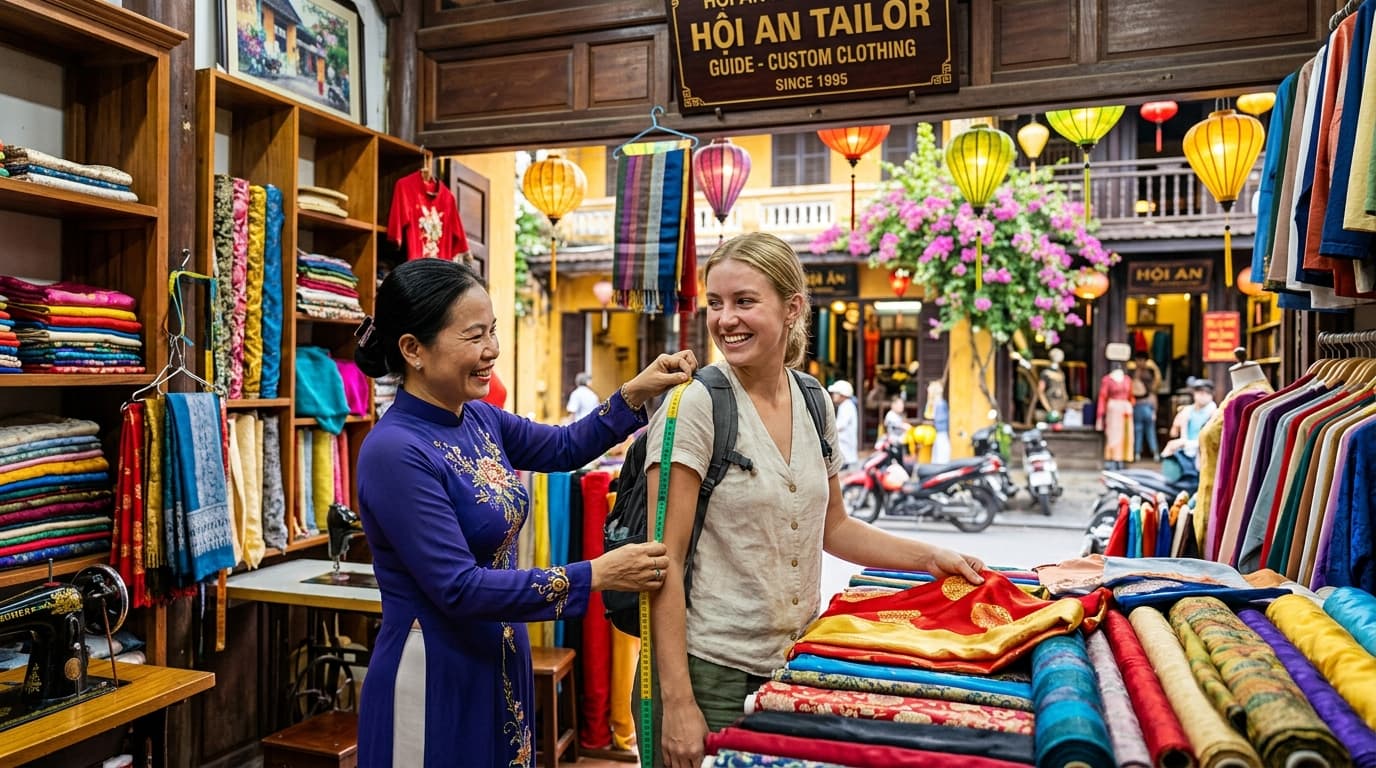
Getting Clothes Made in Hoi An: The Complete Tailor Guide
Everything you need to know about getting clothes made in Hoi An: best tailor shops, real prices, how to choose fabric, what to order, and how to avoid common mistakes.
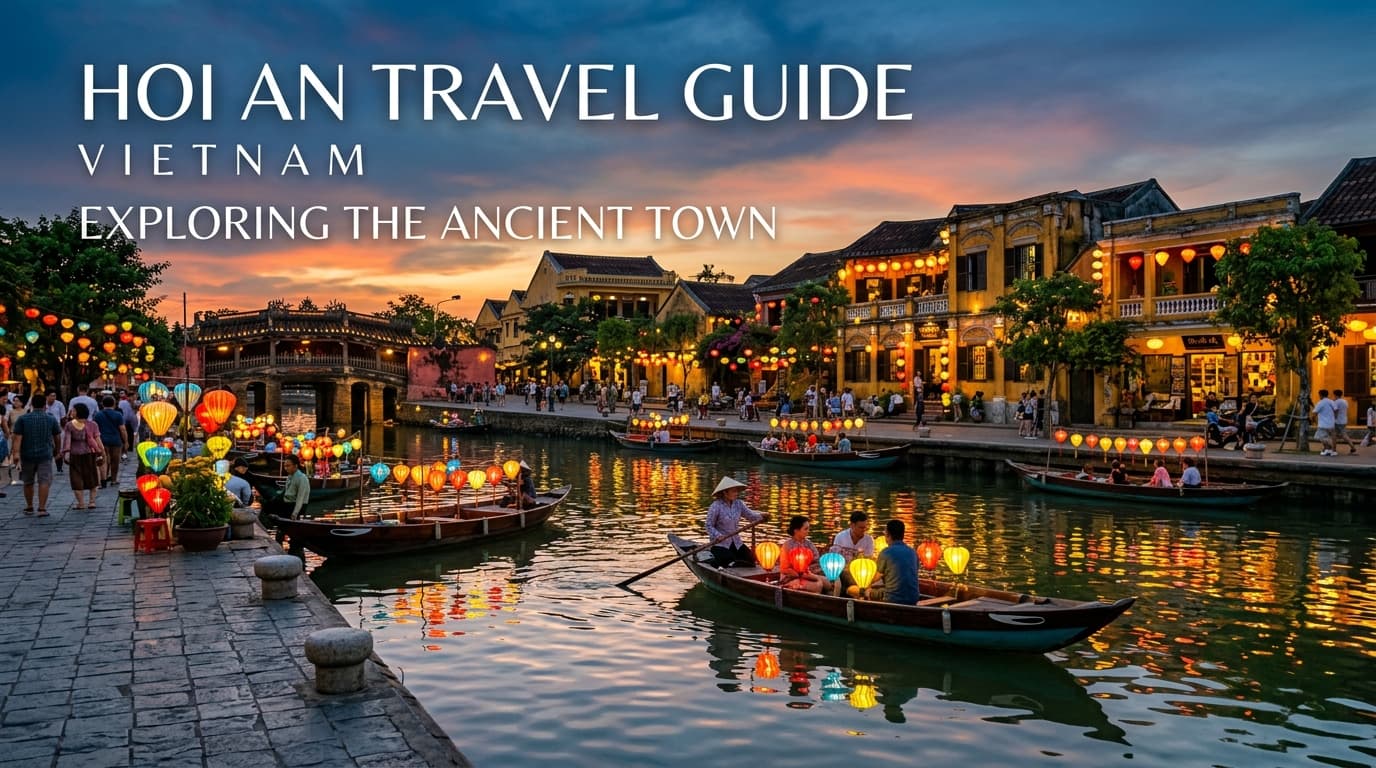
Hoi An Travel Guide: Ancient Town, Beaches & Tailors
Complete Hoi An travel guide: ancient town, pristine beaches, world-class tailors & local food. Includes 1-day & 3-day itineraries.
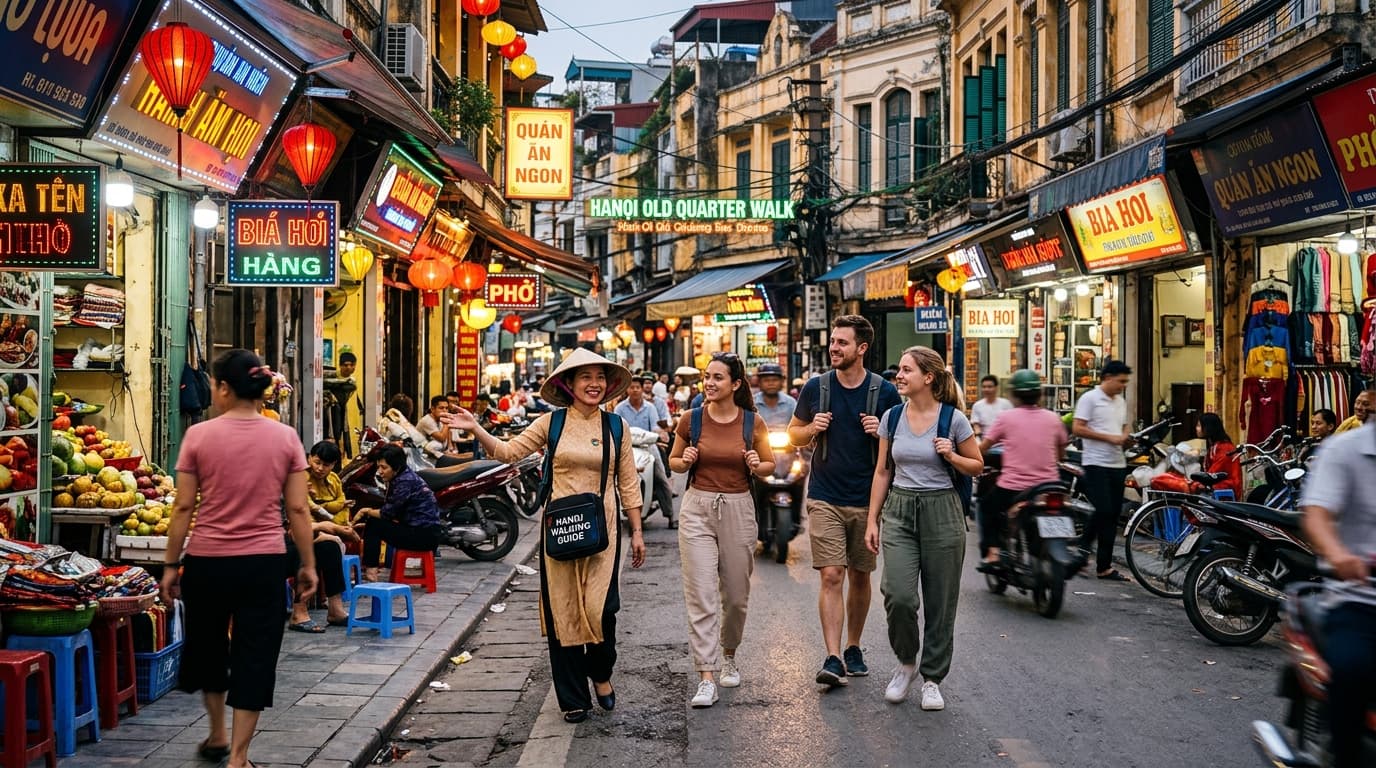
Hanoi Old Quarter Walking Guide: 36 Streets Explained
Explore Hanoi's Old Quarter with our complete walking guide to 36 historic streets, top sights, street food, and practical tips.

Da Lat: Vietnam's French Hill Station in the Central Highlands
Discover Da Lat, Vietnam's misty French hill station. Complete guide to neighborhoods, sights, food, stays, and practical tips.
Plan Your Vietnam Trip
Book hotels, transport, activities, and get connected with an eSIM
Some links are affiliate links. We may earn a commission at no extra cost to you.