Is Vietnam Safe for Solo Female Travelers in 2026?
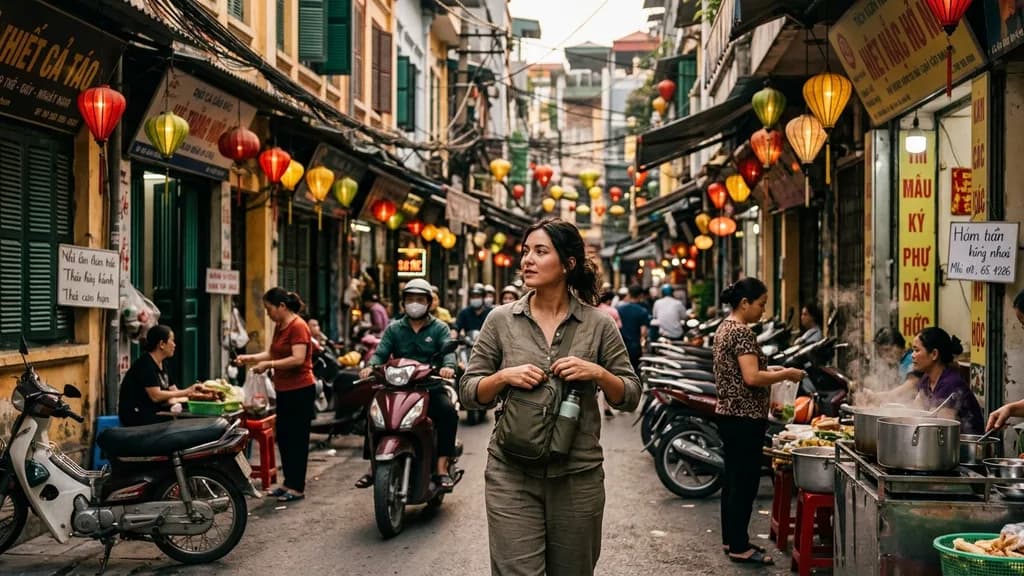
Vietnam is one of the easiest countries in Southeast Asia to travel alone as a woman. You will walk through Hanoi's Old Quarter at 10pm past families eating bun cha, share a sleeper train with grandmothers peeling mandarins, and realize by day three that the thing you were most anxious about (strangers, attention, harassment) is barely on the radar. The real risks are practical: a bag pulled off your shoulder by a motorbike in Saigon, a scooter rental with no insurance, or a "closed museum, let me take you to a tailor" taxi driver. This 2026 guide separates perceived risk from actual risk, with the numbers, hotspots, and tactics that matter.
TL;DR: The Honest Answer
Vietnam is safer for solo women than most first-time travelers expect, and safer than several destinations you have probably already considered "fine" (Barcelona, Naples, Paris 10th). Violent crime against tourists is rare, the US State Department keeps Vietnam at Level 1 (exercise normal precautions) and the UK FCDO issues no blanket warning. Harassment levels are low: you will get curious stares in rural areas and the occasional pushy taxi tout, but almost nothing resembling the street-catcalling or groping that drives women off the streets in other regions. The things that actually go wrong are petty and preventable: bag snatching (worst in Ho Chi Minh City District 1), scooter accidents, and scams around tours, taxis, and money. Follow the same rules you would in any big city, wrap your bag strap around something solid, and Vietnam will reward you with one of the most relaxed solo trips you can have in Asia.
Official Safety Advisories in 2026
Government advisories give you the baseline before individual stories.
| Country | Advisory Level | Key Note |
|---|---|---|
| USA (State Dept) | Level 1: Normal Precautions | No region-specific warnings; petty crime cited |
| UK (FCDO) | No restriction | Warns on scams, road safety, natural disasters |
| Canada | Exercise normal precautions | Notes petty crime in HCMC |
| Australia (DFAT) | Exercise normal safety precautions | Same baseline |
| Germany (AA) | No travel warning | Road safety flagged |
Level 1 is the lowest tier. It is the same rating as Japan, most of Europe, and Singapore. Compare that to Vietnam's neighbors: the Philippines sits at Level 2, Myanmar at Level 4 (do not travel), and parts of southern Thailand at Level 2. Vietnam is, on paper and in practice, the safe option in the region.
For the broader picture across all travelers, see our Vietnam safety guide which covers scams, natural disasters, and health risks in more depth.
Harassment: The Reality vs. the Forum Rumors
If you have read three travel forums about Vietnam, you have probably seen one post claiming "men stared at me the entire trip" and another saying "nobody even looked twice." Both are true, and both depend on where you are.
Urban tourist areas (Hanoi Old Quarter, Hoi An Ancient Town, District 1 Saigon, Da Nang beach strip): Essentially zero harassment. Locals are used to foreign women. You can walk, eat, drink, and take a Grab at midnight without attention.
Rural north (Ha Giang, Sapa, Mai Chau, Cao Bang): Curious staring is normal, especially from older men and children. It is not aggressive. Women in ethnic-minority villages may want to touch your hair or take a photo with you. A smile and a polite "khong" if you are not in the mood is enough.
Nightlife districts (Bui Vien in Saigon, Ta Hien in Hanoi): Expect touts offering laughing gas balloons, massages, and "boom boom." Firm "no" and keep walking. These streets are loud but not dangerous; they just operate on a tourist-bar logic anywhere in SE Asia.
What is rare in Vietnam compared to other destinations: groping on public transport, being followed, sustained catcalling, men invading personal space in cafes, or aggressive reactions to a "no." It happens, but not often enough to show up in any credible solo-female safety index.
Real Risks: Petty Theft and Where It Happens
This is the category that catches people out. Vietnam is not pickpocket-heavy like Barcelona, but it has a specific problem: drive-by bag snatching by thieves on motorbikes. It is fast, it can hurt you (dragging injuries are common), and it concentrates in a few spots.
Ho Chi Minh City Hotspots
District 1 is the epicenter. Specifically:
- Along Nguyen Hue walking street and the streets feeding into it
- Around the Opera House and the Rex Hotel
- The backpacker triangle of Bui Vien, De Tham, and Pham Ngu Lao
- Ben Thanh Market approaches, especially Le Loi at dusk
Common scenario: you are walking on the curb side of the pavement, phone in one hand, day bag on the shoulder nearest the road. A motorbike slows behind you, the passenger reaches, and they are gone before you register it. Phone and bag losses of $500 to $2,000 are routine.
Hanoi
Hanoi is significantly calmer. Old Quarter pickpocketing exists around Hoan Kiem Lake on weekend walking-street nights, but drive-by snatching is less common because the streets are narrower and slower. Still worth precautions.
Anti-Theft Tactics That Actually Work
| Tactic | Why it matters |
|---|---|
| Bag on the wall-side, not the road-side | Removes the drive-by grab angle entirely |
| Cross-body strap, under a jacket or scarf | Cannot be pulled off cleanly |
| Phone in pocket when walking, not in hand near the road | 80 percent of snatches are phones, not bags |
| One card + small cash in a front pocket, rest in hotel safe | Limits loss if taken |
| Photocopy of passport on you, original in the safe | Embassy replacement is far easier with a copy |
| Never resist if grabbed | Injuries happen from dragging, not the theft itself |
City-by-City Safety Breakdown
Vietnam is long and varied. Your risk profile changes as you move.
Hanoi
One of Asia's most walkable capitals for solo women. The Old Quarter is busy until about 11pm, there are always people around, and Grab bikes are everywhere. Avoid the dark alleys around Long Bien Bridge late at night and the quieter edges of the French Quarter after midnight. See our Hanoi Old Quarter walking guide for the route most solo travelers use.
Ho Chi Minh City (Saigon)
Higher energy, higher petty-crime risk. District 1 is fine during the day. After dark, stay on main streets, use Grab (not street taxis flagged down), and keep your phone out of hand. District 3 and District 5 are residential and low-drama. Thao Dien in District 2 is the expat neighborhood and feels like a different city.
Hoi An
Probably the single safest place in Vietnam for a solo woman. The Ancient Town is lantern-lit, car-free in the evenings, and full of couples and families. No known safety issues beyond the usual "be sensible near An Bang beach at night."
Da Nang
Clean, modern, beach-focused. Very low crime. My Khe beach is patrolled and lit. The only watch-out is the downtown Han Market area at closing time when touts get pushier.
Sapa and Ha Giang
Remote northern mountain regions. Crime risk is effectively zero. The real risks here are road accidents (especially on the Ha Giang loop) and weather. If you are riding, go with an easy-rider or a reputable tour rather than solo on your first Vietnamese scooter.
Phu Quoc and Con Dao
Island resorts. Safe. Main risks are sunburn, jellyfish in season, and overcharging on taxis at the port. Grab works on Phu Quoc.
Motorbikes and Scooters: The Actual Dangerous Part
Vietnam's road-traffic death rate is roughly 6 times that of the UK and 3 times that of the USA. This is where women (and men, and everybody) actually get hurt. If you are going to ride:
Legal reality: You need an International Driving Permit with the A1 motorcycle category PLUS your home country motorcycle license. A car-only IDP does not cover scooters above 50cc, and most travel insurance voids your policy if you crash without correct papers. Rental shops will rent to anybody with a passport, but that has no bearing on legality or insurance.
Skill reality: If you have never ridden a scooter, do not learn on a Vietnamese road. Take two or three lessons in a calm place (Hoi An rice paddies, Mui Ne, Phu Quoc) before you ride in traffic.
Helmet reality: The helmet the rental gives you is probably a tofu shell. Buy a proper one at a Protec shop in any major city for around 600,000 to 900,000 VND ($24 to $36). It is the single best $30 you will spend.
Insurance reality: World Nomads, SafetyWing, and Heymondo (see our travel insurance page) cover scooter accidents only if you have the correct license. Read the fine print. A broken collarbone evac from Ha Giang is $8,000 uninsured.
Transport: Grab, Trains, and Taxis
Transport is where most scams happen, and where most solo women feel most exposed. Good news: it is solvable.
Grab (Vietnam's Uber): The default. Works in every major city and most tourist towns. Fixed prices, driver photo in-app, you can share your ride. At night, solo women should always pick Grab over street-hailed taxis.
Taxis: Use Mai Linh (green) or Vinasun (white with red and green stripe) only. Everything else is a gamble. Meters should start around 15,000 VND. If the driver says "meter broken," get out.
Airport transfer: Prebook through your hotel or use Grab once you are past immigration. The taxi touts inside the arrivals hall at Tan Son Nhat (SGN) and Noi Bai (HAN) are a classic scam vector, especially at 1am when you are exhausted.
Sleeper trains: The Reunification Express and the Hanoi to Lao Cai (Sapa) line are solid. Soft sleeper is a 4-berth compartment with a locking door. Vietnam Railways sells female-preference cabins on some routes; request via the booking notes on dsvn.vn or ask your agent. Lock your valuables to the bed frame with a small cable lock when you sleep.
Open-bus / sleeper bus: Less safe than trains. Luggage theft happens in the underneath hold and overnight services have a worse accident record. Fine in daytime, avoid overnight if trains or flights exist.
Dress Code Without the Fuss
Vietnam is relaxed. You do not need to "cover up" for cultural reasons in normal daily life. What matters:
| Setting | What works |
|---|---|
| City streets, cafes, restaurants | Anything, same as home |
| Beach and pool | Swimwear is normal at resorts; topless is not |
| Pagodas and temples | Shoulders and knees covered; scarf in daybag |
| Imperial City (Hue), Cao Dai Temple | Long pants or long skirt; scarf for shoulders |
| Rural ethnic-minority villages | Slightly more modest is respectful, not required |
| Night buses and sleeper trains | Long sleeves; AC is aggressive |
One light pashmina-style scarf in your daybag handles temples, AC, and sunburn. That is it.
Night Safety: What "Safe Until 11pm" Really Means
Vietnam cities wind down earlier than you might expect. Old Quarter Hanoi and District 1 Saigon feel populated and safe until about 10 to 11pm. After that, streets empty quickly and you want to be in a Grab, not walking.
Rules that work:
- Walk on lit, main streets at night. Skip the shortcut down an unlit alley even if it is "just two minutes."
- Keep your phone out of your hand on the street at night.
- Have your hotel address saved in Vietnamese in your phone. Drivers read it, not Google Maps.
- Tell your hotel when you are going out late so somebody notices if you do not come back.
- Drink sensibly. The number one factor in solo-traveler incidents globally is alcohol, not country. Vietnam is no exception.
Rural and Remote Travel: Ha Giang, Sapa, Pu Luong
Going north of Hanoi as a solo woman is fine and genuinely rewarding, but the calculus changes.
Ha Giang loop: 3 to 4 days on a scooter through mountain passes. Solo women do it every week. If you are an experienced rider with your license, rent from QT Motorbikes or Jasmine Hostel in Ha Giang city, go anti-clockwise to avoid the heaviest truck traffic, and download offline maps. If you are not experienced, book an easy-rider package; you ride pillion with a vetted local driver for around $180 to $260 for 3 days including food and homestays. Infinitely safer and still authentic.
Sapa: Very safe. Trekking with homestay guides is the norm. Book your trek through a women-led cooperative like Sapa Sisters for a better experience and to support local Hmong and Red Dao women.
Pu Luong, Mai Chau, Ba Be Lake: Off-grid but very low crime. Bring cash; ATMs are scarce. Get a local SIM (Viettel has the best mountain coverage).
Emergency Contacts to Save Before You Fly
Put these in your phone before you land.
| Service | Number |
|---|---|
| Police (national) | 113 |
| Fire | 114 |
| Ambulance | 115 |
| Tourist Police HCMC | 069 3368 606 |
| Tourist Police Hanoi | 024 3942 1041 |
| US Embassy Hanoi | +84 24 3850 5000 |
| UK Embassy Hanoi | +84 24 3936 0500 |
| Australian Embassy Hanoi | +84 24 3774 0100 |
| Family International Medical (Hanoi) | +84 24 3843 0748 |
| FV Hospital (Saigon) | +84 28 5411 3333 |
Also save: your hotel's phone number, your embassy's consular after-hours line, and your travel insurance 24/7 assistance line.
Scams to Know in 30 Seconds
Quick hits. Read once, recognize when they happen.
- "Museum closed, let me take you elsewhere": Always a commission scam. The museum is open.
- Motorbike taxi (xe om) no-meter flat rate: Use Grab instead.
- Money-changing sleight of hand: Count twice at the counter before leaving.
- Cyclo driver wants $30 for a 10-minute ride: Agree price in writing before getting in, or use Grab.
- "Free" bracelet or flower: Not free. Hand it back immediately.
- Shoe-shiner grabs your shoe and breaks it: Walk away from anyone approaching your feet.
- Cinnamon Hotel, Sunrise Hotel (many knockoffs): Verify your booking address on Google Maps before getting in a taxi from the airport.
Packing Specifics for Solo Female Safety
A short, non-generic list.
- Cross-body daybag with slash-proof strap: Pacsafe or similar. Single best purchase.
- Door wedge: For guesthouse rooms with dodgy locks. Weighs nothing.
- Combination padlock: For hostel lockers and sleeper-train bunks.
- Paper copy of passport + 2 passport photos: Embassy replacement speed.
- Offline Google Maps of your whole route: Download before you lose signal.
- eSIM (Airalo or similar): Connected from the moment you land, no airport-SIM scams.
- Small first-aid kit with electrolytes: Pharmacies are great in cities, patchy in Ha Giang.
How Solo Women Actually Rate Vietnam
Every year the travel industry publishes solo-female safety rankings. Vietnam consistently appears in the "safe" tier, typically alongside Japan, Taiwan, and Portugal when the methodology weights actual incident reports rather than perception. Travel-forum surveys put solo female satisfaction in Vietnam above 90 percent, with the recurring positive themes being "felt safer than expected," "locals looked out for me," and "never felt unwelcome eating alone." The recurring complaints are overwhelmingly about traffic noise, scams, and heat, not personal safety.
Before You Book: A Short Checklist
Before you book the flight, run through this. It takes 10 minutes.
- Travel insurance with scooter coverage if you plan to ride (see travel insurance)
- International Driving Permit with A1 category if you plan to ride
- E-visa applied for at evisa.xuatnhapcanh.gov.vn (or visa-free status confirmed)
- First two nights' accommodation booked in a walkable neighborhood
- Grab app installed and phone number verified before you land
- Embassy contacts and emergency numbers saved offline
- Hotel addresses in Vietnamese saved in Notes
- A budget for a Protec helmet if you are renting a scooter
- Read our first-time Vietnam guide for visa, money, and transport basics
- If you are planning the classic route, see the Vietnam 2-week itinerary
The Bottom Line
Vietnam in 2026 is one of the most rewarding solo trips you can take as a woman. The country will not coddle you, but it will also not go out of its way to make your life hard. Harassment is low, violent crime against tourists is rare, and the infrastructure (Grab, trains, e-visa, widespread English in tourist areas) has never been better. The risks are the same petty-theft and traffic risks that apply to every traveler, and they respond to the same precautions.
Keep your bag on the wall-side, your phone in your pocket, and your sense of curiosity open. You will come home with stories, not incidents.
Sources & References
This article is based on first-hand experience and verified with the following official sources:

Exploring Vietnam since 2020 | 40+ provinces visited | Updated monthly
We are a team of travel writers and Vietnam enthusiasts who explore the country year-round. Our guides are based on first-hand experience, local knowledge, and verified official sources.
More about us →People Also Read

Vietnam E-Visa 2026: How to Apply, Costs & Processing Time
Complete guide to Vietnam e-visa in 2026: step-by-step application, exact costs, processing times, and common mistakes to avoid.

Vietnam E-Visa 2026: How to Apply, Costs & Processing Time
Complete guide to Vietnam e-visa 2026: step-by-step application, exact costs, processing times, and eligibility. Apply online in minutes.
Vietnam E-Visa 2026: How to Apply, Costs & Processing Time
Complete guide to Vietnam E-Visa 2026: step-by-step application process, exact costs, processing times, and everything you need to know before traveling.
Vietnam E-Visa 2026: Complete Guide to Application, Costs & Processing Time
Step-by-step Vietnam e-visa guide for 2026: application process, exact costs, processing times, and answers to common questions.
Plan Your Vietnam Trip
Book hotels, transport, activities, and get connected with an eSIM
Some links are affiliate links. We may earn a commission at no extra cost to you.