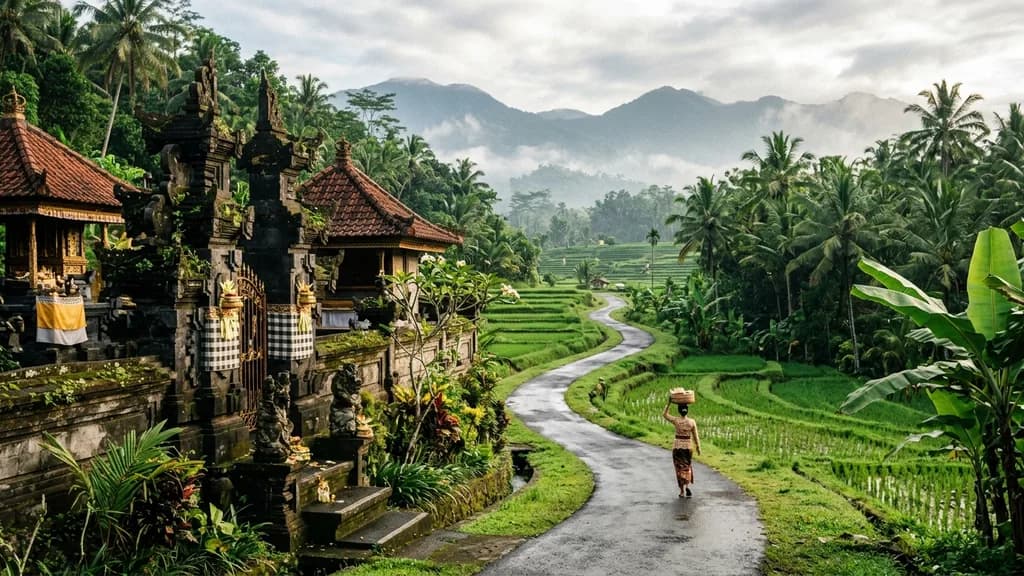
TL;DR: When to Visit Vietnam in 2026
- Best overall window: late February to April 2026 - dry across all three climate zones, post-Tet prices, wildflowers in Sapa.
- Tet 2026: February 17 to 24 - skip or embrace, no middle ground.
- Avoid central Vietnam: September to November (typhoon season, Hoi An floods).
- Halong Bay prime: October to December for calm seas and clear skies.
- Sapa golden rice: end of September to early October.
- Ha Giang Loop motorbike: October to December (no fog) and March to May.
- Cheapest + quietest: February 25 to March 10, 2026 (post-Tet lull).
Vietnam does not have a single best time. The country stretches 1,650 kilometers (1,025 miles) north to south and spans three distinct climate zones, each running a different seasonal calendar. A perfect week in Hanoi can coincide with typhoon warnings in Hoi An and sweaty 34°C (93°F) afternoons in the Mekong Delta. This guide breaks down month-by-month weather for 2026, the Tet holiday impact, and how to stitch a north-to-south itinerary that dodges the worst of each region's bad season.
The 3-Zone Reality: Why Vietnam Has No Single Best Time
Vietnam's long, narrow shape crosses two monsoon systems and a mountain spine that splits weather patterns dramatically. Before you book anything, understand which zone your destinations sit in.
Zone 1: The North (Hanoi, Halong Bay, Sapa, Ha Giang, Ninh Binh)
Four distinct seasons with real winters. Cool, dry air from November to February can drop Hanoi nights to 10°C (50°F) and Sapa mountains to near freezing. Summers (June to August) are brutally hot and humid, 32 to 38°C (90 to 100°F), with afternoon thunderstorms and occasional typhoons rolling in from the Gulf of Tonkin.
Zone 2: The Central Coast (Hue, Da Nang, Hoi An, Quy Nhon)
A narrow strip between the Annamite mountains and the South China Sea with the most extreme monsoon pattern in Vietnam. Dry from January to July, then increasingly violent from August onward as typhoons channel into the coast. Hoi An's UNESCO old town floods almost every October, sometimes knee-deep for days.
Zone 3: The South (Ho Chi Minh City, Mekong Delta, Phu Quoc, Mui Ne)
Tropical year-round, 25 to 35°C (77 to 95°F), with only two seasons: dry (December to April) and wet (May to November). Wet season doesn't mean all-day rain - expect heavy afternoon downpours that last 30 to 90 minutes, then clear again. Phu Quoc flips the script slightly: its driest, calmest months are November to April.
Month-by-Month: All Three Regions at a Glance
2026 Weather & Tourism Calendar
| Month | North | Central | South | Verdict |
|---|---|---|---|---|
| January | Cool, misty, 13-20°C | Dry, mild, 19-24°C | Dry, hot, 22-32°C | Good but chilly north |
| February | Cold start, warming, Tet 17-24 | Dry, pleasant, 20-26°C | Dry, peak season | Tet chaos then gold |
| March | Spring, 17-23°C, ideal | Warm, dry, 22-28°C | Hot, dry, 24-34°C | Best month overall |
| April | Warm, 22-28°C | Hot, dry, 25-32°C | Very hot, 26-35°C | Excellent |
| May | Hot, humid, rains start | Hot, dry ending | Wet season begins | Mixed |
| June | Hot, humid, stormy | Hot, pre-monsoon | Wet, 27-33°C | Avoid north |
| July | Peak heat & humidity | Hot, dry, 28-34°C | Wet, steady | Central OK |
| August | Typhoon risk | Typhoon risk grows | Wet, cooler | Tough month |
| September | Sapa rice harvest | Typhoon peak | Wet peak | Sapa only |
| October | Clear, crisp, ideal | Floods likely | Wet ending | North excellent |
| November | Cool, dry, 18-24°C | Still wet north part | Dry returning | North + south good |
| December | Cool, dry, 15-22°C | Drying out | Dry, peak tourism | All three workable |
January 2026
A cold, dry start. Hanoi mornings sit at 13 to 18°C (55 to 64°F) with occasional misty drizzle. Halong Bay looks moody and atmospheric rather than postcard-perfect. Central Vietnam is dry and mild, a solid choice for beach-free sightseeing in Hue and Hoi An. The south is dry and hot - peak season on Phu Quoc. Good month for temples, food tours, and museums in the north; skip if you want Halong cruises to feel tropical.
February 2026 (Tet Month)
A month of two halves. February 1 to 15 is warming up nicely countrywide. Tet Nguyen Dan runs February 17 to 24, 2026 - expect shop closures, family gatherings, and sharply inflated hotel rates. From February 25 onward Vietnam hits its shoulder-season sweet spot: dry weather in all three zones, post-Tet prices, and quiet streets while locals return to work.
March 2026
Arguably the best single month of 2026 for a full-country trip. The north shakes off winter (17 to 23°C / 63 to 73°F), Sapa's wildflowers bloom, central Vietnam is reliably dry and warm (22 to 28°C / 72 to 82°F), and the south is sunny with manageable humidity. Book Halong cruises and Ha Giang motorbike tours now for lowest cancellation risk.
April 2026
Warm and dry nationwide, though the south starts climbing into uncomfortable 34 to 35°C (93 to 95°F) afternoons. Central Vietnam beaches peak (Da Nang, An Bang, My Khe). Reunification Day holiday (April 30) and Labor Day (May 1) create a long weekend - expect domestic tourism spikes at coastal resorts.
May 2026
Transition month. The south's wet season begins with short, intense afternoon storms. The north gets humid and hot with early thunderstorms. Central Vietnam is your safest bet, still dry and hot. Good month for cheap southern beach stays if you can tolerate brief daily rain.
June 2026
Summer heat arrives in force. Hanoi regularly hits 35°C (95°F) with 85% humidity - genuinely uncomfortable for sightseeing. The south is fully in wet season but predictable. Central Vietnam remains the dry bright spot. Ha Giang Loop is hot and humid with slippery mountain roads.
July 2026
Peak northern heat and early typhoon risk on the Tonkin coast. School holidays drive domestic tourism to Phu Quoc, Nha Trang, and Da Nang - book ahead. Consider this a central Vietnam month (Hoi An, Da Nang, Hue all still dry) and avoid the north if you dislike humidity.
August 2026
Tough month. Typhoons start threatening the northern and north-central coasts. Halong Bay cruise cancellations become common. The south's rains stretch longer into evenings. Central Vietnam is still mostly dry but thunderstorm risk rises late month.
September 2026
Sapa's golden rice harvest peaks end of September - genuinely one of the most photogenic travel moments in Southeast Asia, worth planning a trip around. Everywhere else is compromised: typhoon peak for central Vietnam, wet peak for the south, and lingering heat up north. Go for Sapa and Ha Giang specifically, skip if you want beaches.
October 2026
The north flips to its best season. Hanoi turns crisp and dry (20 to 27°C / 68 to 81°F), Halong Bay enters its prime window, and Ha Giang Loop gets its clearest mountain views of the year. Central Vietnam is the trouble spot - expect at least one major typhoon and widespread Hoi An flooding. The south's rains start tapering.
November 2026
Excellent month for the north and increasingly good for the south. Central Vietnam is drying out but still risky through mid-month. Book Halong cruises and Ha Giang motorbike tours now for stable weather. Phu Quoc enters its dry season. A good alternative-to-March option for a full country trip if you skip Hoi An.
December 2026
Peak tourist season nationally. Cool, clear skies in the north (prepare for Sapa temperatures near freezing at night). Central Vietnam fully recovered and dry again. Phu Quoc, Mui Ne and HCMC are in prime time. Book everything 2 to 3 months ahead - Christmas and New Year push prices up 40 to 80% at coastal resorts.
Tet 2026 Deep Dive: The February 17 to 24 Question
Tet Nguyen Dan is Vietnam's Lunar New Year and the most significant cultural event of the year. For 2026 the official public holiday is February 16 to 22 with Lunar New Year's Day falling on Tuesday, February 17, 2026 (the Year of the Horse). The practical tourism slowdown stretches wider - roughly February 14 to 24.
What's Open and What's Closed During Tet 2026
| Service Type | Status During Tet | Notes |
|---|---|---|
| Major attractions | Mostly open | Temple pagodas extra busy days 1-3 |
| Family-run restaurants | Closed 3-7 days | Hotel restaurants stay open |
| Street food stalls | Closed 5-7 days | Returns gradually from day 4 |
| International chains (KFC, McDonald's) | Open | Limited hours on day 1 |
| Domestic flights | Running, expensive | Book 6+ weeks ahead |
| Trains | Fully booked | Book 2 months ahead |
| Buses (open-tour) | Reduced service | Day 1-3 very limited |
| Tour operators | Closed day 1-3 | Limited service days 4-6 |
| Banks & post offices | Closed 5-7 days | ATMs work but sometimes empty |
| Hotels | Open, prices up 2-3x | Book 3 months ahead |
Tet 2026: Visit or Avoid?
Visit if: you want to see the cultural heart of Vietnam, don't mind paying 2 to 3x hotel rates, can book transport 6 weeks ahead, and are comfortable with closed restaurants outside hotels.
Avoid if: you want street food tours, cheap travel, flexible tour bookings, or the buzzing normal rhythm of Vietnamese cities.
Sweet spot: arrive February 25, 2026. Post-Tet prices drop sharply, streets empty as locals return to work, weather is excellent nationwide, and you ride a two-week low-tourism window through early March.
Browse Tet-week hotel deals on Booking.com to see the rate spike in real time - compare February 15 to February 28 against early March.
Typhoon Season: August to November 2026
Vietnam averages 6 to 8 tropical storms and typhoons per year. Central Vietnam takes the hardest hits, especially September and October. The north sees earlier, weaker storms (June to August) and the south is largely spared.
Typhoon Impact by Region, 2026
| Region | Risk Months | Typical Impact | Cruise/Trek Risk |
|---|---|---|---|
| Northeast (Halong, Cat Ba) | Jun-Sep | Cruise cancellations 24-48hr notice | High Jul-Sep |
| Northwest (Sapa, Ha Giang) | Jul-Sep | Flash floods, landslides | High Jul-Aug |
| North Central (Hue, Dong Hoi) | Aug-Oct | Road closures, flooding | High Sep-Oct |
| Central (Da Nang, Hoi An) | Sep-Nov | Old town floods waist-deep | Very high Oct |
| South Central (Nha Trang, Quy Nhon) | Oct-Dec | Rough seas, beach closures | Moderate |
| South (HCMC, Mekong, Phu Quoc) | Rare direct | Heavy rain only | Low |
Travel insurance with trip-interruption coverage is not optional for August to November travel. Read our full breakdown in the Vietnam typhoon season guide.
Best Time by Destination
Halong Bay & Lan Ha Bay
Best: October 1 to December 20, 2026 - calm seas, 5 to 10 km visibility, 20 to 25°C (68 to 77°F). Second best: March to early May. Avoid: July to September (typhoon cancellations).
Overnight cruises sell out 4 to 8 weeks ahead for the October-December window. Book early and keep one flexible day in Hanoi in case a storm pushes your departure back 24 hours.
Sapa & the Northwest
Best for rice terraces: September 20 to October 10, 2026 - peak golden harvest. Best for green paddies and flowers: March to May. Avoid: June to August (rain, leeches, muddy trails) and January (fog reduces visibility to zero some days).
Sapa sits at 1,600 meters (5,250 feet). Pack layers year-round; winter nights drop to 2°C (36°F) with occasional frost.
Ha Giang Loop
Best: October 15 to December 15, 2026 (no fog, clear mountain views) and March 15 to May 15, 2026 (wildflowers, dry roads). Avoid: June to August (dangerous rain, landslides) and late December to February (dense fog, freezing nights).
The loop is unrideable in heavy fog - you literally cannot see the edge of the road. See our 4-day Ha Giang Loop motorbike itinerary for detailed route timing.
Hoi An & the Central Coast
Best: February 15 to May 31, 2026 - dry, warm, lantern-lit old town at its photogenic peak. Second best: June to August (hot but dry, cheap). Avoid: September to mid-November (typhoons, flooding - Hoi An's old town regularly floods waist-deep in October).
Beach season for An Bang and My Khe peaks April to August - hot but reliably dry and swimmable.
Hue & the DMZ
Best: February to April 2026. Shoulder: May to July. Avoid: September to November (heavy rain, Perfume River floods).
Ho Chi Minh City
Best: December 2025 to March 2026 - dry, cooler evenings (22 to 31°C / 72 to 88°F). Shoulder: November, April. Wet but manageable: May to October - expect a heavy 1-hour downpour most afternoons at 2 to 4 PM, then clear skies.
HCMC remains walkable year-round - the wet season just reshapes your daily schedule.
Mekong Delta
Best: November to March 2026 - dry, cool, water levels good for cruises. Floating markets peak: January to March. Avoid heavy floods: August to October.
Some Mekong experiences (fruit orchards, certain floating markets) are actually better in wet season when water levels rise. Ask your tour operator about tradeoffs.
Phu Quoc
Best: November 2025 to April 2026 - dry, calm seas, 25 to 30°C (77 to 86°F). Avoid: July to September (rough seas, ferry cancellations, waterlogged resorts).
Phu Quoc follows a slightly different pattern than the mainland south - its dry season starts earlier (November) and ends earlier (April).
Nha Trang & Mui Ne
Best: January to August 2026. Avoid: October to December (rough seas, short wet window). Kitesurfing at Mui Ne peaks November to April thanks to steady offshore winds.
The North-to-South Itinerary Weather Problem
Most first-time visitors want to see Hanoi, Halong, Hoi An and the Mekong in two weeks. The weather rarely cooperates everywhere at once. Here's the matching chart.
Best Windows for a Full-Country Itinerary
| Window | North | Central | South | Overall |
|---|---|---|---|---|
| Feb 25 - April 15 | Excellent | Excellent | Excellent | Best |
| Nov 1 - Dec 15 | Excellent | Recovering | Excellent | Very good (skip Hoi An) |
| March 15 - May 15 | Excellent | Excellent | Good (hot) | Very good |
| Jan 5 - Feb 14 | Cool, dry | Dry, mild | Dry | Good, chilly north |
| May 20 - July 31 | Hot, stormy | Dry, hot | Wet afternoons | Skip or focus center |
| Aug 1 - Oct 31 | Variable | Typhoon risk | Wet | Skip full-country trip |
If you're trip-planning for the first time, start with our first-time Vietnam guide and Vietnam dry season vs wet season breakdown.
Shoulder-Season Math: Where the Value Lives
Shoulder season in Vietnam means one of three things: post-Tet, late-May, or early November. Each comes with tradeoffs.
Post-Tet (February 25 to March 15, 2026)
The quietest, best-value window of the year. Hotels drop 30 to 50% from Tet-week peaks. Weather is nationwide-excellent. Tour operators reopen fully by February 25. Book a 10 to 14 day itinerary during this window for the best weather-to-price ratio.
Late May to Early June
The north is getting hot, the south is starting to rain, but the center is still dry. Good for a Hue-Hoi An-Da Nang focused trip at 40% lower rates than March. Book GetYourGuide day tours (GetYourGuide Vietnam) to lock in weather-flexible bookings.
Early November
The north is hitting prime but prices haven't spiked yet. Central Vietnam is still risky so skip Hoi An - or build flex days. The south is drying out. First 10 days of November can offer March-quality weather at February-week prices.
Packing by Season
Nov-Feb (Cool Season)
Layers, light sweater, long pants for Hanoi and Sapa (Sapa needs a fleece + rain shell at 1,600m). Flip-flops and shorts still fine in HCMC and Mekong.
Mar-May (Hot Dry Season)
Light cotton, sun hat, SPF 50+, refillable water bottle. Humidity low enough that evenings are pleasant.
Jun-Aug (Hot Wet Season)
Quick-dry everything, compact poncho (not an umbrella), sandals that handle wet streets. Mosquito repellent with 30%+ DEET for northern mountains.
Sep-Nov (Transition / Typhoon)
Waterproof everything, trip-interruption insurance, flexible ticket classes. Pack a phone dry-bag.
Cultural Calendar: Other 2026 Dates to Plan Around
| Date | Event | Impact |
|---|---|---|
| Jan 1, 2026 | New Year | Mild, 1-day slowdown |
| Feb 17-24, 2026 | Tet Nguyen Dan | Major, country-wide |
| Apr 15, 2026 | Hung Kings Festival | Moderate, 1 day |
| Apr 30-May 1, 2026 | Reunification + Labor Day | Domestic travel surge |
| Jun 9, 2026 | Buddha's Birthday | Temple crowds |
| Sep 2, 2026 | National Day | 1-day slowdown |
| Sep 25, 2026 | Mid-Autumn Festival | Festive evenings, lanterns |
| Late Sep 2026 | Hoi An full-moon festival | Lantern-lit old town |
Final Call: Pick Your 2026 Window
For most travelers planning 2026, book late February 25 through April 15, 2026 for the best weather across all three zones, with post-Tet pricing and wildflower blooms in the north. Second choice is November 1 to December 15, 2026 if you're willing to skip or flex around Hoi An's typhoon recovery. Avoid August to October 2026 for any full-country trip.
If you only have September or October free, go Sapa-and-Ha Giang focused - the north is stunning, and the golden rice harvest is one of Asia's great underrated travel moments. Skip the center entirely those months.
Weather is the single biggest variable that can make or break a Vietnam trip. Plan around the three-zone calendar above and you'll spend your days walking Hoi An's lantern streets dry, cruising glassy Halong seas, and hiking Sapa rice terraces under clear skies - not hiding from a typhoon in your hotel.
Sources & References
This article is based on first-hand experience and verified with the following official sources:

Exploring Vietnam since 2020 | 40+ provinces visited | Updated monthly
We are a team of travel writers and Vietnam enthusiasts who explore the country year-round. Our guides are based on first-hand experience, local knowledge, and verified official sources.
More about us →People Also Read

Vietnam E-Visa 2026: How to Apply, Costs & Processing Time
Complete guide to Vietnam e-visa in 2026: step-by-step application, exact costs, processing times, and common mistakes to avoid.

Vietnam E-Visa 2026: How to Apply, Costs & Processing Time
Complete guide to Vietnam e-visa 2026: step-by-step application, exact costs, processing times, and eligibility. Apply online in minutes.
Vietnam E-Visa 2026: How to Apply, Costs & Processing Time
Complete guide to Vietnam E-Visa 2026: step-by-step application process, exact costs, processing times, and everything you need to know before traveling.

Vietnam E-Visa 2026: Complete Guide to Application, Costs & Processing Time
Step-by-step Vietnam e-visa guide for 2026: application process, exact costs, processing times, and answers to common questions.
Plan Your Vietnam Trip
Book hotels, transport, activities, and get connected with an eSIM
Some links are affiliate links. We may earn a commission at no extra cost to you.