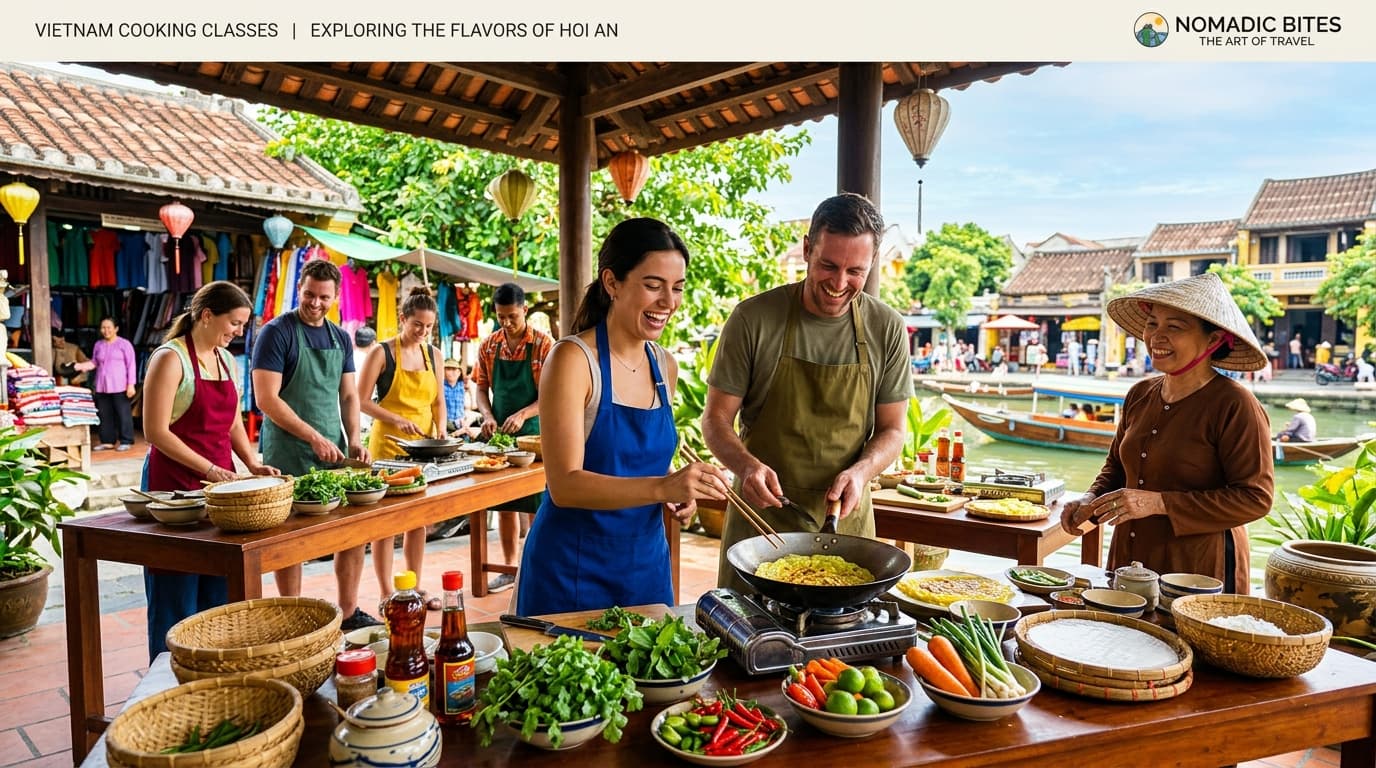
Vietnamese cooking is one of the most technically rewarding cuisines to learn hands-on. The dishes that look simple—a clear pho broth, a crispy banh xeo, a plate of fresh spring rolls—are built on layers of technique that take years for professionals to perfect. A good cooking class in Vietnam cuts through the mystique: you learn why the broth is clear, how the rice paper stays pliable, and what makes Central Vietnamese food different from northern or southern styles.
This guide covers the best cooking schools across the three major culinary cities, with honest assessments of price, format, and which classes are worth your half-day.
Key Takeaways
| Question | Answer |
|---|---|
| What does a cooking class cost? | USD $25-60 for group classes; $60-120 for private sessions |
| How long are classes? | 3-5 hours, including a market visit in most cases |
| What cities have the best options? | Hoi An (best overall), Hanoi (best northern dishes), HCMC (best street food focus) |
| Do I need cooking experience? | No — classes are designed for all levels |
| Is a market visit included? | At most reputable schools, yes |
| What dishes will I learn? | Pho, spring rolls, pho, banh xeo, bun cha, cao lau — varies by city and school |
Why Take a Cooking Class in Vietnam?
Vietnam has one of the world's most regionalized cuisines. The pho you eat in Hanoi bears little resemblance to the pho served in Ho Chi Minh City. Central Vietnam has dishes — cao lau, mi quang, banh hoai — that exist nowhere else. A cooking class, especially one that begins with a market tour, teaches you to read ingredients before you can read recipes. You learn why a Hanoi cook uses minimal garnish while a Saigon cook piles on bean sprouts and basil. You understand why the broth changes, the noodle changes, the seasoning changes.
Beyond technique, cooking classes often deliver the most intimate cultural encounters of any Vietnam trip. You're in someone's kitchen — or a school modeled on one — handling fresh turmeric and lemongrass, learning the names of herbs you've been pointing at all week, and eating what you made for lunch.
Hoi An: Vietnam's Cooking Class Capital
Hoi An punches above its weight on cooking schools. The combination of a pristine central market, strong culinary heritage, and proximity to farms and herb gardens makes it the most complete cooking class destination in the country. Most schools here include a boat ride or riverside setting that turns the experience into a half-day excursion.
Red Bridge Cooking School
The most established school in Hoi An, Red Bridge has been running classes since the late 1990s. The setup is genuinely impressive: you start at Hoi An's central market with a guided walk-through of fresh herbs, rice papers, and local proteins. Then you board a small wooden boat for a 20-minute river journey to the school's dedicated facility outside town, set among herb gardens and rice paddies.
The half-day class (USD $35-40 per person) includes:
- Guided central market tour (45 minutes)
- Boat trip to the school
- Walk through the on-site herb garden
- Hands-on cooking of 4-5 dishes (cao lau, fresh spring rolls, banh xeo, Vietnamese salad)
- Lunch with what you've cooked
The full-day class (USD $50-60) adds additional dishes and a more in-depth market experience. Classes run every morning and afternoon, with groups capped at around 12 people. English is spoken throughout.
The school's herb garden is a practical resource, not a decorative feature. Instructors walk you through rau ram (Vietnamese coriander), la lot (betel leaf), and hung que (Thai basil), explaining which dish uses what and why substitutes don't work the same way.
Ms. Vy's Market Restaurant & Cooking School
Trinh Diem Vy — known universally as Ms. Vy — is Hoi An's most celebrated culinary figure. Her restaurant empire includes Morning Glory, Cargo Club, and the Market Restaurant, and her cooking school is one of the best structured in the country.
Classes (USD $40-55) run from the Market Restaurant kitchen and focus heavily on the specific flavors of Central Vietnamese cuisine. You'll learn cao lau (the wheat-and-ash noodle dish unique to Hoi An), white rose dumplings, and fresh rice paper rolls with shrimp. The school emphasizes technique over quantity: you make fewer dishes but understand each one properly.
Ms. Vy's classes tend to book out during peak season (October-February). Reserve at least 2-3 days in advance.
Tra Que Village Cooking Classes
For a more rural experience, several schools operate out of Tra Que Vegetable Village, 3km north of Hoi An's ancient town. You start the morning harvesting herbs and vegetables from the organic garden, which adds context that restaurant-based classes can't provide. Classes here are typically cheaper (USD $20-30) and have a more informal, home-cooking feel.
The dishes tend to be simpler — fresh salads, spring rolls, grilled skewers — but the setting is genuinely local, and you're learning techniques that Vietnamese home cooks actually use.
Skip the walk-ins — book Vietnam cooking classes, market tours, and food experiences in advance with instant confirmation.
Browse Classes on Klook → Scan me
Hanoi: Northern Vietnamese Cooking
Hanoi cooking classes focus on the restrained, precise flavors of northern Vietnamese cuisine. You'll learn pho, bun cha, banh cuon, and cha ca — dishes built on clarity and technique rather than the bold, herb-heavy approach of the south. The market visits here are in Old Quarter wet markets, which are chaotic and educational in equal measure.
Apron Up Cooking Class
Located at 8 Gia Ngu Street in the Old Quarter, Apron Up is consistently one of Hanoi's highest-rated cooking schools. The group class (USD $32 per person) runs 3-4 hours and includes a market visit, hands-on cooking of 5 dishes, a take-home cookbook, and a certificate.
The market portion is an actual wet market experience — your guide explains ingredients as vendors hawk them around you, and you buy your own produce using Vietnamese phrases the instructor teaches you on the spot. It's one of the more genuinely interactive market experiences available in Hanoi.
Dishes vary by day but typically include pho, bun cha, banh cuon, and fresh spring rolls. Private classes (USD $60-80 per person) offer a customized menu. The school keeps groups small — maximum 8-10 people — which means you get real hands-on time rather than watching someone else cook.
Vietnam Cookery Centre
Located near Hoan Kiem Lake, this school takes a more structured, curriculum-based approach. Half-day classes (USD $35-45) cover northern classics with a strong emphasis on understanding the flavor profiles that distinguish Hanoi food from food elsewhere. The instructors have professional chef backgrounds and tend to go deeper on technique — stock-making, knife skills, the logic behind herb combinations — than most tourist-facing schools.
Hanoi Cooking Centre
On Ly Quoc Su Street, this larger school runs both morning and afternoon sessions. The morning class (USD $35-40) includes a visit to Dong Xuan Market — Hanoi's largest indoor market — which is far more comprehensive than the Old Quarter wet markets used by smaller schools. You'll see the full range of northern Vietnamese ingredients, including dried goods, spices, and fresh proteins, in a single sprawling indoor space.
Book buses, trains, and transfers between Vietnamese cities easily online.
Book Transport on 12Go → Scan me
Ho Chi Minh City: Southern Vietnamese & Street Food
HCMC cooking classes reflect southern Vietnamese food culture: bolder flavors, more herbs, more chili, more variety. The best classes here lean into the city's street food identity — you're learning the dishes you've been eating at plastic-stool sidewalk stalls, now understanding how they're built.
Saigon Cooking Class by Hoa Tuc
Held in the atmospheric courtyard of a converted opium den on Hai Ba Trung Street, Saigon Cooking Class by Hoa Tuc is one of the most polished school experiences in the south. Classes (USD $50-65) run mornings and include a Ben Thanh Market tour and 4-5 southern dishes: pho, banh xeo, fresh spring rolls, and a Vietnamese dessert.
The setting alone distinguishes it — cooking in a colonial-era courtyard under strings of lights is unlike any class in Hanoi or Hoi An. The instructors are professional and the pace is relaxed enough that you actually understand each step.
Grain Cooking Studio
Chef Luke Nguyen's cooking studio in District 1 offers a more premium experience (USD $80-110 per person) oriented toward serious food enthusiasts. The curriculum goes deeper into Vietnamese culinary history — including a fish sauce tasting — and covers 5-6 dishes with more focus on technique and ingredient sourcing than most classes.
Groups are small (maximum 8-10), and the facility is properly equipped with professional-grade stations. It's not a tourist experience designed for Instagram moments; it's a class designed to teach you to cook.
Ben Thanh Market Cooking Classes
Several operators run informal cooking classes from the kitchens adjacent to Ben Thanh Market, typically for USD $25-35 per person. The format is more casual — you cook in a working kitchen environment rather than a dedicated school — and the dishes tend toward quick southern staples: pho, broken rice, fresh spring rolls. These are best for travelers who want a hands-on market experience without the polish of a formal school.
Did You Know? Vietnamese cuisine uses over 70 different herbs regularly — more than any other cuisine in Asia. A cooking class is one of the fastest ways to learn to identify them by sight, smell, and use.
What to Expect at a Vietnamese Cooking Class
The Market Visit
Most reputable classes begin with a market visit, typically 30-60 minutes. A guide walks you through the wet market identifying ingredients: which rice papers are used for fresh rolls versus fried, why some basil varieties work in pho but not spring rolls, how to choose a fresh chili versus a dried one. You'll see live seafood, temple offerings, and quantities of herbs that European markets wouldn't stock in a year.
The best market visits are genuine — your guide is actually shopping for the class, not just walking you past vendors. At Apron Up in Hanoi, you buy your own ingredients with phrases you've just learned. At Red Bridge in Hoi An, the market is a practical first step before the boat journey to the school.
Hands-On vs. Demonstration
Avoid any class that's primarily demonstration-based — you can watch YouTube for that. The value is in handling ingredients yourself: rolling spring rolls tightly enough that they don't fall apart, learning the hand position for slicing bun cha pork, adjusting seasoning in a broth to your taste. All the schools listed above are genuinely hands-on.
Group Size Matters
Classes with more than 12-15 people dilute the hands-on time significantly. You end up watching while an instructor demonstrates and then briefly repeat one step. Classes with 8-10 people or fewer mean you work through every dish yourself. Ask about group size when booking.
What You'll Take Home
Beyond the recipe cards and cookbook (standard at most schools), you'll leave with the ability to identify Vietnamese herbs at a regular market, an understanding of regional flavor differences, and at least 4-5 dishes you can replicate at home with reasonable ingredients. The nuance — the dried shrimp paste, the specific Hoi An well water used in cao lau — is harder to replicate, but the technique travels.
Compare hotels near Hoi An's Old Quarter, Hanoi's Old Quarter, and HCMC's District 1 with free cancellation on most bookings.
Search Hotels on Booking.com → Scan me
Cooking Class Comparison: City by City
| City | Best School | Price (Group) | Market Included | Specialty |
|---|---|---|---|---|
| Hoi An | Red Bridge | USD $35-40 | Yes (+ boat ride) | Central Vietnamese cuisine |
| Hoi An | Ms. Vy's | USD $40-55 | Yes | Hoi An specialty dishes |
| Hanoi | Apron Up | USD $32 | Yes (Old Quarter) | Northern classics |
| Hanoi | Hanoi Cooking Centre | USD $35-40 | Yes (Dong Xuan) | Northern technique |
| HCMC | Saigon Cooking Class by Hoa Tuc | USD $50-65 | Yes (Ben Thanh) | Southern street food |
| HCMC | Grain Cooking Studio | USD $80-110 | Optional | Premium culinary focus |
Practical Tips for Booking
Book in advance during peak season. October through February is busy across all three cities. Ms. Vy's and Red Bridge in Hoi An, in particular, book out 3-5 days ahead during the November-January high season. Apron Up in Hanoi is usually available with 1-2 days' notice.
Morning classes are better. You visit markets at their freshest, and you finish in time for an afternoon activity. Afternoon classes often coincide with the hottest part of the day and use yesterday's market produce.
Tell them your dietary restrictions. All reputable schools accommodate vegetarians, and most can modify for seafood allergies. Give them at least 24 hours' notice so they can adjust the menu.
Combine with a food tour. Many operators — particularly in Hanoi and HCMC — offer street food walking tours that pair well with cooking classes. Do the food tour first (evening before) to understand the dishes, then the class the next morning to learn how they're made.
Frequently Asked Questions
How much does a cooking class in Vietnam cost?
Group cooking classes at reputable schools run USD $25-55 per person, including the market visit, ingredients, and the meal. Private classes are USD $60-120 for 1-2 people. Premium experiences like Grain Cooking Studio in HCMC can reach USD $110. Budget options near markets start from USD $15-20 but may be more demonstration-focused.
Which city has the best cooking classes: Hanoi, Hoi An, or Ho Chi Minh City?
Hoi An offers the most complete experience — market visit, boat trip, dedicated herb garden, and a dedicated school facility — making it the overall winner. Hanoi is best if you're specifically interested in northern Vietnamese cuisine (pho, bun cha). HCMC excels for street food dishes and has the widest range of premium culinary experiences.
Do I need to be able to cook to take a Vietnamese cooking class?
Not at all. All classes are designed for beginners. The skill gap between a home cook and a professional doesn't matter — you'll be learning specific techniques from scratch with full instructor guidance. The challenge is manageable and the results are genuinely good.
Are cooking classes worth it in Vietnam?
Yes, particularly if you plan to cook Vietnamese food at home. The hands-on market experience alone is worth it — learning to identify ingredients by sight and smell, understanding the logic of regional flavor differences, and eating what you've cooked all add up to one of the most memorable activities available in Vietnam.
Can I take a vegetarian cooking class?
Most schools offer vegetarian options or can modify their standard menu. Vietnam has a strong Buddhist vegetarian tradition (ăn chay), so plant-based Vietnamese cooking is a real culinary tradition, not just a dietary substitution. Red Bridge, Apron Up, and Saigon Cooking Class by Hoa Tuc all accommodate vegetarians with advance notice.
Conclusion
A cooking class in Vietnam is one of the most useful things you can do with a half-day. It converts passive eating into active understanding — you leave knowing why Vietnamese food tastes the way it does, how regional differences actually work, and how to reproduce at least a handful of dishes at home.
Choose Hoi An for the complete experience: the boat ride to Red Bridge or the market-to-kitchen journey at Ms. Vy's is unmatched. Choose Hanoi if northern pho and bun cha are what you want to learn. Choose Ho Chi Minh City for southern street food techniques.
Whichever you pick, book a morning class, go to the market first, and eat everything you make.
For more on Vietnam's food culture, read our guide to the best street foods in Vietnam or the Hoi An travel guide for context on Central Vietnamese cuisine.
Bronnen & Referenties
Dit artikel is gebaseerd op eigen ervaring en geverifieerd met de volgende officiële bronnen:

Go2Vietnam Team
Vietnam verkennen sinds 2020 | 40+ provincies bezocht | Maandelijks bijgewerkt
Wij zijn een team van reisschrijvers en Vietnam-liefhebbers die het land het hele jaar door verkennen. Onze gidsen zijn gebaseerd op eigen ervaring, lokale kennis en geverifieerde officiële bronnen.
Meer over ons →Anderen lezen ook
Banh Mi: A Complete Guide to Vietnam's Perfect Sandwich
Master Vietnam's iconic banh mi sandwich. Learn regional variations, where to find the best, and how to order like a local.
Vegetarian and Vegan Vietnam: How to Eat Plant-Based Across the Country
Vietnam is one of Southeast Asia's best countries for vegetarian and vegan travel. Buddhist chay cuisine, specific restaurants, dishes to try, and how to communicate your diet.
Best Coffee Shops in Hanoi: From Egg Coffee to Ca Phe Sua Da
Discover Hanoi's best coffee shops, from iconic egg coffee to traditional ca phe sua da. Local favorites, hidden gems, and how to order like a local.
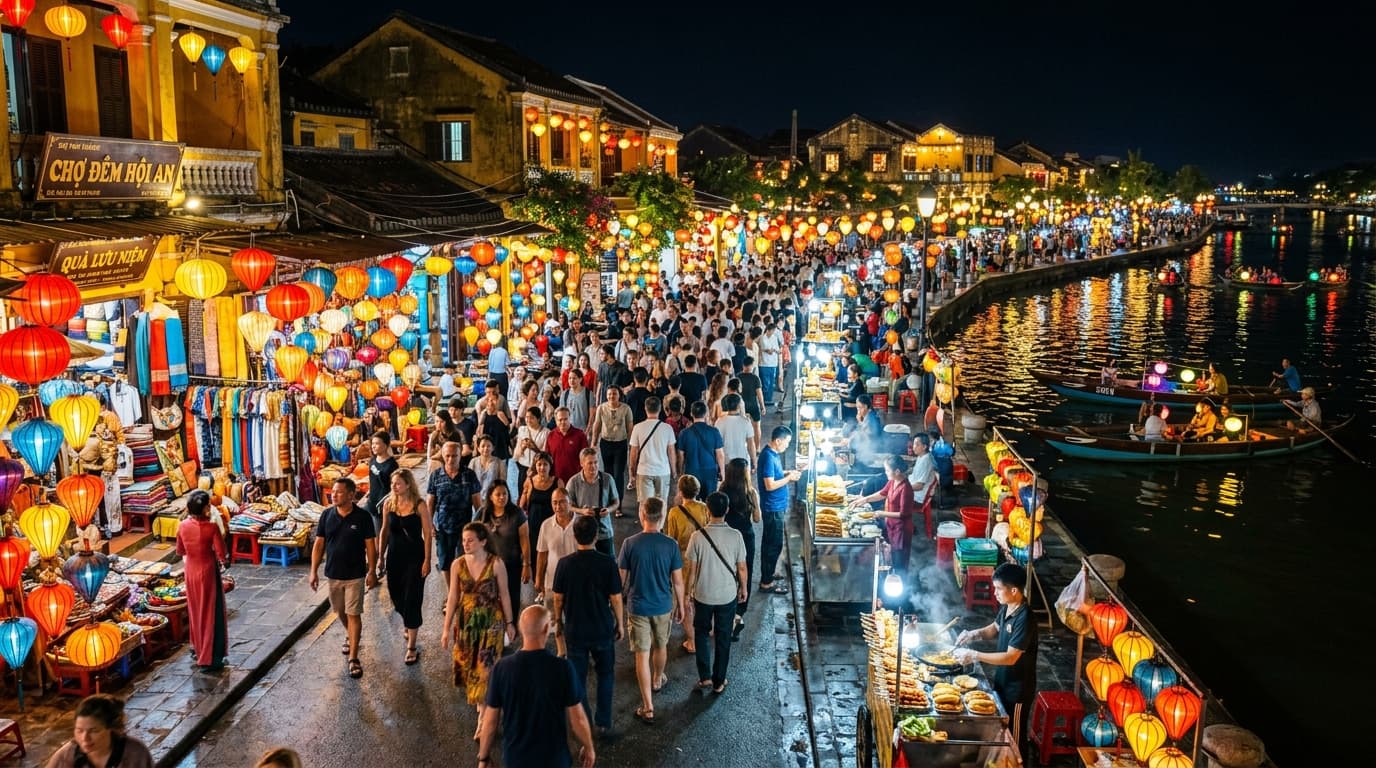
Best Night Markets in Vietnam: What to Eat, Buy, and Expect
The best night markets in Vietnam by city: opening hours, what to buy, what to eat, and how to haggle without getting ripped off.
Plan Your Vietnam Trip
Book hotels, transport, activities, and get connected with an eSIM
Some links are affiliate links. We may earn a commission at no extra cost to you.