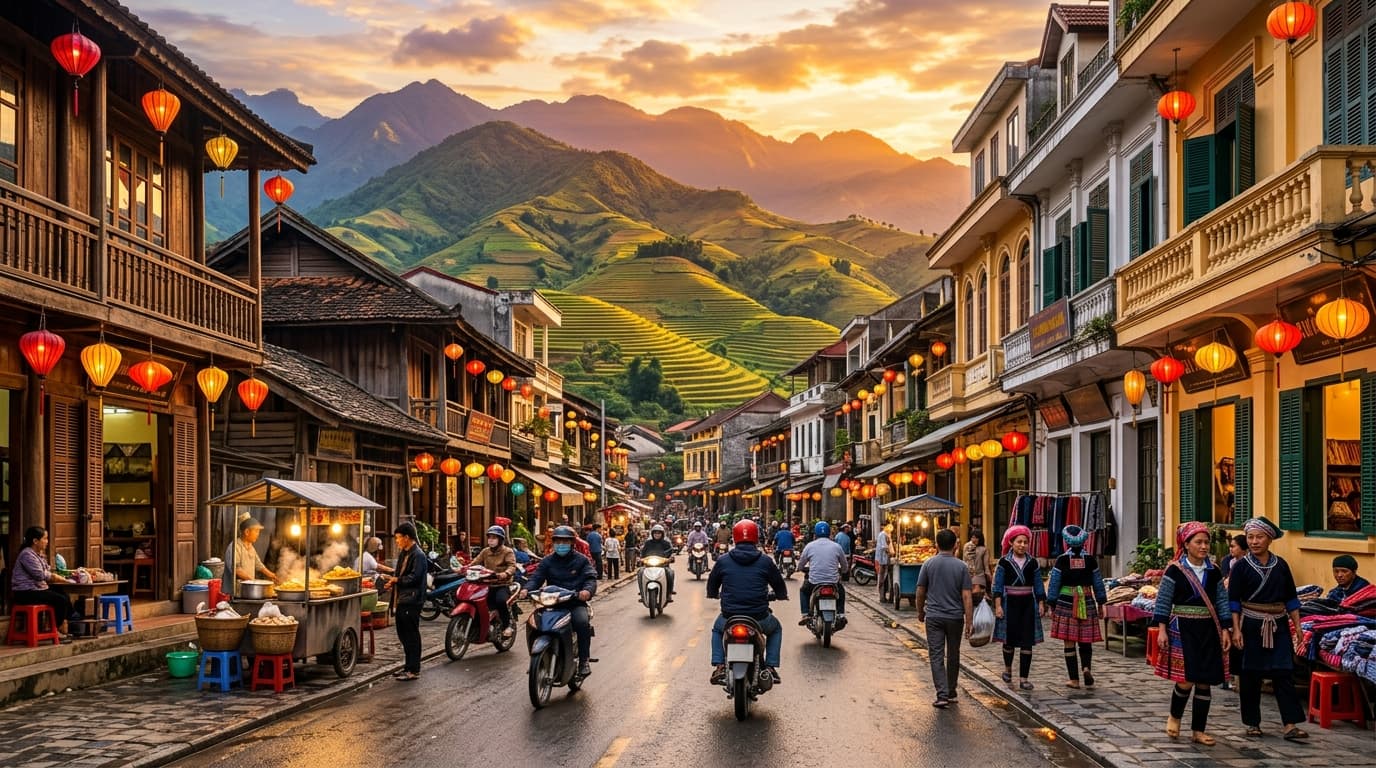
At 1,600 meters above sea level, Sa Pa Vietnam sits wrapped in clouds and mystery—a mountain town where terraced rice paddies tumble down emerald valleys and ethnic minorities have lived for centuries in ways that feel worlds away from Hanoi's chaos. When we first arrived after a 5-hour train journey from the capital, we understood immediately why this place has captivated travelers for over a century.
Key Takeaways
| Question | Answer |
|---|---|
| What is the best time to visit Sa Pa? | September to November and March to May offer clear skies and comfortable temperatures (15-20°C). December to February brings fog and occasional snow; June to August is rainy. |
| How much does it cost? | Budget guesthouses: 150,000-300,000 VND/night; mid-range hotels: 400,000-800,000 VND/night; meals: 30,000-100,000 VND per person; treks: 400,000-1,200,000 VND per day. |
| How do I get there? | Direct overnight train from Hanoi (5-6 hours) or 4-5 hour drive. Train is most popular and atmospheric; book tickets in advance during peak season. |
| Is it safe? | Very safe. Low crime, friendly locals, and well-established tourist infrastructure. Standard precautions apply (watch valuables on trains, use registered guides for treks). |
| What should I book in advance? | Overnight trains (especially Sept-Nov), multi-day treks with established operators, and mid-range hotels during peak season. Day trips and budget stays are flexible. |
| What's the main attraction? | Trekking through hill tribe villages (H'Mong, Dao, Tay) and hiking past rice terraces. Cultural immersion and landscape photography are the draws. |
| How long should I stay? | 2-3 days minimum for a day trek plus town exploration; 4-5 days if doing a multi-day trek or visiting multiple villages. |
1. Getting to Sa Pa: The Journey is Part of the Experience
Sa Pa sits in Lao Cai Province in the far northwest of Vietnam, just 12km from the Chinese border. The most atmospheric way to arrive is via the Hanoi to Sa Pa overnight train, a journey that's become iconic among travelers exploring North Vietnam. The train departs Hanoi around 9:30 PM and arrives in Lao Cai town around 6:00 AM, where a shuttle bus or minivan takes you up the winding mountain road to Sa Pa town (another 45 minutes).
During our time in Hanoi, we took this train twice—once in clear conditions and once in thick fog—and both journeys felt like stepping back into old Indochina. The sleeper cars are basic but comfortable enough, and you'll meet fellow travelers from around the world. Book tickets at least 3-5 days ahead during peak season (September-November, March-May), or use a travel agent to secure your spot.
Train Travel Details
The overnight train is the most popular option, offering a romantic, old-world experience. Hard sleeper berths cost around 400,000-600,000 VND per person depending on season and booking method. Soft sleeper (more comfortable) runs 600,000-900,000 VND. You'll arrive in Lao Cai early morning and transfer to Sa Pa by minibus (included with most bookings or 50,000 VND if arranged separately).
Alternative: Driving from Hanoi
If you prefer flexibility and speed, hire a private driver or join a minibus tour from Hanoi. The 4-5 hour drive covers 320km and winds through stunning scenery—rice paddies, limestone karsts, and small villages. Costs run 800,000-1,500,000 VND for a private car with driver. Some travelers combine this with a visit to Ninh Binh on the way, breaking up the journey.
2. Where to Stay: From Budget Guesthouses to Mountain Retreats
Sa Pa's accommodation ranges from backpacker hostels clustered around the town center to upscale colonial-era hotels perched on hillsides. The town itself is small—you can walk across it in 20 minutes—so location matters less than comfort level and whether you want to be near the main strip or tucked away for peace.
Budget & Mid-Range Options
Guesthouses in the 150,000-400,000 VND range dominate Sa Pa's accommodation landscape. Most offer clean rooms, hot water (essential at this altitude), and friendly staff who can arrange treks. We've stayed in several and found the quality surprisingly consistent. Many include breakfast and can book your train tickets or arrange guides. The trade-off is thin walls and occasional noise from other guests.
Best for solo travelers: Hostels offer dorm beds (80,000-150,000 VND) and social atmospheres. Best for couples: Mid-range guesthouses with private rooms, fireplaces, and views. Pro tip: Booking directly with guesthouses often yields better rates than online platforms, and staff can provide insider tips on which guides are reliable and which restaurants serve authentic local food.
Upscale & Boutique Hotels
If you want to splurge, Sa Pa has several charming colonial-style hotels and modern resorts with spa facilities, restaurants, and mountain views. These run 800,000-2,000,000 VND per night and often include breakfast. Many offer trekking packages bundled with accommodation. We recommend checking recent reviews carefully—some pricier places trade on nostalgia rather than current quality.
Insider tip: Book accommodation with trek operators included. Many guesthouses partner with local guides and offer better rates for multi-day treks when you stay with them.
3. Top Sights & Experiences: Beyond the Town Center
Sa Pa's real magic lies outside town, in the villages and valleys where H'Mong, Dao, and Tay people maintain traditional lifestyles. The town itself—with its colonial church, market, and main square—is pleasant but secondary to the trekking and cultural experiences.
Trekking to Hill Tribe Villages
This is why you came. Trekking in Sa Pa means walking through rice terraces, bamboo forests, and small villages where you'll meet locals, learn about their agriculture and traditions, and see landscapes that look like they've been painted. Day treks (6-8 hours) cost 400,000-700,000 VND per person with a guide; multi-day treks (2-3 days) run 1,000,000-1,500,000 VND including meals and homestay accommodation.
When we trekked with a local H'Mong guide named Sapa (yes, really), he took us through villages most tourists never reach—places where children played in the dirt and women wove indigo cloth. We learned that the H'Mong people migrated from southern China 200+ years ago and still maintain distinct cultural practices. The key is hiring a responsible guide who has genuine connections to the villages, not someone just herding tourists through for photos.
- Cat Cat Village Trek: The most popular day trek, starting from town and descending into the valley. About 6 hours, moderate difficulty. Includes visits to H'Mong villages and a waterfall. Best done early morning to avoid crowds.
- Ta Van Village Trek: Less crowded alternative, visiting Tay and Giay ethnic villages. 6-7 hours, similar difficulty. Often includes a homestay dinner if booked as overnight trek.
- Fansipan Summit Trek: Vietnam's highest peak (3,143m) is a challenging 2-3 day trek from Sa Pa. Requires good fitness and acclimatization. Many prefer the cable car (see below) for views without the strain.
Responsible trekking tip: Choose guides and operators who employ local people, don't encourage giving money/gifts to children, and respect village privacy. Avoid peak hours (10 AM-3 PM) when tour groups flood the trails.
Fansipan Mountain & Cable Car
If trekking isn't your style, the Fansipan cable car offers a 15-minute ride to Vietnam's highest peak with 360-degree views on clear days. The cable car costs around 200,000 VND one-way, 300,000 VND return. On misty days (common even in "good" season), you'll see clouds instead of views—not a waste, but plan accordingly. The summit has a small temple, souvenir shops, and a restaurant.
Sa Pa Town Market
The Saturday and Sunday morning market is where local H'Mong, Dao, and Tay people gather to buy and sell goods. It's colorful, chaotic, and authentic—not staged for tourists. Go early (6-7 AM) before it gets crowded. You'll see traditional clothing, local produce, and crafts. It's a photographer's dream but be respectful; ask before taking photos of people.
4. Food & Drink: Mountain Flavors & Local Specialties
Sa Pa's food scene reflects its mountain location and ethnic diversity. You'll find Vietnamese staples alongside H'Mong and Tay specialties—corn, bamboo shoots, wild greens, and locally raised meat and fish.
Where to Eat in Sa Pa
The town center has dozens of restaurants catering to tourists, but quality varies wildly. We've had excellent meals in simple family-run places and disappointing ones in fancy-looking spots. The best strategy: eat where locals eat, ask your guesthouse staff for recommendations, and don't judge by appearance.
Local specialties to try:
- Thang Co (horse meat stew): A traditional H'Mong dish made with horse meat, organs, and herbs. It's an acquired taste but culturally significant. Available at local restaurants and night markets.
- Corn-based dishes: Roasted corn, corn soup, and corn flour cakes are staples. Try them at the market or local eateries.
- Wild greens and bamboo shoots: Often served stir-fried or in soups. Seasonal and delicious.
- Local fish from mountain streams: Grilled or steamed, often served at homestays during treks.
Drinks & Cafés
Sa Pa's cool mountain air makes it perfect for coffee. Local cafés serve excellent Vietnamese coffee prepared traditionally with condensed milk. Many guesthouses and cafés have fireplaces—perfect for lingering over a cup while watching the mist roll through the valleys. Prices are slightly higher than Hanoi (30,000-50,000 VND for coffee) but still cheap by Western standards.
Pro tip: Homestays during treks often serve simple but delicious meals. The family will cook dinner and breakfast, and it's a chance to eat with locals and learn about their food culture. Don't expect fancy—expect authentic.
5. Neighborhoods & Areas: Where to Explore
Sa Pa town is compact, but different areas have different vibes. Understanding the layout helps you choose where to stay and how to spend your time.
Town Center (Around Sa Pa Square)
This is the tourist hub—hotels, restaurants, tour operators, and the market cluster here. It's convenient and lively, especially on weekends when locals come to town. The colonial church (built in 1930) overlooks the square and is worth a quick visit. The main street has souvenir shops, internet cafés, and ATMs. It's touristy but not aggressively so—you can still find authentic experiences if you look.
When we explored the center on a Saturday morning, we found the market, grabbed coffee, and booked our trek with a local guide—all within an hour. The energy is relaxed compared to Hanoi or Ho Chi Minh City.
Outskirts & Hillside Hotels
Hotels on the edges of town offer quieter settings and better views but require short walks or motorbike rides to reach restaurants and shops. These areas are perfect if you want peace and don't mind the slight inconvenience. Many upscale hotels are positioned here, taking advantage of the panoramic vistas.
Villages Around Sa Pa
The real Sa Pa experience happens in the villages within trekking distance. Cat Cat, Ta Van, and other settlements are where you'll meet local people, see traditional houses, and understand how life actually works in the mountains. These aren't museums—they're living communities, so approach with respect and genuine curiosity.
6. Best Time to Visit: Seasons & Weather
Sa Pa's weather is dramatic and changes seasonally. At 1,600m elevation, it's significantly cooler than lowland Vietnam—expect temperatures 10-15°C cooler than Hanoi.
Peak Season: September-November & March-May
Clear skies, comfortable temperatures (15-20°C), and excellent visibility for trekking and photography. September-November is drier and slightly warmer; March-May is cooler but also drier. These months see the most tourists, higher prices, and crowded treks. Book accommodation and trains in advance.
Winter: December-February
Temperatures drop to 5-10°C, and fog is common—sometimes so thick you can't see 10 meters ahead. Snow occasionally falls but rarely accumulates. Hotels are less crowded, prices drop 20-30%, and the misty atmosphere has its own beauty. The downside: poor visibility for trekking and photography. Some travelers love this season for its moody, atmospheric quality.
Summer: June-August
Hot and very rainy. Temperatures reach 20-25°C (still cool by Vietnamese standards), but frequent downpours make trekking muddy and slippery. Landslides occasionally close trails. Accommodation is cheap and uncrowded, but weather is unpredictable. Only recommended if you're flexible and don't mind rain.
Our recommendation: Visit September-November if you want clear views and don't mind crowds. Visit December-February if you want solitude and atmospheric fog. Avoid June-August unless you have flexible dates and like rain.
7. Practical Information: Money, Language & Safety
Money & Costs
Sa Pa is cheap by Western standards but slightly pricier than rural Vietnam due to tourism. Budget travelers spend 300,000-500,000 VND daily (accommodation + food + activities); mid-range travelers spend 800,000-1,500,000 VND. ATMs are available in town, and most guesthouses accept cash or cards.
Sample daily costs:
- Guesthouse: 200,000 VND
- Meals (3): 100,000 VND
- Day trek with guide: 500,000 VND
- Coffee/snacks: 50,000 VND
- Total:
850,000 VND ($35 USD)
Language & Communication
English is spoken in tourist areas—hotels, restaurants, and tour operators. Guides speak English, French, or both. In villages, you'll encounter locals who speak Vietnamese, H'Mong, or Tay. Learning a few Vietnamese phrases helps. Mobile networks work well; consider a Vietnamese SIM card or eSIM for data and calls.
Safety
Sa Pa is very safe. Violent crime is virtually non-existent, and petty theft is rare. Standard precautions apply: watch valuables on trains, don't leave belongings unattended, and use registered guides for treks. The main risks are altitude-related (headaches, fatigue) and weather (slippery trails, hypothermia in winter). Acclimatize by arriving a day early and taking it easy on your first day.
8. Responsible Tourism: Respecting Local Communities
Sa Pa's ethnic minorities have lived in these mountains for centuries. Tourism brings economic benefits but also cultural pressures. Here's how to travel responsibly:
Supporting Local Guides & Homestays
Hire guides from the communities you're visiting. Established operators employ local H'Mong, Dao, and Tay guides who earn fair wages and have genuine knowledge. Ask your guesthouse for recommendations or contact guides directly. Multi-day treks with homestays directly support families and are often more authentic than day treks.
Respecting Cultural Boundaries
Don't photograph people without permission. Don't give money or gifts to children—it encourages dependency and disrupts education. Don't expect villages to perform traditions for you. Respect dress codes (cover shoulders and knees in villages) and ask before entering homes or sacred spaces.
Environmental Considerations
Stick to established trails to prevent erosion. Pack out all trash. Don't pick plants or disturb wildlife. Support eco-friendly guesthouses and tour operators. The mountains are fragile ecosystems; tourism can damage them if not managed carefully.
Did You Know? The H'Mong people of Sa Pa have maintained their distinct culture and language for over 200 years despite pressure to assimilate. Tourism has become a vital income source, but it also threatens traditional practices. Responsible tourism helps preserve both livelihoods and culture.
9. Day Trip & Multi-Day Trek Itineraries
1-Day Sa Pa Itinerary
Morning (6:00-9:00 AM): Arrive by train or car. Check into guesthouse, have breakfast, book a day trek with a local guide.
Mid-morning (9:00 AM-12:00 PM): Start trek to Cat Cat Village or Ta Van. Walk through rice terraces, visit local homes, learn about daily life. Stop for water and snacks.
Afternoon (12:00-3:00 PM): Lunch at a village home or simple restaurant. Continue trekking, visit a waterfall or second village.
Late afternoon (3:00-5:00 PM): Return to town. Rest, shower, explore the market or town square.
Evening (5:00 PM+): Dinner at a local restaurant. Stroll around town, enjoy coffee, watch the sunset from a hillside café.
3-Day Sa Pa Itinerary
Day 1: Arrive by train/car (6:00 AM). Breakfast, rest, explore town center and market. Day trek to Cat Cat Village (6-8 hours). Dinner and early sleep.
Day 2: Multi-day trek begins. Hike to Ta Van or another village, stay in a homestay. Dinner with the family, evening conversation and cultural exchange.
Day 3: Morning trek to another village or waterfall. Return to Sa Pa by early afternoon. Final exploration of town, shopping for souvenirs, dinner. Evening train back to Hanoi or stay another night.
Alternative Day 3: Skip the return trek. Take the Fansipan cable car for views, visit the market again, relax in a café, and catch the evening train.
10. Practical Tips for Your Sa Pa Visit
What to Pack
- Warm layers: Fleece jacket, long pants, warm socks. Temperatures drop significantly, especially at night.
- Rain gear: Waterproof jacket and pants, even in dry season. Mist and sudden showers are common.
- Hiking boots: Essential for trekking. Trails are muddy and slippery.
- Sun protection: Sunscreen, hat, sunglasses. High altitude means stronger UV rays.
- Medications: Altitude sickness remedies (ibuprofen, ginger), blister treatment, basic first aid.
- Toiletries: Bring what you need; limited selection in town.
Altitude Sickness
Sa Pa is at 1,600m, which can cause mild altitude sickness (headache, fatigue, nausea) in some people. Acclimatize by arriving a day early, drinking plenty of water, and avoiding alcohol. Symptoms usually pass within 24 hours. Serious altitude sickness is rare at this elevation.
Train Booking Tips
Book overnight trains 5-7 days in advance during peak season. Use a travel agent, your guesthouse, or online platforms. Confirm your booking 24 hours before departure. Bring a light blanket or sleeping bag—train blankets are thin. Earplugs help with noise from other passengers and the train itself.
Did You Know? The Hanoi-Sa Pa train route opened in 1910 during French colonial rule. The line was built to connect Hanoi with the mountain resort town and remains one of Vietnam's most scenic railway journeys.
Source: Lonely Planet Vietnam
Photography Tips
Early morning light (6:00-8:00 AM) is best for photographing rice terraces and villages. Mist adds atmosphere but reduces visibility. Bring a tripod for landscape shots. Always ask permission before photographing people. The market is a photographer's paradise—go early and be respectful.
Frequently Asked Questions
How do I avoid tourist traps in Sa Pa?
Eat where locals eat, hire guides recommended by your guesthouse, and book treks directly with guides or established operators rather than random touts. Avoid restaurants with laminated menus and pictures of food. Ask other travelers for recommendations. Most traps are minor (overpriced meals, mediocre guides) rather than serious scams.
Can I trek to Sa Pa from other nearby towns?
Yes. Ha Long is 3-4 hours away by car; Hanoi is 5-6 hours by train. Some travelers combine Sa Pa with visits to nearby ethnic villages or Ha Long Bay. The region is part of Northwest Vietnam and offers multiple trekking and cultural experiences.
What's the difference between H'Mong, Dao, and Tay people?
These are distinct ethnic groups with different languages, clothing, and traditions. H'Mong wear indigo-dyed clothing and practice agriculture on steep slopes. Dao people (also called Zao) wear red turbans and have unique embroidery. Tay people are lowland farmers with closer ties to Kinh Vietnamese culture. Guides can explain differences during treks.
Is it worth staying in a homestay during a trek?
Absolutely. Homestays offer authentic cultural exchange, simple but delicious food, and direct support to local families. You'll sleep on a basic bed, share a bathroom, and eat with the family. It's not luxurious but deeply rewarding. Most homestays are clean and safe; ask your guide about conditions beforehand.
Can I visit Sa Pa in winter?
Yes, but expect fog, cold temperatures (5-10°C), and occasional snow. Visibility for trekking and photography is poor, but the atmosphere is moody and beautiful. Fewer tourists, lower prices, and a quieter experience. Only recommended if you're flexible about weather and don't mind mist.
How do I get from Sa Pa to other parts of Vietnam?
Return to Hanoi by train or car, then fly or take buses to other destinations. Most travelers spend 2-3 days in Sa Pa, then continue to Ha Long, Hanoi, or Da Lat in the Central Highlands. The train journey back to Hanoi is as scenic as the journey there.
What should I do if I have altitude sickness?
Rest, drink water, and avoid alcohol. Most symptoms pass within 24 hours. Ibuprofen helps with headaches. If symptoms worsen (severe headache, shortness of breath, confusion), descend to lower elevation and seek medical help. Serious altitude sickness is rare at Sa Pa's elevation, but it's worth taking precautions.
Conclusion
Sa Pa Vietnam rewards travelers willing to make the journey. The overnight train from Hanoi, the mist-wrapped mountains, the terraced rice paddies, and the warmth of local guides and homestay families create an experience that lingers long after you leave. Whether you spend 2 days or a week, Sa Pa offers trekking, cultural immersion, and mountain beauty that justify the effort to get there.
The town itself is pleasant but secondary—the real magic happens on the trails, in the villages, and in conversations with local people who've lived in these mountains for generations. Come with respect, curiosity, and a willingness to slow down. Bring warm clothes, good boots, and an open mind.
For more inspiration on exploring North Vietnam, check out our complete North Vietnam travel guide. And if you're planning a broader Vietnam itinerary, our Vietnam travel resources cover everything from Hanoi to the Mekong Delta.
Some links in this guide are affiliate links — if you book through them, we earn a small commission at no extra cost to you, which helps us keep this site running.
Safe travels, and enjoy the mountains.
Have you been to Sa Pa? Share your experience in the comments below—we'd love to hear your stories and tips for future travelers.
Bronnen & Referenties
Dit artikel is gebaseerd op eigen ervaring en geverifieerd met de volgende officiële bronnen:

Go2Vietnam Team
Vietnam verkennen sinds 2020 | 40+ provincies bezocht | Maandelijks bijgewerkt
Wij zijn een team van reisschrijvers en Vietnam-liefhebbers die het land het hele jaar door verkennen. Onze gidsen zijn gebaseerd op eigen ervaring, lokale kennis en geverifieerde officiële bronnen.
Meer over ons →Anderen lezen ook
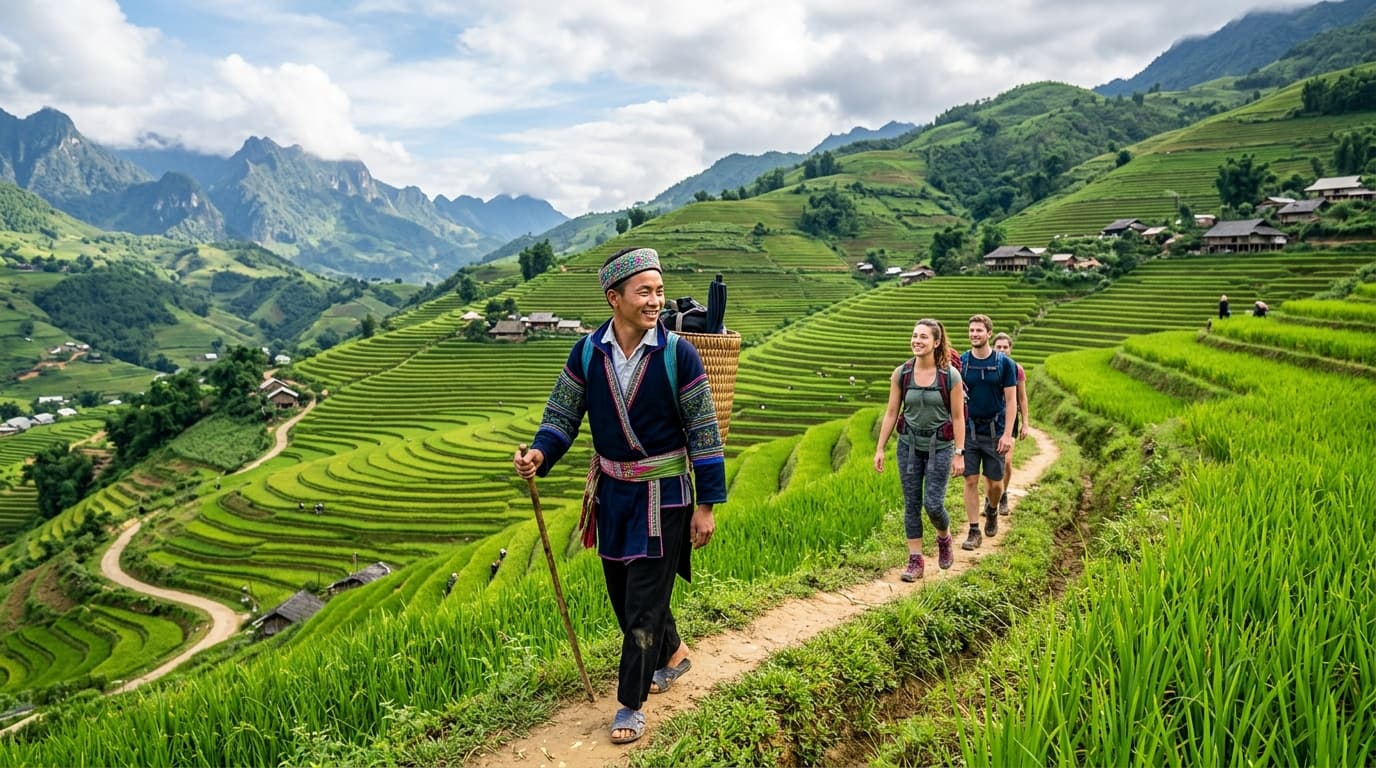
Sa Pa Trekking Guide: Routes, Homestays & Best Season
Complete Sa Pa trekking guide with routes, homestay options, seasonal tips & honest operator comparisons. Trek Vietnam's misty mountains like a local.

Vietnam E-Visa 2026: How to Apply, Costs & Processing Time
Complete guide to Vietnam e-visa in 2026: step-by-step application, exact costs, processing times, and common mistakes to avoid.

Vietnam E-Visa 2026: How to Apply, Costs & Processing Time
Complete guide to Vietnam e-visa 2026: step-by-step application, exact costs, processing times, and eligibility. Apply online in minutes.
Vietnam E-Visa 2026: How to Apply, Costs & Processing Time
Complete guide to Vietnam E-Visa 2026: step-by-step application process, exact costs, processing times, and everything you need to know before traveling.
Plan Your Vietnam Trip
Book hotels, transport, activities, and get connected with an eSIM
Some links are affiliate links. We may earn a commission at no extra cost to you.