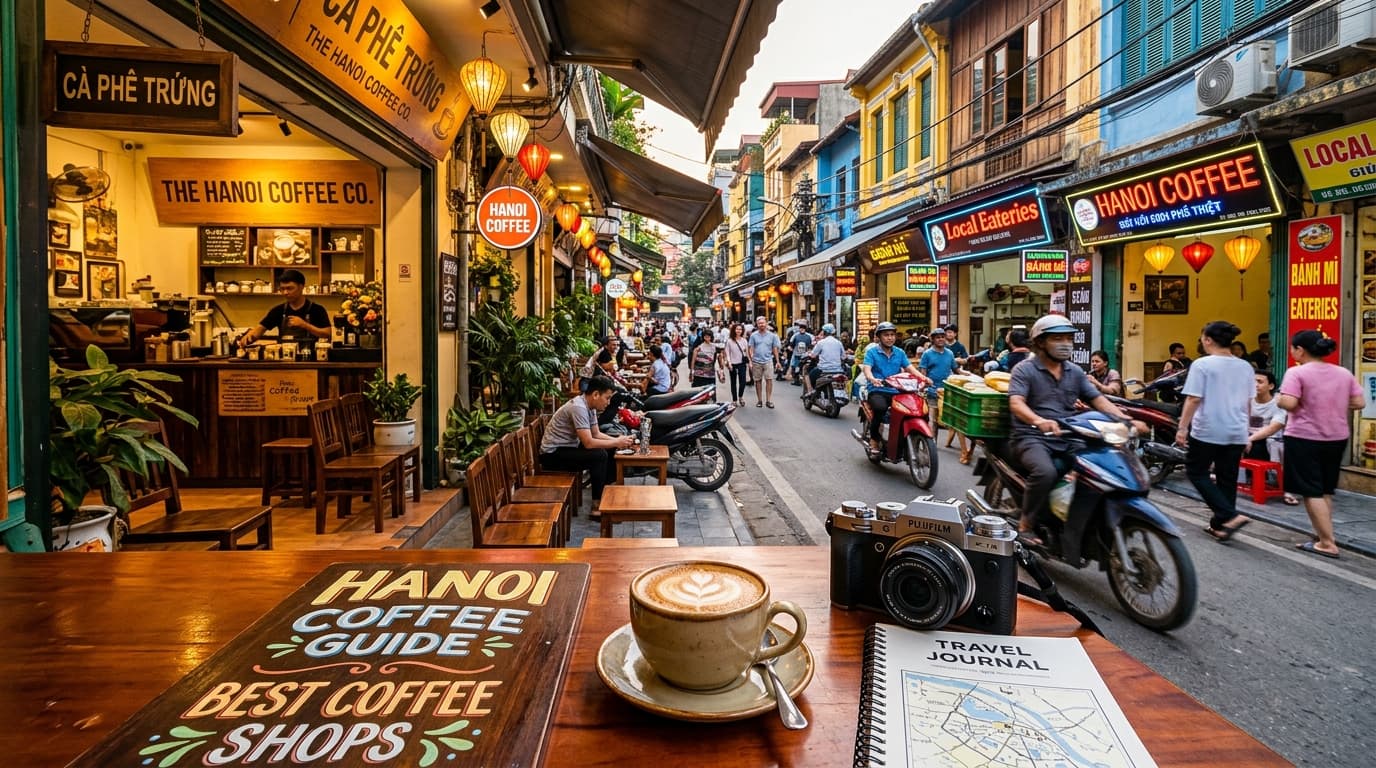
Best Coffee Shops in Hanoi: From Egg Coffee to Ca Phe Sua Da
There's something almost sacred about coffee culture in Hanoi. Sit in any café tucked into the Old Quarter's narrow streets, and you'll witness a ritual that's been perfected over generations—the slow drip of a metal filter, the rich aroma of dark roast, the patient wait for that first sip. Vietnamese coffee, particularly Hanoi's iconic varieties, isn't just a morning beverage; it's a window into the city's soul, blending French colonial heritage with distinctly Vietnamese innovation.
Key Takeaways
| Question | Answer |
|---|---|
| What is the most famous Hanoi coffee? | Egg coffee (cà phê trứng) and iced milk coffee (cà phê sữa đá) are the two most iconic drinks |
| How much does coffee cost? | VND 15,000–50,000 ($0.60–$2 USD) depending on the café and drink type |
| Best time to visit coffee shops? | Early morning (6–8 AM) for locals, afternoon (3–5 PM) for a relaxed vibe |
| Where are the best coffee areas? | Old Quarter, Hoan Kiem Lake area, and French Quarter neighborhoods |
| Do I need to book in advance? | No—most cafés are walk-in friendly, though popular spots can get crowded during peak hours |
| What should I try first? | Start with egg coffee (cà phê trứng) at a traditional café, then explore iced milk coffee variations |
1. Understanding Vietnamese Coffee Culture
Vietnamese coffee is a product of history, geography, and ingenuity. When the French colonized Vietnam in the 19th century, they introduced coffee plantations to the Central Highlands, transforming the nation into one of the world's largest coffee producers. Today, Vietnam produces roughly 25% of the world's coffee supply, yet the coffee culture in Hanoi tells a uniquely local story.
What makes Vietnamese coffee distinctive is the brewing method and the beans themselves. Vietnamese coffee is typically made from robusta beans—darker, more bitter, and more caffeinated than arabica varieties. The traditional metal drip filter (called a "phin") brews coffee slowly, concentrating flavors and creating a rich, almost syrupy cup. When we explored the Old Quarter's café culture during our time in Hanoi, we discovered that this isn't just about caffeine; it's about community, patience, and the art of slowing down.
The Phin: Vietnam's Iconic Brewing Method
The metal phin filter is as essential to Vietnamese coffee as the espresso machine is to Italian culture. This simple device—a small cylindrical chamber with a perforated plate—sits directly on your cup and brews coffee through gravity alone. The process takes 5–10 minutes, forcing you to pause and wait. During our visits to neighborhood cafés, we watched locals read newspapers, chat with friends, or simply sit in silence while their coffee dripped.
The phin method extracts maximum flavor from the beans, creating a concentrated brew that's typically served with sweetened condensed milk (creating ca phe sua da, or iced milk coffee) or with hot water for a lighter version. The ritual of watching the drip, hearing the gentle patter of liquid hitting the cup, is part of the experience that makes Hanoi's coffee culture so compelling.
Colonial Legacy Meets Modern Innovation
Hanoi's coffee scene is a fascinating blend of French colonial tradition and Vietnamese entrepreneurship. The French left behind a love of café culture—the idea of lingering over a drink, watching the street, engaging in conversation. Vietnamese entrepreneurs transformed this into something entirely their own: egg coffee (cà phê trứng), a creamy, luxurious drink invented in the 1940s when fresh milk was scarce, is now one of the city's most iconic beverages.
Did You Know? Vietnam produces approximately 25% of the world's coffee supply, with the Central Highlands accounting for the majority of production. The country's coffee industry generates over $3 billion annually in exports.
2. Egg Coffee (Cà Phê Trứng): Hanoi's Most Famous Export
Egg coffee is Hanoi's most iconic beverage, and trying it is non-negotiable for any visitor. This creamy, custard-like drink combines dark Vietnamese coffee with a whipped mixture of egg yolks and sweetened condensed milk, creating a dessert-like experience that's simultaneously rich and surprisingly balanced.
The drink was invented in the 1940s by a bartender named Giang at the Sofitel Legend Metropole hotel (then the French colonial Hotel Metropole). When fresh milk became scarce during wartime, he experimented with egg yolks—a protein-rich substitute that created a luxurious, creamy texture. The drink became so popular that it eventually spread throughout Hanoi, and today, dozens of cafés claim to serve the "original" version.
How Egg Coffee Is Made
The preparation is theatrical and delicious. A server whisks together egg yolks, sweetened condensed milk, and sometimes a touch of butter or cheese until the mixture becomes light, fluffy, and mousse-like. This is then spooned onto a cup of hot, dark Vietnamese coffee. When you drink it, you get the intense bitterness of the coffee balanced against the sweet, creamy richness of the egg mixture—it's like drinking coffee and eating tiramisu simultaneously.
When we visited traditional egg coffee cafés in Hanoi's Old Quarter, we noticed that locals often sip the drink slowly, sometimes taking 30 minutes to finish a single cup. The egg mixture gradually melts into the coffee, changing the flavor profile as you drink. This isn't a grab-and-go beverage; it's a meditation.
Where to Find the Best Egg Coffee
- Giang Café — The original and most famous location, where the drink was allegedly invented. Expect queues, especially in the morning, but the authenticity is worth it.
- Café Giang — Multiple locations throughout Hanoi, offering consistent quality and a less chaotic atmosphere than the original.
- Local Old Quarter cafés — Nearly every small café in the Old Quarter serves egg coffee. Prices are typically VND 25,000–35,000 ($1–1.40 USD), and the quality is remarkably consistent.
Compare hotels, resorts, and guesthouses across Vietnam with free cancellation on most bookings.
Search Hotels on Booking.com → Scan me
3. Ca Phe Sua Da: The Iced Milk Coffee Essential
If egg coffee is Hanoi's luxury drink, ca phe sua da—iced milk coffee—is its everyday staple. This is the drink you'll see in the hands of every commuter, street vendor, and office worker in the city. It's simple, refreshing, and perfectly suited to Hanoi's hot, humid climate.
The preparation is straightforward: dark Vietnamese coffee brews through a phin filter directly into a glass filled with sweetened condensed milk (about 2–3 tablespoons). Once the coffee finishes dripping, you stir the mixture and pour it over ice. The result is a sweet, creamy, intensely caffeinated beverage that's both dessert and energy boost.
The Art of Ordering Ca Phe Sua Da
Compare hotels, resorts, and guesthouses across Vietnam with free cancellation on most bookings.
Search Hotels on Booking.com →
Scan me
When ordering like a local, you have options. "Cà phê sữa đá" is the standard iced version. If you want it hot, ask for "cà phê sữa nóng." If you prefer less sweetness, ask for "ít đường" (less sugar). Some cafés will also offer variations like cà phê sữa cot dua (coffee with coconut milk) or cà phê muối (salt coffee, a northern specialty that's gaining popularity).
During our time in Hanoi, we learned that the quality of ca phe sua da depends entirely on the coffee beans and the condensed milk used. Better cafés source high-quality robusta beans and use premium condensed milk brands. The difference is noticeable—a well-made ca phe sua da is smooth and balanced, while a poorly made version can taste cloying or bitter.
Regional Variations
- Northern Style — Stronger, darker roast with generous sweetened condensed milk. Often served in a glass with a metal phin still dripping.
- Southern Style — Slightly lighter roast, sometimes with a touch of salt or even a pinch of cinnamon. More milk is typical.
- Hanoi Specialty — The original style, emphasizing the bitterness of the coffee against the sweetness of the milk.
Skip the hassle — book Vietnam day trips, cooking classes, and experiences in advance with instant confirmation.
Browse Activities on Klook → Scan me
4. Specialty Coffee Shops: Modern Hanoi's Third Wave
While traditional egg coffee and ca phe sua da remain iconic, Hanoi's coffee scene has evolved dramatically over the past decade. A new generation of specialty coffee roasters has emerged, bringing single-origin beans, precise brewing techniques, and café culture that rivals any major global city.
These modern cafés—often run by young Vietnamese entrepreneurs who've trained internationally—focus on coffee quality, bean sourcing, and the craft of brewing. Many roast their own beans, often sourcing from Vietnam's Central Highlands or partnering with farms in Da Lat and other highland regions.
What to Expect at Modern Specialty Cafés
- Single-Origin Beans — Look for cafés highlighting beans from specific regions like Buon Ma Thuot or Lam Dong Province. These coffees often have distinct flavor profiles—some fruity, some earthy, some with chocolate notes.
- Precision Brewing — Expect pour-overs, AeroPress, and Chemex brewing methods alongside traditional phins. Baristas can explain the differences and help you choose.
- Comfortable Seating — Unlike traditional street-side cafés, modern specialty shops offer air-conditioned spaces, WiFi, and seating conducive to working or lingering.
- Higher Prices — Expect to pay VND 40,000–80,000 ($1.60–$3.20 USD) for a specialty coffee, compared to VND 15,000–30,000 for traditional varieties.
During our exploration of Hanoi's newer neighborhoods like Tay Ho and the French Quarter, we found that specialty cafés often double as cultural spaces—hosting art exhibitions, live music, or book clubs. They're less about the quick caffeine fix and more about creating community.
5. Traditional Street-Side Cafés: The Real Hanoi Experience
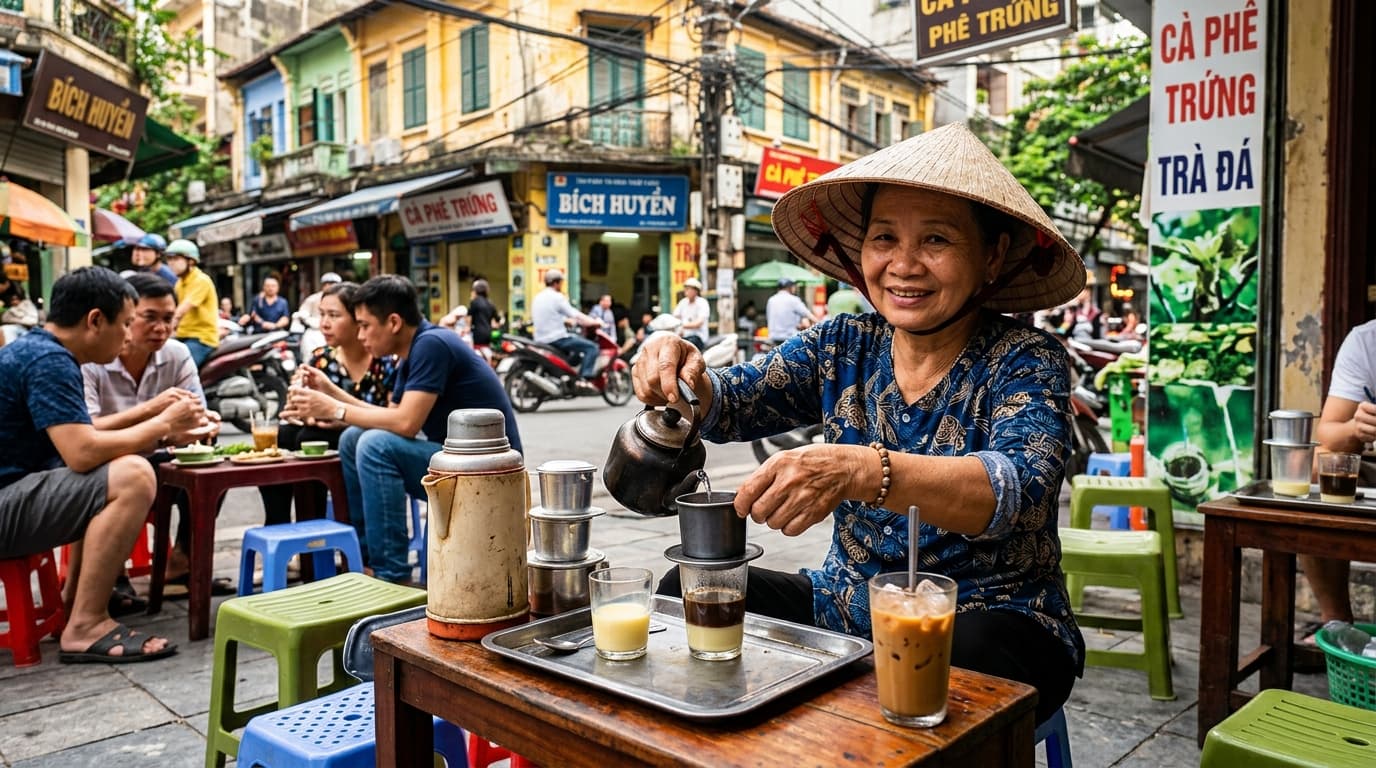
If you want to experience authentic Hanoi coffee culture, skip the polished specialty shops and head to a traditional street-side café. These are the places where locals spend hours, where the furniture might be plastic stools and the "counter" is a folding table, where a cup of coffee costs less than a dollar and the experience is priceless.
Street-side cafés are typically found on narrow sidewalks throughout the Old Quarter, French Quarter, and residential neighborhoods. They open early (often by 6 AM) and serve a steady stream of locals before work, students between classes, and retirees with nowhere else to be. The coffee is always good—sometimes exceptional—and the people-watching is unbeatable.
How to Find and Order at Street Cafés
Look for a small storefront or sidewalk setup with a phin filter visible, a few plastic stools, and locals lingering over small cups. Point to what you want or use these key phrases:
- "Cà phê đen đá" — Black iced coffee (no milk)
- "Cà phê sữa đá" — Iced milk coffee
- "Cà phê nóng" — Hot coffee
- "Cà phê trứng" — Egg coffee
- "Ít đường" — Less sugar
- "Không đường" — No sugar
When we sat at a plastic stool on a Hanoi side street at 7 AM, nursing a ca phe sua da for VND 20,000, watching motorbikes stream past and vendors set up their morning stalls, we understood why locals cherish these spaces. They're democratic, unpretentious, and deeply woven into the city's rhythm.
Arrive early (before 8 AM) at popular street cafés to experience the morning rush and see how locals start their day. You'll get fresher coffee and a more authentic atmosphere.
6. Coffee Shop Neighborhoods: Where to Explore
Old Quarter: The Heart of Hanoi Coffee Culture
The Old Quarter (Hoan Kiem area) is ground zero for Hanoi's coffee scene. Narrow streets lined with centuries-old shophouses have been converted into cafés, many of which have become tourist institutions. While some are admittedly touristy, others remain genuinely excellent and frequented by locals.
The advantage of the Old Quarter is density—you can visit 5–10 different cafés in a morning, each offering a different style or specialty. The disadvantage is crowds, especially during peak tourist season. Prices are slightly higher than in residential neighborhoods (expect VND 25,000–40,000 for traditional drinks), but the experience and people-watching are unmatched.
French Quarter: Colonial Elegance Meets Modern Coffee
Skip the hassle — book Vietnam day trips, cooking classes, and experiences in advance with instant confirmation.
Browse Activities on Klook →
Scan me
The French Quarter (around Hoan Kiem Lake and extending toward the Red River) offers a different vibe. Here, you'll find cafés in converted colonial villas, tree-lined streets, and a more relaxed atmosphere. This area is less touristy than the Old Quarter but still accessible and walkable.
Many specialty coffee shops have opened in the French Quarter over the past 5 years, offering high-quality single-origin beans and modern brewing methods. It's an excellent area to explore if you want to combine coffee with a stroll around Hanoi's most beautiful neighborhoods.
Tay Ho: Trendy Cafés and Lake Views
Tay Ho, a neighborhood on the western side of Hanoi near Tay Ho Lake, has emerged as a hub for young professionals and digital nomads. The cafés here are modern, well-designed, and often offer excellent WiFi—making it ideal if you want to work while enjoying your coffee.
Prices are higher than in traditional neighborhoods (VND 50,000–100,000 / $2–$4 USD), but the quality and atmosphere are exceptional. Many cafés here source beans from Vietnam's highlands and offer brewing methods you won't find in street-side shops.
7. Coffee Varieties and How to Order Like a Local
Vietnamese coffee culture has evolved beyond just black coffee and milk coffee. Here's a guide to the main varieties you'll encounter:
| Coffee Type | Description | Best For | Typical Price |
|---|---|---|---|
| Cà phê đen đá | Black iced coffee, no milk | Coffee purists, those who want to taste the bean | VND 15,000–25,000 |
| Cà phê sữa đá | Iced coffee with sweetened condensed milk | Most people; sweet, creamy, refreshing | VND 20,000–30,000 |
| Cà phê trứng | Hot coffee topped with whipped egg yolk and condensed milk | Special occasions; dessert lovers | VND 30,000–50,000 |
| Cà phê muối | Coffee with a pinch of salt (northern specialty) | Those seeking unique flavors; reduces bitterness | VND 20,000–30,000 |
| Cà phê sữa cot dua | Coffee with coconut milk | Those avoiding dairy; tropical flavor preference | VND 25,000–35,000 |
| Cà phê nóng | Hot coffee with or without milk | Winter months; those who prefer hot beverages | VND 15,000–30,000 |
Customization Tips
Vietnamese cafés are flexible with customization. You can adjust:
- Sugar level — "Ít đường" (less sugar), "không đường" (no sugar), or "nhiều đường" (more sugar)
- Milk amount — "Ít sữa" (less milk) or "nhiều sữa" (more milk)
- Temperature — "Nóng" (hot), "đá" (iced), or "ấm" (warm)
- Strength — Some cafés will adjust the coffee-to-water ratio if you ask
During our time ordering coffee across Hanoi, we found that baristas appreciate when you speak Vietnamese, even if just a few words. It shows respect for the culture and often results in a better experience.
Discover the best guided tours and activities in Hanoi, Ho Chi Minh City, Da Nang and beyond.
Browse Tours on GetYourGuide → Scan me
8. Coffee and Food Pairings: The Complete Café Experience
In Hanoi, coffee isn't consumed in isolation. It's paired with food, conversation, and the rhythm of the city. Understanding traditional pairings enhances the experience.
Traditional Breakfast Pairings
- Bánh mì — The iconic Vietnamese sandwich pairs beautifully with black coffee or ca phe sua da. The richness of the coffee balances the savory, spicy sandwich.
- Bánh cuốn — Delicate steamed rice rolls with pork and shrimp are often enjoyed with a hot coffee in the morning.
- Cơm tấm — Broken rice with grilled pork or egg is a southern specialty increasingly popular in Hanoi, paired with iced coffee.
Afternoon Café Culture
Hanoi's afternoon café culture (around 3–5 PM) is distinct from morning coffee. This is when locals take a break, often ordering a lighter drink—sometimes just iced coffee with minimal milk—and a snack. You'll see:
- Bánh (cakes and pastries) — French-influenced pastries, Vietnamese sponge cakes, or egg custard tarts
- Bánh flan — Caramel custard, a French colonial legacy
- Fresh fruit — Seasonal fruits like dragon fruit, mango, or passion fruit
When we visited a traditional café in Hanoi's residential areas during the afternoon, we noticed that the pace was entirely different from morning rush. People lingered, read, worked on laptops, or simply sat in silence. The coffee was the excuse; the experience was the point.
Did You Know? The Vietnamese consume approximately 3 kg of coffee per person annually, making Vietnam one of the world's highest per-capita coffee consumers despite being a major exporter.
Source: Lonely Planet Vietnam
9. Seasonal and Regional Variations
Seasonal Drinking Patterns
Hanoi's climate dramatically influences coffee consumption. During the hot, humid summer months (May–September), iced coffee dominates. During the cooler winter months (November–February), hot coffee and egg coffee become more popular. Spring and autumn are ideal times to experience the full range of Vietnamese coffee culture.
Regional Influences on Hanoi's Coffee Scene
Compare car rental prices across Vietnam. Pick up at airports or city locations with flexible cancellation.
Compare Car Rentals →
Scan me
While Hanoi is in the north, the city's coffee culture has been influenced by all regions of Vietnam:
- Northern traditions — Strong, dark roasts; emphasis on the coffee's bitterness; salt coffee as a specialty
- Central Highland influence — Single-origin beans from Da Lat and Buon Ma Thuot; specialty roasters sourcing directly from farms
- Southern innovations — Lighter roasts; more milk; experimental additions like cinnamon or cardamom
During our travels through Vietnam, we noticed that Hanoi's coffee shops increasingly feature beans from across the country, allowing you to taste regional differences in a single city.
10. Practical Tips for Coffee Lovers Visiting Hanoi
Best Times to Visit Coffee Shops
- Early morning (6–8 AM) — Experience the authentic local rush. Coffee is freshest, atmosphere is energetic, and you'll see real Hanoi.
- Mid-morning (9–11 AM) — Still busy but less chaotic. Good for leisurely coffee and people-watching.
- Afternoon (3–5 PM) — The secondary café rush. Quieter than morning but still lively. Ideal for sitting and working.
- Evening (6–8 PM) — Some cafés close, but those that stay open offer a more intimate atmosphere.
Budget Considerations
- Street-side cafés — VND 15,000–30,000 ($0.60–$1.20 USD) for traditional coffee
- Mid-range cafés — VND 30,000–50,000 ($1.20–$2 USD) for specialty drinks
- Modern specialty shops — VND 50,000–100,000 ($2–$4 USD) for single-origin or specialty preparations
What to Bring
- Small cash — Many street cafés don't accept cards. Have small denominations ready.
- Patience — The phin brewing method takes time. Embrace the wait.
- Curiosity — Ask baristas about their beans, brewing methods, and recommendations. Most are passionate about coffee and love sharing knowledge.
Get a Vietnam eSIM before you land. No physical SIM needed — activate instantly on your phone.
Get Saily eSIM for Vietnam → Scan me
Frequently Asked Questions
What is the difference between egg coffee and regular ca phe sua da?
Egg coffee (cà phê trứng) is topped with a whipped mixture of egg yolks and sweetened condensed milk, creating a creamy, custard-like texture. Ca phe sua da is simply iced coffee mixed with sweetened condensed milk. Egg coffee is richer, sweeter, and more dessert-like, while ca phe sua da is lighter and more refreshing. Egg coffee is typically served hot, while ca phe sua da is served cold.
Where can I find the original egg coffee in Hanoi?
The original egg coffee is claimed to have been invented at the Sofitel Legend Metropole hotel (formerly Hotel Metropole) in the 1940s by a bartender named Giang. Today, Giang Café in the Old Quarter is the most famous location serving this drink, though many other cafés throughout Hanoi offer excellent versions. The "original" is debated, but Giang Café is the most historically significant.
Is Vietnamese coffee stronger than other types of coffee?
Yes, Vietnamese robusta beans are naturally higher in caffeine than arabica beans commonly used in Western coffee. Additionally, the phin brewing method extracts more caffeine and flavor compounds, resulting in a more concentrated, stronger cup. A typical serving of Vietnamese coffee contains more caffeine than an equivalent amount of American drip coffee.
Can I find coffee from Vietnam's Central Highlands in Hanoi?
Absolutely. Many specialty coffee shops in Hanoi source beans directly from Vietnam's Central Highlands, particularly from regions like Buon Ma Thuot, Lam Dong Province, and Da Lat. These single-origin coffees are often labeled by region or farm name. Modern cafés in Tay Ho and the French Quarter are most likely to carry these specialty beans.
What's the best way to experience Hanoi's coffee culture as a tourist?
Start with egg coffee at a traditional café to understand Hanoi's unique contribution to global coffee culture. Then explore street-side cafés in the Old Quarter and residential neighborhoods to see how locals drink coffee daily. Finally, visit a modern specialty shop to understand Vietnam's role in the global specialty coffee movement. This progression gives you a complete picture of Hanoi's coffee scene.
How much should I expect to spend on coffee in Hanoi?
Budget VND 15,000–30,000 ($0.60–$1.20 USD) for traditional street-side coffee, VND 30,000–50,000 ($1.20–$2 USD) for mid-range cafés, and VND 50,000–100,000 ($2–$4 USD) for modern specialty shops. Even at higher-end cafés, Vietnamese coffee remains remarkably affordable compared to global prices.
Conclusion
Hanoi's coffee culture is far more than a caffeine delivery system—it's a window into Vietnamese history, innovation, and daily life. From the iconic egg coffee born during wartime scarcity to the modern specialty roasters celebrating single-origin beans, the city's café scene tells the story of Vietnam itself: resourceful, evolving, and deeply rooted in tradition.
Whether you're sipping a ca phe sua da from a plastic stool on a narrow Old Quarter street or enjoying a pour-over single-origin coffee in a modern Tay Ho café, you're participating in a ritual that connects you to millions of Hanoians. The coffee is excellent, the prices are unbeatable, and the experience is unforgettable.
Ready to explore more of Hanoi's culinary scene? Check out our comprehensive Vietnamese food guide to discover other iconic dishes and where to find the best versions throughout the city. For more insights into Hanoi's neighborhoods, culture, and attractions, visit our complete Hanoi city guide.
Trust Statement: The Go2Vietnam team has spent years living in and exploring Hanoi, visiting hundreds of cafés across every neighborhood. This guide reflects genuine local experience, conversations with café owners and baristas, and careful attention to detail. We've tested prices, brewing methods, and flavor profiles firsthand to bring you the most accurate, helpful information possible.
Bronnen & Referenties
Dit artikel is gebaseerd op eigen ervaring en geverifieerd met de volgende officiële bronnen:

Go2Vietnam Team
Vietnam verkennen sinds 2020 | 40+ provincies bezocht | Maandelijks bijgewerkt
Wij zijn een team van reisschrijvers en Vietnam-liefhebbers die het land het hele jaar door verkennen. Onze gidsen zijn gebaseerd op eigen ervaring, lokale kennis en geverifieerde officiële bronnen.
Meer over ons →Tags
Anderen lezen ook
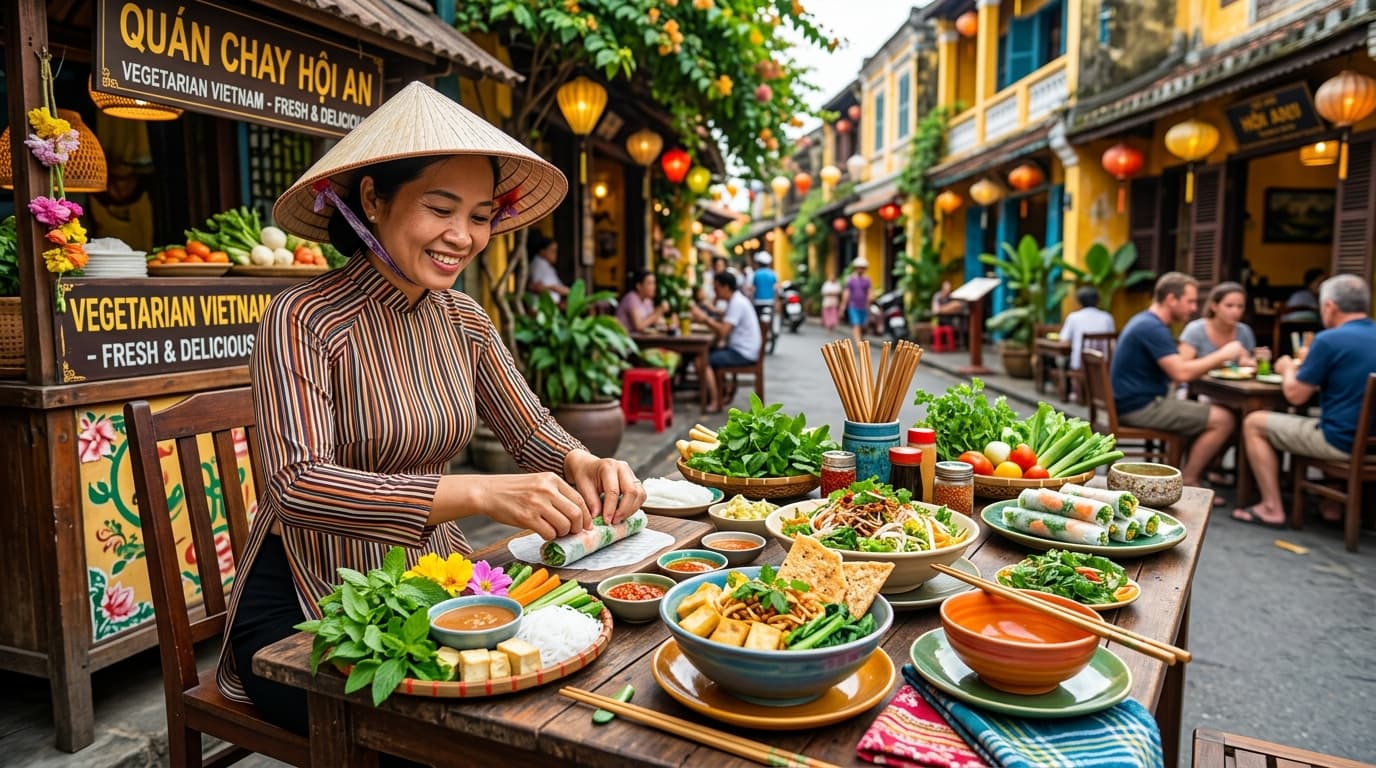
Vegetarian and Vegan Vietnam: How to Eat Plant-Based Across the Country
Vietnam is one of Southeast Asia's best countries for vegetarian and vegan travel. Buddhist chay cuisine, specific restaurants, dishes to try, and how to communicate your diet.
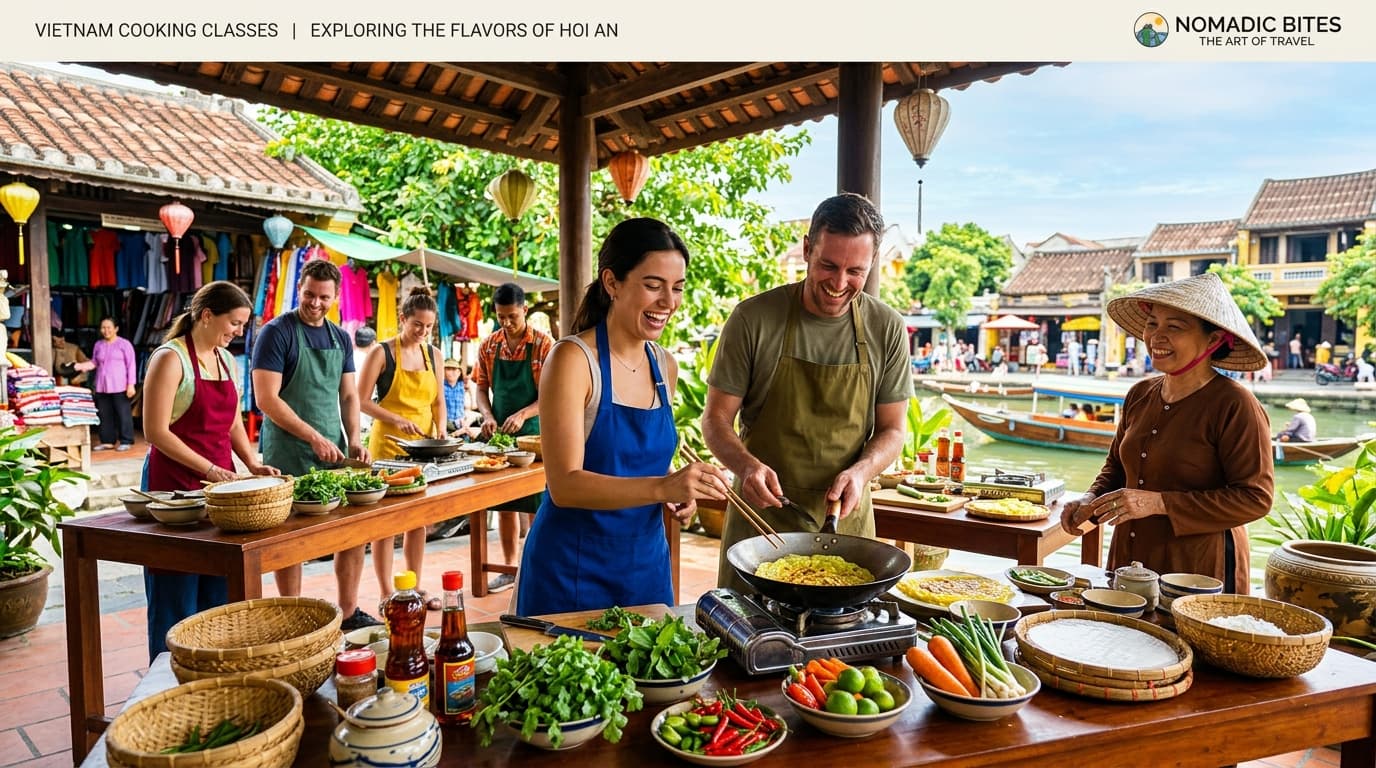
Best Cooking Classes in Vietnam: Hanoi, Hoi An, and HCMC
Find the best cooking classes in Vietnam across Hanoi, Hoi An, and Ho Chi Minh City. Real school names, prices, what you learn, and which market visits are worth it.
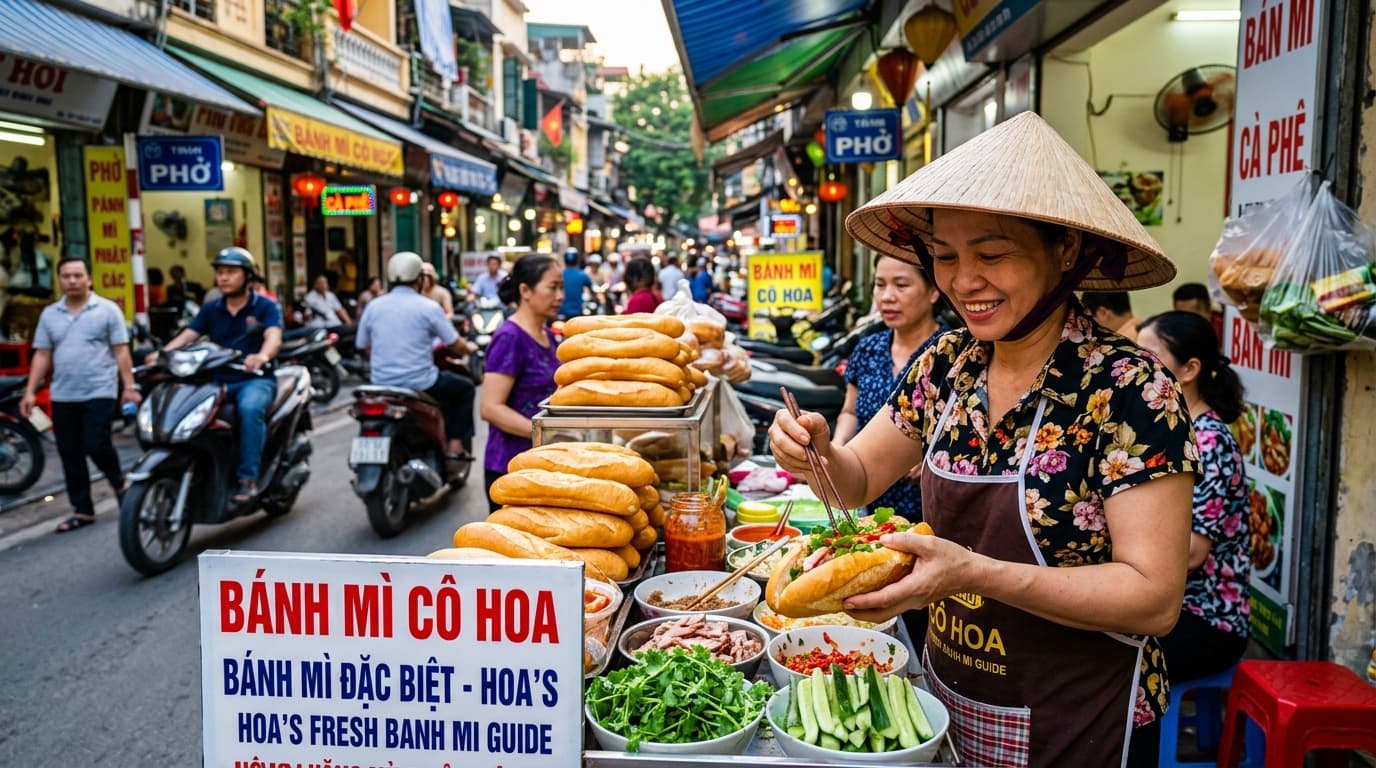
Banh Mi: A Complete Guide to Vietnam's Perfect Sandwich
Master Vietnam's iconic banh mi sandwich. Learn regional variations, where to find the best, and how to order like a local.
Vietnamese Coffee Culture: From Cà Phê Sữa Đá to Specialty Roasters
The complete guide to Vietnamese coffee culture: history, types of cà phê, where to drink the best egg coffee and cà phê sữa đá, and the best specialty roasters in each city.
Plan Your Vietnam Trip
Book hotels, transport, activities, and get connected with an eSIM
Some links are affiliate links. We may earn a commission at no extra cost to you.