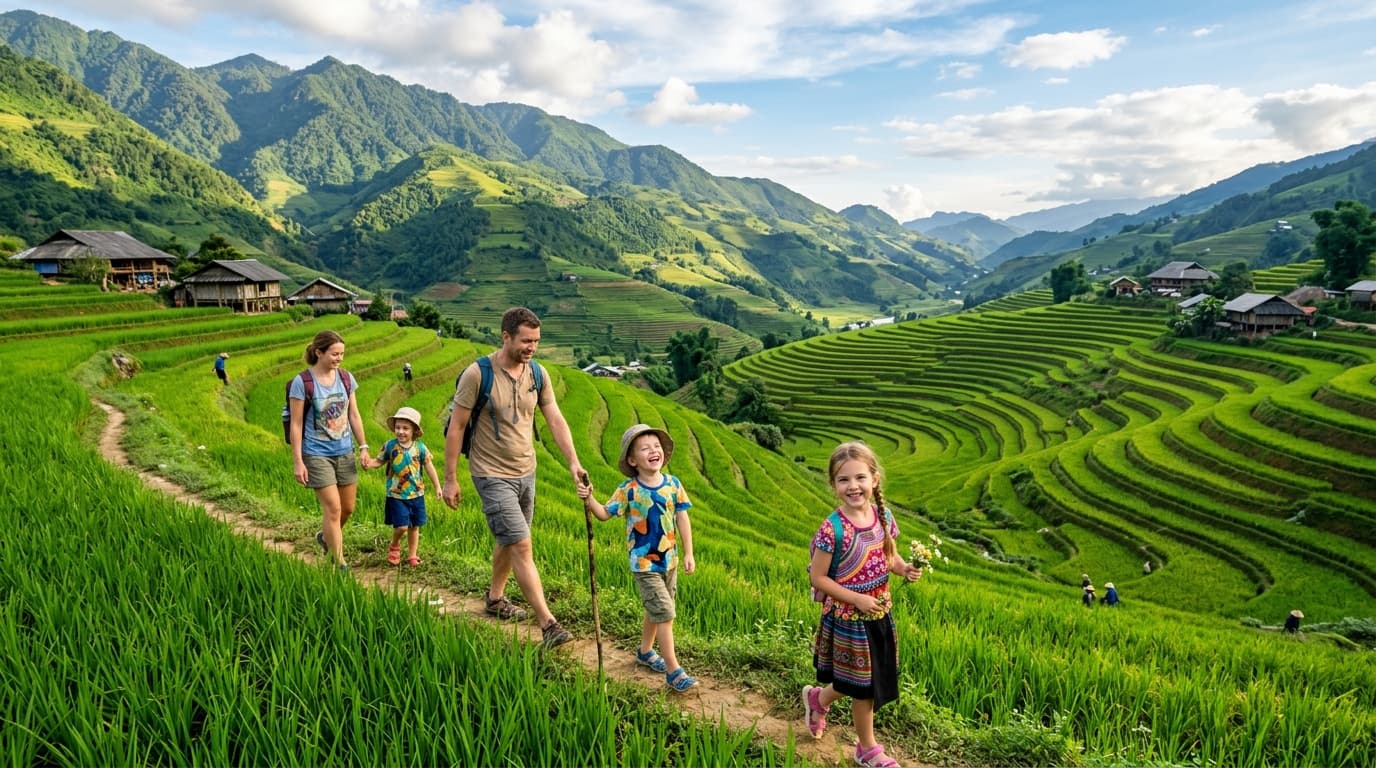
Vietnam with Kids: Family-Friendly Itineraries and Tips
Vietnam rewards family travel in ways that many countries don't. Vietnamese culture places genuine value on children — locals engage with kids spontaneously, activities are accessible and varied, and the price differential between budget and comfort means families can afford to stay somewhere good without destroying their budget. The food is adaptable, the beaches are excellent, and the combination of cultural depth and natural spectacle means there's always something for the adults while the kids are occupied.
The challenges are real too: traffic is intense, heat and humidity can exhaust young children, and the pace that works for adult travelers often doesn't work for families. This guide addresses both sides honestly, with specific itineraries and practical advice for families traveling with children of different ages.
Key Takeaways
| Question | Answer |
|---|---|
| Is Vietnam safe for families? | Yes — low crime, family-friendly culture, locals genuinely welcoming to children |
| What's the best age range? | 6-14 tends to get the most from the experience; under 3 is manageable but tiring |
| What's the best time to visit? | October-April (dry season); avoid May-September heat and monsoon with young children |
| What vaccinations are needed? | Hepatitis A & B, Typhoid, routine vaccines (MMR, DTP, Polio); consult a travel doctor |
| How long should families visit? | 10-14 days is ideal for a north-south circuit; 7-10 days works for a focused region |
| What's the best city for kids? | Hoi An (walkable, beach nearby, activities) and Phu Quoc (beach, resort, kids' clubs) |
Why Vietnam Works Well for Families
The Culture Factor
Vietnamese people genuinely like children. In markets, at restaurants, on buses — strangers will engage your kids with curiosity and warmth, often offering sweets, wanting to take photos, and treating young children as guests of honor rather than inconveniences. This social warmth makes family travel in Vietnam feel supported in a way that more reserved cultures don't offer.
Family structure is central to Vietnamese life. Multi-generational households are the norm, and children are seen as the center of the family unit. When you arrive at a hotel or restaurant with children, you're understood — staff will bring crayons, produce smaller portions without being asked, and show patience with slow-eating toddlers that you won't always find in Europe or Australia.
The Price Advantage for Families
Vietnam's price point means families can afford comfort they couldn't in equivalent destinations. A family room at a genuinely good mid-range hotel in Hoi An costs USD $60-100 per night — the kind of price that in France or the UK would buy you a budget hostel. This means families can book hotels with pools, large rooms, and facilities without the budget pressure that often forces compromises.
Accessible Activities
Vietnam's top activities translate well to families: Ha Long Bay boat cruises, Hoi An's ancient town and beaches, water puppet shows, cooking classes, cycling through rice fields, and snorkeling at Phu Quoc are all accessible and engaging for children ages 5+. The country doesn't require hiking strenuous trails or sitting through long museum tours to experience its highlights.
Age-Appropriate Activities by Region
Hanoi (Best for Ages 5+)
Water Puppet Theater: The Thang Long Water Puppet Theatre near Hoan Kiem Lake is Hanoi's single best family activity. Puppets operated by hidden artists behind a screen perform traditional folk tales on a water stage — colorful, musical, and genuinely engaging for children who don't speak Vietnamese. Shows run multiple times daily (60 minutes); tickets cost 100,000-200,000 VND per person. Book in advance during peak season.
Hoan Kiem Lake: A 20-minute walk around this central lake is pleasant for all ages and free. The small Ngoc Son Temple on the island in the middle (accessed via red bridge) costs 30,000 VND and is quick to visit. The lake's paths are well-maintained and flat — accessible for strollers and young walkers.
Vietnam Museum of Ethnology: Genuinely one of the best museums in Southeast Asia. The outdoor section has full-scale traditional houses from Vietnam's 54 ethnic minority groups — children can explore inside the stilt houses, bamboo structures, and longhouses. The layout is open and easy to navigate. Entry: 40,000 VND adults, 15,000 VND children.
Age note: Hanoi's Old Quarter is stimulating but chaotic. Traffic is dense, sidewalks are narrow (often blocked by motorbikes), and the streets are not stroller-friendly. Baby carriers work better than prams. Children under 5 may find the noise and crowds overwhelming.
Ha Long Bay (Best for Ages 5+, Ideal for 7+)
Ha Long Bay boat cruises are one of Vietnam's most spectacular family experiences when chosen carefully. The key is selecting a cruise with family-appropriate activities and the right duration.
Best cruise options for families:
- Day cruise (1 day, no overnight): Suitable for families with very young children or children prone to seasickness. You see the limestone karsts, kayak if older children can manage, and return to shore. Less immersive but lower risk.
- 2-day/1-night cruise: The sweet spot for most families. You overnight on the boat, watch the sunrise over the karsts, and have full days for kayaking, cave exploration, and swimming. Most reputable cruise operators (Bhaya, Paradise, Indochina Sails) have good safety records and experienced crew.
- Kayaking: Excellent for children 7+ with basic swimming ability. Guides accompany kayaks through cave passages and between karsts. Life jackets provided.
- Swimming: Designated swimming areas are generally calm; the water is warm (26-30°C October-April). Check with the cruise operator about jellyfish season.
Family-friendly cruise operators: Indochina Sails and Bhaya Cruises both have strong safety records and offer family cabins with extra beds or pull-out sofas. Avoid ultra-budget operators (under USD $80 per person for 2-day trips) — safety standards correlate with price here.
Age note: Children under 4 on an overnight cruise is manageable if your child sleeps well in new environments. The boat movement at night is gentle in calm conditions. If your child is a poor sleeper in unfamiliar places, the day cruise is a safer choice.
Hoi An (Best for All Ages)
Hoi An is Vietnam's most family-friendly city for several reasons: the Ancient Town is partially pedestrianized (cars and motorbikes are excluded from the core streets on certain evenings), the beach is 4km away, and activities scale well across age groups.
Lantern Making Workshops: Multiple workshops in the Ancient Town teach traditional lantern making for 80,000-150,000 VND per person. Children 5+ can participate; younger children with assistance from about age 3. The finished lantern to take home makes this a popular family activity. Book in advance for the more reputable workshops (Thien Thanh Lantern Workshop is well-reviewed).
Cycling Through Rice Fields: Several operators offer guided cycle tours through Hoi An's surrounding countryside — through Tra Que Vegetable Village, past rice paddies, and along quiet rural lanes. Suitable for children who can ride independently (age 7+) or can ride in a child seat (younger). Half-day tours run USD $15-25 per person, including bicycle and guide.
An Bang Beach: 4km from the Ancient Town, reachable by bicycle, taxi, or Grab. Clean sand, calm water suitable for swimming, and beachside restaurants. The northern end is less crowded than the central beach area. Water is typically gentle enough for young children to wade; check with locals during typhoon season (October-November).
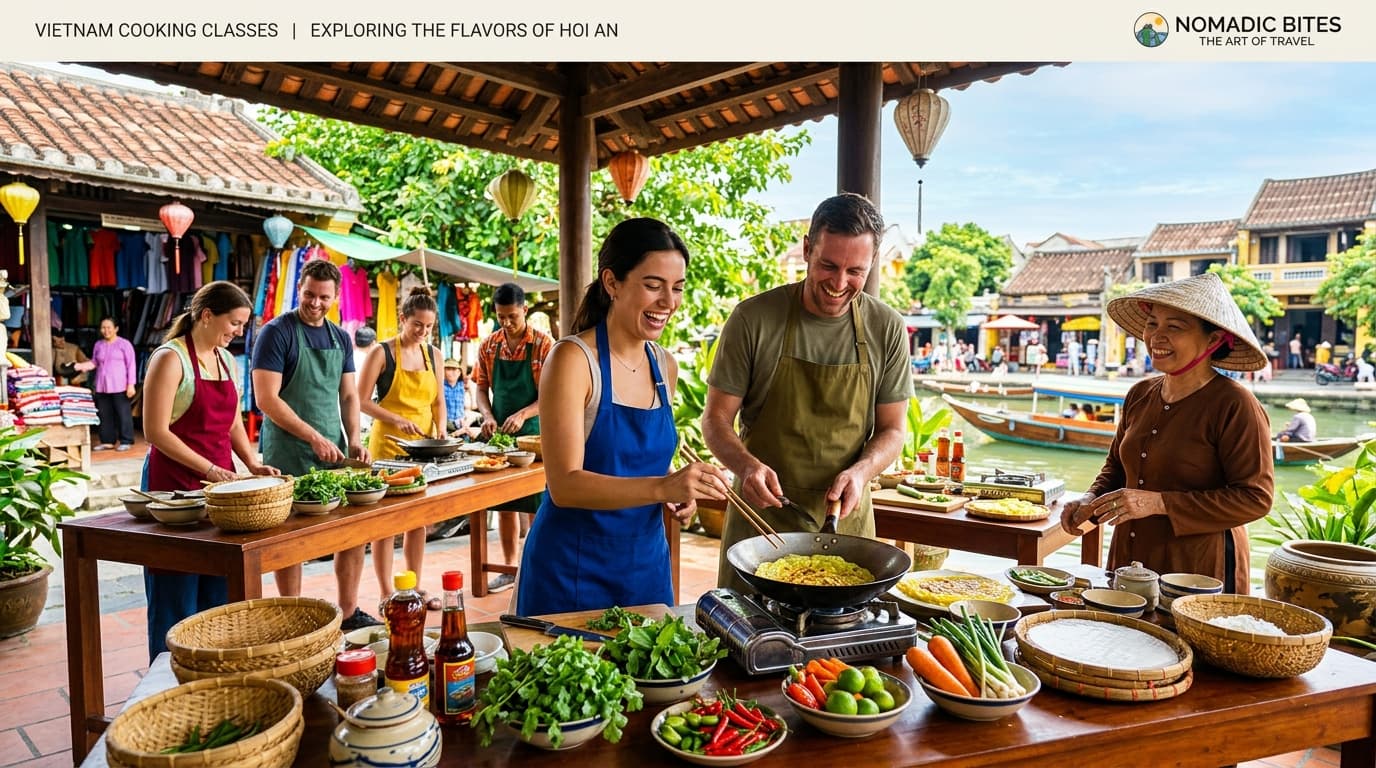
Cooking Classes for Families: Tra Que Village cooking classes welcome children and are a practical family activity — you harvest herbs from the garden, cook a simple Vietnamese lunch, and eat it together. Most schools accommodate children ages 5+. More structured schools like Red Bridge can host families with children 8+ for a more complete experience. See our full Vietnam cooking classes guide.
Ho Chi Minh City (Best for Ages 7+)
HCMC is the most intense city environment in Vietnam — traffic is extreme, distances are large, and the sensory overload can overwhelm younger children. That said, there are genuine family highlights.
Cu Chi Tunnels: The underground tunnel network used during the Vietnam War is a historically significant and viscerally interesting site (kids 8+ tend to engage well). The crawl-through tunnel sections are optional but popular with older children. Half-day tours from HCMC run USD $25-40 per person, typically by organized minibus. See our Cu Chi Tunnels guide for details.
Saigon Zoo and Botanical Garden: An older zoo by international standards but set in 33 hectares of botanical garden in the city center. Entry is cheap (80,000 VND adults, 50,000 VND children) and the botanical garden provides space to run. Good for a morning with young children who need time outdoors.
Mekong Delta Day Trip: The closest natural escape from HCMC (2 hours south) involves boat rides through narrow waterways, visits to fruit orchards and honey farms, and small-boat rowing through mangroves. Kids 5+ enjoy this; the main challenge is a long bus journey from the city. Full-day organized tours run USD $25-40 per person. See our Mekong Delta guide for specifics.
Phu Quoc Island (Best for All Ages, Especially Under 7)
Phu Quoc is Vietnam's best destination for families with young children. The island has excellent resort infrastructure, calm beaches suitable for young swimmers, and enough organized activities to fill a week without rushing.
Vinpearl Land and Cable Car: The offshore cable car ride to Vinpearl resort on Hon Tre island is a 15-minute crossing over the sea and an event in itself. The Vinpearl resort includes a theme park, water park, and aquarium — designed explicitly for families and running all day, every day.
Beaches: Phu Quoc's west coast beaches (Long Beach, Ong Lang, Bai Sao) are calm and clear, protected from the south seas. Bai Sao in the south is postcard-perfect and family-friendly with gentle waves ideal for young swimmers. The swimming window is best November-April.
Night Market (Phu Quoc): The Phu Quoc Night Market on Vo Thi Sau Street is an excellent evening family outing — fresh grilled seafood, local sweets, and a lively atmosphere without the intensity of mainland city markets.
Family-Friendly Hotels in Phu Quoc:
- Movenpick Resort Phu Quoc — beachfront, large pool, Little Birds kids' club with daily activities, ice cream parlor.
- Wyndham Grand Phu Quoc — 1,500m² pool, 2-3 bedroom villas suitable for families.
- InterContinental Long Beach Phu Quoc — Planet Trekkers kids' club with professional child minders, weekend Kids' Camp with craft and cooking activities.
Search family rooms and resorts with kids' facilities across Vietnam with free cancellation on most bookings.
Search Hotels on Booking.com → Scan me
Suggested Family Itineraries
10-Day Classic Circuit (Best for Families with Children 7+)
Day 1-3: Hanoi
- Day 1: Arrive, recover from travel. Evening walk around Hoan Kiem Lake.
- Day 2: Water Puppet Theatre (morning), Old Quarter walking tour, Vietnam Museum of Ethnology (afternoon).
- Day 3: Day trip to Ninh Binh (2 hours south) — boat through the karst landscape at Tam Coc, suitable for children 4+, less intense than Ha Long Bay.
Day 4-5: Ha Long Bay
- 2-day/1-night cruise. Kayaking, cave exploration, swimming.
- Return to Hanoi by afternoon of Day 5; overnight train or flight to Da Nang.
Day 6-8: Hoi An (base for Da Nang)
- Day 6: Arrive, settle in, explore Ancient Town on foot.
- Day 7: Lantern making workshop (morning), An Bang Beach (afternoon).
- Day 8: Cycling through rice fields or Tra Que Village cooking class.
Day 9-10: Ho Chi Minh City or fly to Phu Quoc Option A (HCMC): Cu Chi Tunnels day trip, Ben Thanh Market evening. Option B (Phu Quoc): 2 nights on the island — beach days, Vinpearl if children are interested in theme parks, evening at the night market.
7-Day Beach-Focused (Best for Families with Children Under 7)
A week focused on Hoi An and Phu Quoc, minimizing transit time and intense city experiences.
Day 1-3: Hoi An Gentle pace: Ancient Town mornings, beach afternoons, lantern workshop and market visit fitted in. Central location, everything accessible without long drives.
Day 4-7: Phu Quoc Fly from Da Nang to Phu Quoc (1.5 hours). Beach resort base with a resort featuring a kids' club. Day trips to Bai Sao, Vinpearl, and the night market as energy permits. No rushing.
Health and Safety: The Honest Guide
Vaccinations
Consult a travel medicine clinic 4-8 weeks before departure. Standard recommendations for Vietnam (including children) include:
- Hepatitis A — recommended for all travelers, including children
- Hepatitis B — recommended; part of standard childhood schedules in many countries
- Typhoid — recommended; oral vaccine available for children 6+
- Japanese Encephalitis — recommended if visiting rural areas or staying more than 1 month
- Routine vaccines — ensure MMR, DTP, and Polio are up to date
- Rabies — consider if children will have significant animal contact (monkeys at temples, street dogs)
This is general guidance — your travel doctor will advise based on your children's ages, health status, and specific itinerary.
Food and Water Safety
Tap water is not drinkable anywhere in Vietnam. Bottled water is cheap (5,000-10,000 VND per 500ml) and universally available. Ice at restaurants and hotels in major tourist areas is generally made from purified water and is safe; ice from street stalls in rural areas is more variable. Be conservative with young children and stick to bottled water.
Vietnamese food is generally safe for children at established restaurants and popular street food stalls. The hygiene standard at tourist-facing restaurants in major cities (Hanoi, Hoi An, HCMC, Phu Quoc) is consistently high. As with all food travel, introduce new foods gradually with young children rather than loading up on the most adventurous dishes immediately.
Pack children's fever reducer (paracetamol/acetaminophen), children's antihistamine, diarrhea treatment (oral rehydration salts), and any specific medications your children use. Finding exact formulations of children's medications in rural areas can be difficult.
Traffic and Pedestrian Safety
Vietnam's traffic is the most challenging aspect of the country for families. Motorcycles are everywhere, pedestrian crossings are rarely respected, and the volume of vehicles at intersections in Hanoi and HCMC is genuinely alarming on first encounter.
Practical rules:
- Hold children's hands when crossing any road, regardless of pedestrian signals.
- Cross roads in groups and walk at a steady pace — traffic flow adjusts around pedestrians who move predictably.
- Consider a baby carrier over a stroller in the Old Quarters of Hanoi and Hoi An — narrow sidewalks blocked by motorbikes make stroller navigation difficult and frustrating.
- Grab is safer than flagging random motorbike taxis (xe om) — registered Grab drivers are accountable.
Sun and Heat
Vietnam in the dry season (November-April) is warm (25-33°C) but manageable. The shoulder months (April-May, September-October) can be very hot (35-38°C) and humid. Young children and infants are particularly vulnerable to heat exhaustion.
- Apply SPF 50 sunscreen daily, including on cloudy days.
- Schedule outdoor activities in the morning (before 11 AM) and afternoon (after 4 PM). Midday heat (11 AM-3 PM) is best spent at a hotel pool, beach, or air-conditioned restaurant.
- Carry a large water bottle for each child and reinforce frequent sipping.
- Signs of heat exhaustion (fatigue, headache, pale skin, rapid heartbeat) require immediate rest, fluids, and cooling. Seek medical attention if symptoms worsen.
Book family-friendly Ha Long Bay cruises, Hoi An lantern workshops, and day trips with instant confirmation.
Browse Family Tours on Klook → Scan me
Pacing and Logistics for Family Travel
Don't Rush
The biggest mistake families make in Vietnam is trying to cover too much ground. Adult travelers can absorb 3-4 cities in 2 weeks without exhaustion; families with children need more decompression time. Every long bus journey, airport wait, and hotel check-in costs family energy that adults don't notice but children feel immediately.
Recommended approach: Choose 2-3 destinations, stay longer in each, and build in pool/beach days between cultural activities. A family that spends 3 nights in Hanoi, 3 nights in Hoi An, and 4 nights in Phu Quoc will have a better trip than one that tries to cover Hanoi + Ha Long + Hue + Hoi An + HCMC in 10 days.
Domestic Flights Over Buses
Vietnam's domestic flight network is extensive and affordable — Hanoi to Da Nang (1.5 hours), Hanoi to Ho Chi Minh City (2 hours), Da Nang to Phu Quoc (1.5 hours). A direct flight that costs USD $40-70 per person replaces an 8-16 hour bus journey that exhausts children and adults alike. With families, flights are almost always worth the premium.
Book on VietJet Air, Bamboo Airways, or Vietnam Airlines via Trip.com or the airlines' own websites. Book 2-4 weeks ahead for the best prices.
Grab for Family Transport
The Grab app works in all major Vietnamese cities and is far easier with children than flagging taxis. Car options (GrabCar) provide seat-belted vehicles; you can specify a larger vehicle if needed for car seats or luggage. Child car seats are not standard in Vietnam — if you need one, bring a portable travel seat.
Hotel Selection for Families
Prioritize hotels with:
- Swimming pool — non-negotiable for families in the Vietnamese heat
- Family rooms or connecting rooms — Vietnamese hotels vary widely; confirm room configuration before booking
- In-room refrigerator — for storing children's food and drinks
- Restaurant — eating on-site for at least one meal daily reduces the logistical burden
Mid-range hotels in Vietnam (USD $50-100 per night for a family room) typically include all of the above. The premium resorts mentioned in the Phu Quoc section add dedicated kids' clubs for families who want a more structured holiday experience.
Book your first night's accommodation near the airport or in a central location even if you're tired — it's much easier to regroup and plan from a known base than to figure out logistics after a long-haul flight with children.
Frequently Asked Questions
Is Vietnam safe for families with young children?
Yes — Vietnam has a low crime rate and Vietnamese culture is genuinely warm toward children. The main practical challenges are traffic (intense in major cities), heat, food and water hygiene, and managing pace. All are manageable with preparation. Most families find Vietnam much easier than anticipated once they arrive.
What is the best time to visit Vietnam with kids?
November to March is the best window for most of Vietnam — dry, warm without being brutal, and perfect beach weather on the central and southern coast. April and October are shoulder months with excellent conditions. Avoid May-September for families with young children: the heat and monsoon rains limit outdoor activity significantly.
Can I bring a stroller to Vietnam?
Yes, but a baby carrier is more practical in cities and old towns. Hanoi's Old Quarter and Hoi An's Ancient Town have narrow, uneven sidewalks frequently blocked by parked motorbikes. Strollers work well in beach resort areas, hotel grounds, and the wider streets of Da Nang. A lightweight travel stroller (rather than a full-size pram) is the best compromise.
What do Vietnamese children eat — can my kids eat Vietnamese food?
Vietnamese food is generally mild compared to Thai or Indian food, though some dishes (bun bo Hue, various southern soups) can be quite spicy. Safe bets for children: pho (mild, noodly), com tam (broken rice with grilled pork), fresh spring rolls, steamed dumplings, and banh mi. Most Vietnamese restaurants will reduce or eliminate chili on request for children ("Khong cay" — not spicy).
Is Ha Long Bay safe for children?
Yes, when booked with reputable cruise operators. Reputable operators (Bhaya, Indochina Sails, Paradise Cruises) have strong safety records, properly trained crew, and life jackets for all ages. The water in designated swimming areas is calm. The main risk is choosing a cheap operator with inadequate safety standards — budget on a reputable boat rather than a budget boat.
How should I handle the traffic with children?
Hold children's hands on all road crossings — regardless of signals. Cross as a group, move at a steady pace, and make eye contact with approaching vehicles. In HCMC and Hanoi, use Grab rather than walking long distances. Avoid xe om (motorbike taxis) for children. In Hoi An and Phu Quoc, traffic is significantly calmer than the major cities.
Conclusion
Vietnam is a rewarding family destination when approached with appropriate pace and preparation. The country's combination of accessible beaches, culturally engaging cities, spectacular natural scenery, and genuinely child-welcoming culture makes it one of Southeast Asia's strongest family travel options.
The key variables are simple: visit in the dry season, don't rush the itinerary, fly between cities rather than busing, choose hotels with pools, and prioritize activities over sightseeing. An adult trip that packs in 7 cities in 14 days needs to become a family trip that covers 3-4 destinations properly.
For more on specific destinations: see our Hoi An travel guide for Central Vietnam's most family-friendly city, our Ha Long Bay guide for cruise selection, and our Phu Quoc Island guide for beach resort options. For a full trip structure, the two-week Vietnam itinerary can be adapted with the pacing principles above to work well for families.
Sources & References
This article is based on first-hand experience and verified with the following official sources:

Go2Vietnam Team
Exploring Vietnam since 2020 | 40+ provinces visited | Updated monthly
We are a team of travel writers and Vietnam enthusiasts who explore the country year-round. Our guides are based on first-hand experience, local knowledge, and verified official sources.
More about us →People Also Read
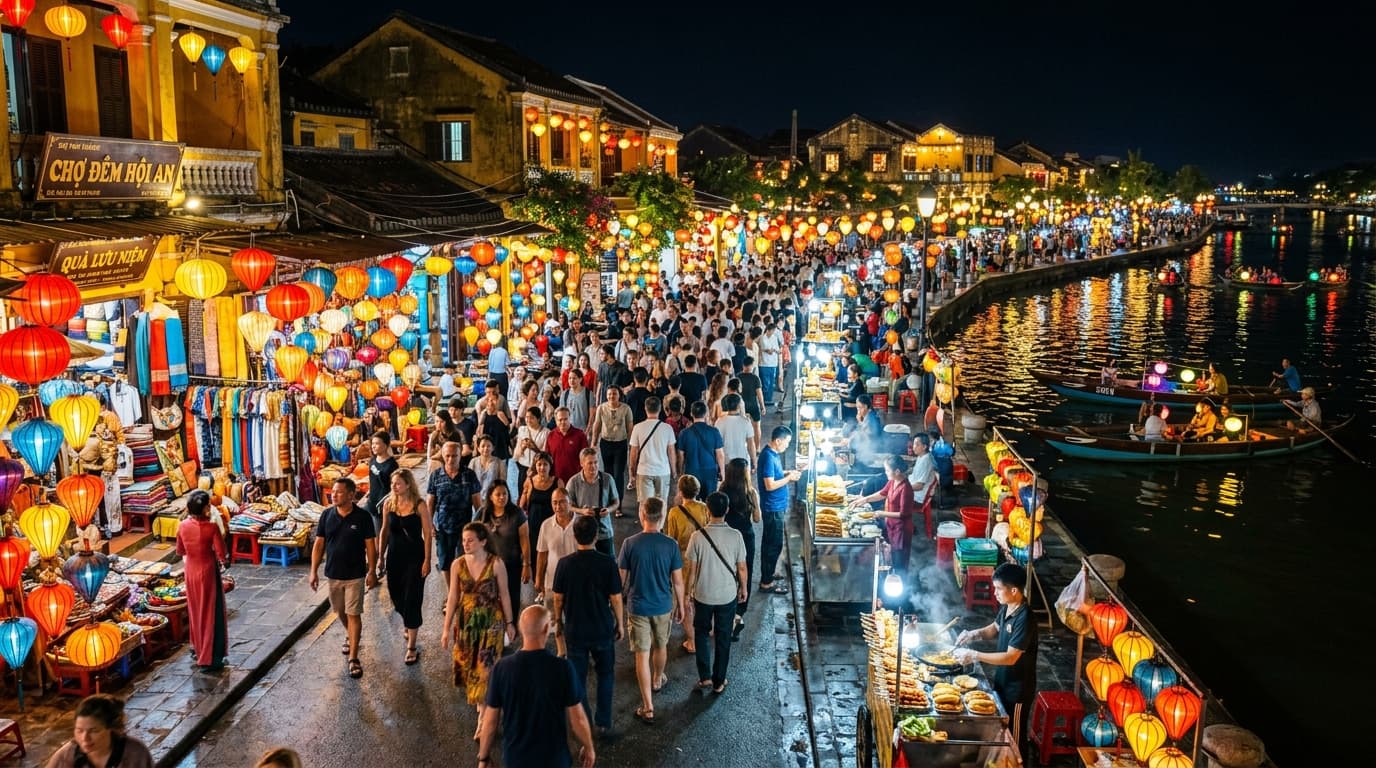
Best Night Markets in Vietnam: What to Eat, Buy, and Expect
The best night markets in Vietnam by city: opening hours, what to buy, what to eat, and how to haggle without getting ripped off.
Is Vietnam Safe? Honest Safety Guide for Travelers in 2026
Is Vietnam safe to visit in 2026? Honest guide covering traffic safety, common tourist scams, solo female travel, health and vaccination requirements, and practical precautions.
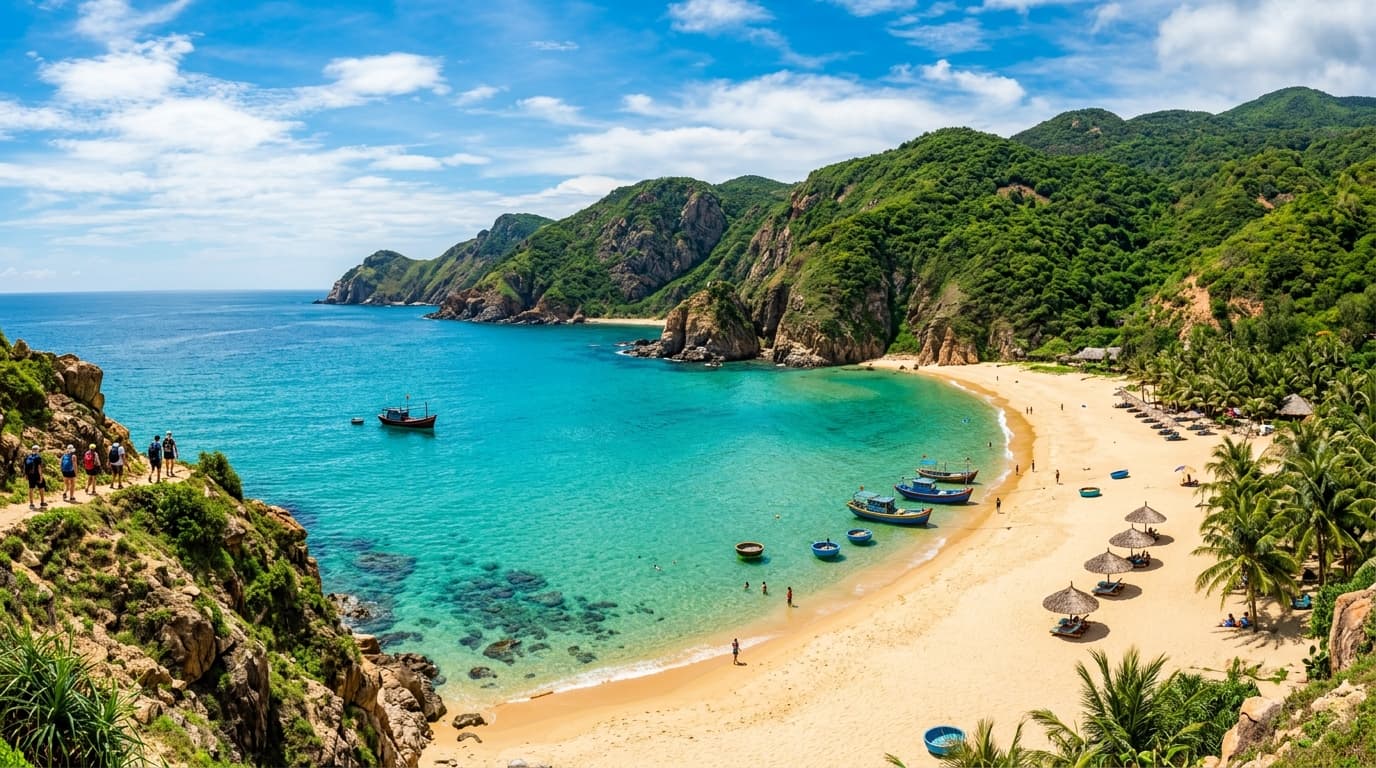
12 Best Beaches in Vietnam: From Secret Coves to Resort Shores
The 12 best beaches in Vietnam for 2026, including secret coves, resort beaches, and island escapes. Best season, how to get there, and what to expect.
Best Cooking Classes in Vietnam: Hanoi, Hoi An, and HCMC
Find the best cooking classes in Vietnam across Hanoi, Hoi An, and Ho Chi Minh City. Real school names, prices, what you learn, and which market visits are worth it.
Plan Your Vietnam Trip
Book hotels, transport, activities, and get connected with an eSIM
Some links are affiliate links. We may earn a commission at no extra cost to you.