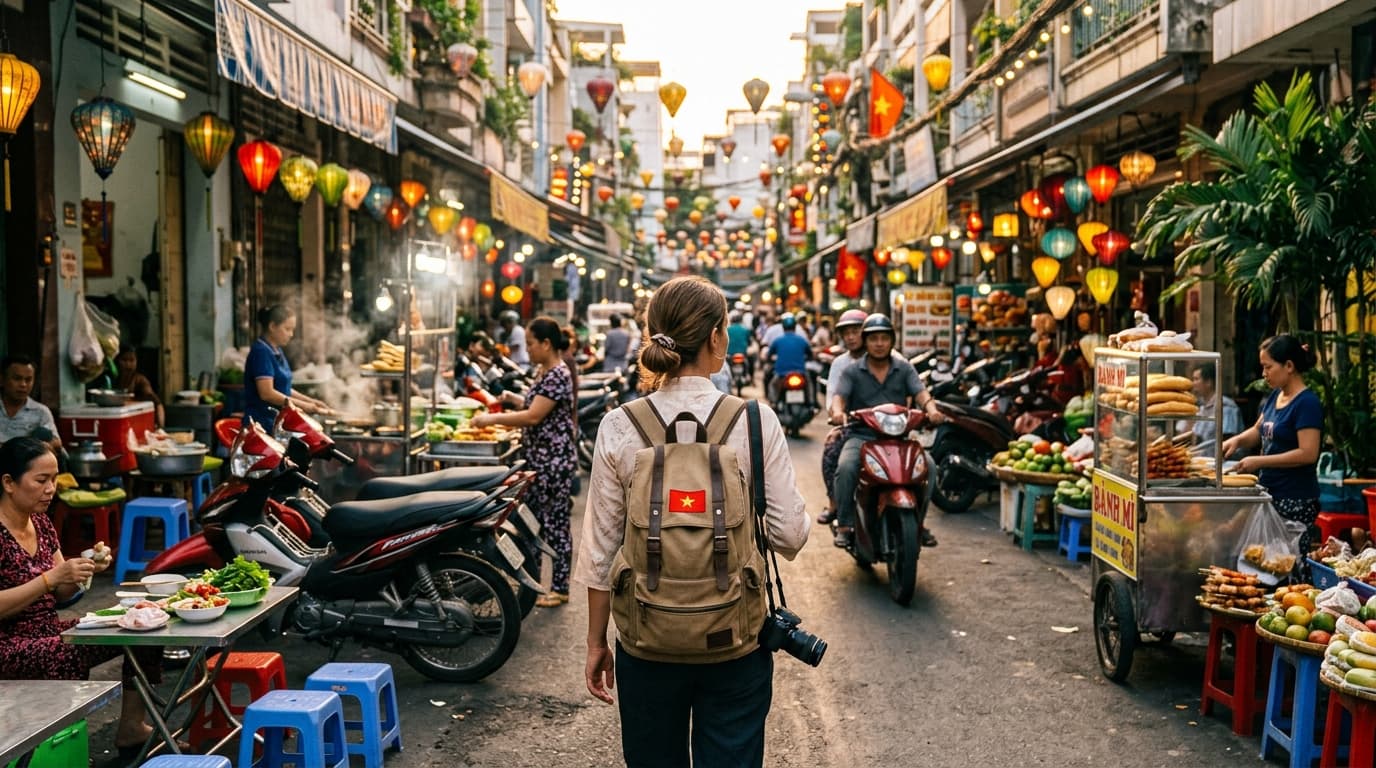
Free Things to Do in Ho Chi Minh City: Budget Travel Guide 2025
You don't need to spend a fortune to fall in love with Ho Chi Minh City—one of Southeast Asia's most vibrant and wallet-friendly destinations. After spending months navigating the chaotic streets, hidden alleyways, and bustling markets of HCMC, our team discovered that some of the city's best experiences won't cost you a single Vietnamese dong.
Key Takeaways
| Question | Answer |
|---|---|
| What is the best time to visit? | November to February (cool and dry). Avoid May-September monsoon season. |
| How much does it cost? | Budget travelers: 300,000–500,000 VND/day ($12–$20 USD). Mid-range: 500,000–1,000,000 VND/day ($20–$40 USD). |
| How do I get there? | Tan Son Nhat International Airport (SGN) is 7km north. Grab taxi or bus 152 to city center. |
| Is it safe? | Yes. Exercise normal precautions with belongings in crowded areas and at night. |
| What should I book in advance? | Nothing essential for free activities. Book accommodation and tours 1-2 weeks ahead for better rates. |
| What's the best free activity? | Walking through District 1's colonial architecture and street food scenes. |
| Can I survive on free activities alone? | Mostly—combine free attractions with ultra-cheap street food (20,000–50,000 VND per meal). |
1. Wander the Streets of District 1's Colonial Quarter
The heart of Ho Chi Minh City is a living museum, and the best way to experience it costs absolutely nothing. District 1's colonial architecture tells the story of French Indochina, with grand villas, tree-lined boulevards, and crumbling facades that feel frozen in time. When we explored these streets on foot at dawn, before the heat and crowds arrived, we understood why this neighborhood captivates photographers and history lovers alike.
Start at the iconic Saigon Notre-Dame Cathedral (Nhà Thờ Đức Bà), a stunning 19th-century basilica with twin spires that dominate the skyline. You can admire the exterior and snap photos from the street for free—the interior requires a small donation, but the outside is equally impressive. From there, wander down Dong Khoi Street, the city's most elegant thoroughfare, lined with colonial buildings that now house cafes, galleries, and boutiques.
The Central Post Office & Surrounding Landmarks
The Central Post Office (Bưu Điện Thành Phố) is one of Asia's most beautiful post offices, designed by French architect Gustave Eiffel's company. The exterior is free to admire, and if you pop inside, you can see the ornate interior with its high ceilings and vintage postal equipment without paying anything. It's worth 10 minutes of your time just to soak in the architectural details.
Street Photography & Hidden Alleyways
The real magic happens when you veer off the main streets into narrow alleyways (called "hems"). These passages reveal authentic daily life: locals playing cards, street vendors preparing lunch, laundry hanging between buildings. Our team spent hours getting delightfully lost in these neighborhoods, camera in hand, without spending a single dong. Early mornings (6-8am) are best—the light is golden, the streets are quieter, and you'll see locals going about their day before the tourist crowds arrive.
- Best Time: Early morning (6-8am) or late afternoon (4-6pm)
- Pro Tip: Download an offline map on Google Maps before you go—WiFi can be spotty in older neighborhoods
- What to Bring: Comfortable walking shoes, sunscreen, and a reusable water bottle
Wear respectful clothing when visiting religious sites—cover shoulders and knees, and remove shoes when entering temples.
2. Explore Free Museums & Cultural Spaces
Ho Chi Minh City is home to several museums with free or very low-cost admission, though some charge modest fees. The real treasure is discovering the city's cultural spaces that don't charge entry at all. When we visited during our extended stay, we found that many galleries and cultural centers welcome visitors without demanding payment.
The War Remnants Museum (Bảo Tàng Chứng Tích Chiến Tranh) does charge admission (150,000 VND / $6 USD), but it's one of the most important museums in Vietnam and worth the cost. However, if you're looking for completely free cultural experiences, the city's street art scene and public galleries offer plenty to explore.
Street Art & Public Galleries
Ho Chi Minh City's street art scene has exploded in recent years, particularly in neighborhoods like Tan Binh and around the Ben Thanh Market area. Murals depicting Vietnamese history, daily life, and contemporary social issues cover building walls. Walking tours of these areas are free if you explore on your own, though many travelers book guided street art tours (prices vary—check local options).
Temple & Pagoda Visits
Buddhist temples and Taoist pagodas throughout the city welcome visitors free of charge, though a small donation (10,000–50,000 VND) is appreciated. Jade Emperor Pagoda (Chùa Ngọc Hoàng) in District 3 is one of the most atmospheric, with ornate wooden carvings, incense smoke, and locals praying. The energy inside is palpable—it's a genuine place of worship, not a tourist attraction. We spent 30 minutes there one afternoon, sitting quietly and observing the rituals, and it cost us nothing but felt priceless.
- Donation Etiquette: Leave 10,000–20,000 VND if you're comfortable. It's not mandatory.
- Photography: Always ask permission before photographing people or rituals
- Visiting Hours: Most temples open 6am–6pm daily
3. Experience Street Food Markets Without Buying
One of the greatest free experiences in Ho Chi Minh City is simply wandering through the city's famous markets. Ben Thanh Market (Chợ Bến Thành) in District 1 is the most famous, but it's also the most touristy. For a more authentic market experience, head to Binh Tay Market (Chợ Bình Tây) in District 5 (Chinatown), where locals actually shop.
Walking through these markets is completely free. You can observe vendors preparing food, watch the organized chaos of commerce, and soak in the sensory overload—the smells, sounds, and colors—without spending a dong. Our team loves arriving at markets around 6-7am when they're most active and the energy is electric.
The Sensory Experience
Compare hotels, resorts, and guesthouses across Vietnam with free cancellation on most bookings.
Search Hotels on Booking.com → Scan me
Markets in Ho Chi Minh City are overwhelming in the best way. You'll see fresh herbs piled high, fish on ice, vendors shouting prices, and locals haggling. It's a masterclass in Vietnamese daily life. The sights and sounds alone are worth the visit, and you can observe food preparation techniques that would cost money in a cooking class.
Optional: Buy a Cheap Snack
If you do want to spend money, a small snack at the market costs almost nothing. A cup of fresh sugarcane juice (nước mía) runs 10,000–15,000 VND ($0.40–$0.60 USD). A bánh mì sandwich from a street vendor costs 20,000–30,000 VND ($0.80–$1.20 USD). These are some of the cheapest, most delicious meals you'll find anywhere.
Skip the hassle — book Vietnam day trips, cooking classes, and experiences in advance with instant confirmation.
Browse Activities on Klook → Scan me
4. Walk Along the Saigon River at Sunset
The Saigon River waterfront has undergone major development in recent years, and now there's a beautiful public promenade where locals and tourists alike gather at sunset. Walking along the river is completely free and offers some of the best views of the city's skyline.
The best spot is along Nguyen Hue Walking Street (Phố Đi Bộ Nguyễn Huệ), a pedestrian-only boulevard that stretches from the river toward the city center. In the evenings, it transforms into a social hub where families stroll, street performers entertain crowds, and the energy is infectious. We've spent countless evenings here, watching the sun dip below the horizon and the city lights flicker on, without spending a single dong.
Riverside Parks & Green Spaces
Tao Đàn Park (Công Viên Tao Đàn) in District 1 is another free gem. It's a peaceful green space where locals exercise, practice tai chi, and relax. Early mornings are particularly special—you'll see elderly Vietnamese doing tai chi, joggers, and people just enjoying the quiet before the city wakes up.
Photography Opportunities
The river views at sunset are Instagram gold. The reflections of skyscrapers in the water, the colorful sky, and the silhouettes of boats create stunning photo opportunities. Best time: 5-7pm, depending on the season.
- Bring: A light jacket (it can get breezy near the water)
- Safety Note: The area is well-lit and safe in the evenings, but stick to main promenades
- Local Tip: Grab a cheap coffee or drink from a nearby vendor and settle in for the sunset
5. Visit Pagodas & Temples for Spiritual Immersion
Beyond the Jade Emperor Pagoda mentioned earlier, Ho Chi Minh City has dozens of temples and pagodas worth exploring. Giac Lam Pagoda (Chùa Giác Lâm) in District 11 is one of the oldest temples in the city, dating back to 1744. The wooden architecture is intricate, the courtyards are serene, and admission is free (though donations are welcome).
When we visited Giac Lam on a quiet weekday morning, we had the place nearly to ourselves. Monks were chanting in the main hall, incense smoke curled through the air, and the atmosphere was deeply meditative. It's a world away from the chaos of the streets outside.
Understanding Temple Etiquette
Vietnamese temples operate on a different rhythm than tourist attractions. They're active places of worship, and visitors should be respectful. Remove your shoes before entering certain areas, dress modestly, and keep noise to a minimum. Many temples have English-language signs explaining the layout and history.
Spiritual Practices & Ceremonies
If you're lucky, you might witness a ceremony or prayer session. These are open to visitors, and participating (or simply observing respectfully) is a profound cultural experience. No payment is required, and locals are generally welcoming to respectful visitors.
6. Discover Street Art & Neighborhood Walks
Ho Chi Minh City's street art scene has transformed the city's visual landscape. Neighborhoods like Tan Binh and areas around the Bitexco Financial Tower feature colorful murals depicting everything from Vietnamese history to contemporary social commentary. Walking these neighborhoods and photographing the art is completely free.
Our team spent an afternoon in Tan Binh, wandering residential streets and discovering massive murals that would rival any gallery. Local artists continue to create new pieces, so the landscape changes regularly. It's a living, evolving art gallery open to the public.
Self-Guided vs. Guided Tours
Skip the hassle — book Vietnam day trips, cooking classes, and experiences in advance with instant confirmation.
Browse Activities on Klook →
Scan me
You can explore on your own using Google Maps and local recommendations, or you can book a guided street art tour (typically 200,000–400,000 VND / $8–$16 USD for 2-3 hours). The self-guided option is free, though you might miss some context about the artists and meanings behind the work.
Photography & Respect
Street art is meant to be photographed and shared, but always be respectful of private property. Stick to public walls and ask permission if you're photographing in someone's neighborhood.
- Best Areas: Tan Binh District, around Bitexco Financial Tower, District 1 alleys
- Best Time: Early morning or late afternoon (better light, fewer crowds)
- Pro Tip: Follow local street art Instagram accounts to find the newest pieces
Discover the best guided tours and activities in Hanoi, Ho Chi Minh City, Da Nang and beyond.
Browse Tours on GetYourGuide → Scan me
7. Sample Street Food & Cheap Eats (Budget Section)
While technically not "free," street food in Ho Chi Minh City is so absurdly cheap that it deserves its own section. You can eat like a king for almost nothing, which means more money in your pocket for other experiences.
Sample Budget Food Costs
| Dish | Cost (VND) | Cost (USD) |
|---|---|---|
| Bánh Mì (Vietnamese sandwich) | 20,000–40,000 | $0.80–$1.60 |
| Phở (noodle soup) | 30,000–50,000 | $1.20–$2.00 |
| Com Tam (broken rice) | 25,000–40,000 | $1.00–$1.60 |
| Bánh Xèo (sizzling crepe) | 30,000–50,000 | $1.20–$2.00 |
| Sugarcane Juice | 10,000–15,000 | $0.40–$0.60 |
| Iced Coffee | 15,000–25,000 | $0.60–$1.00 |
During our time in HCMC, we ate street food for nearly every meal and spent an average of 100,000–150,000 VND ($4–$6 USD) per day on food. That's three meals plus drinks.
Where to Find the Best Street Food
Nguyen Hue Walking Street has dozens of food vendors in the evenings. Pham Ngu Lao Street in District 1 (the backpacker area) has budget restaurants and street stalls. Ben Thanh Market has food vendors throughout. For Vietnamese street food, the key is eating where locals eat—if there's a crowd of Vietnamese people at a stall, the food is good and cheap.
Budget-Friendly Dining Strategy
- Breakfast: Street bánh mì or phở (20,000–40,000 VND)
- Lunch: Com tam or bánh xèo at a local restaurant (30,000–50,000 VND)
- Dinner: Street food or small restaurant (40,000–80,000 VND)
- Drinks: Iced coffee, sugarcane juice, or bia hơi (10,000–20,000 VND)
Total daily food budget: 100,000–200,000 VND ($4–$8 USD)
Some links in this guide are affiliate links — if you book through them, we earn a small commission at no extra cost to you, which helps us keep this site running.
8. Relax in Parks & Green Spaces
Ho Chi Minh City has several parks where you can spend hours for free, enjoying green space and people-watching. Beyond Tao Đàn Park, there's Thao Dien Park (Công Viên Thảo Điền) in District 2, a newer, more modern park with landscaped gardens, walking paths, and riverside views.
Le Van Tam Park (Công Viên Lê Văn Tâm) in District 1 is a quiet oasis in the city center, popular with locals for morning exercise and evening strolls. We've sat on benches here for hours, reading, writing, and observing the rhythm of daily life.
Morning Exercise Culture
If you wake up early, you'll witness a unique Vietnamese tradition: morning exercise in parks. Elderly locals practice tai chi, groups do aerobics to music, and joggers run the paths. You're welcome to join in or simply observe. It's a free, authentic cultural experience.
Picnicking & Relaxation
Bring a cheap snack from a convenience store (7-Eleven, Circle K) and have a picnic in the park. A bottle of water costs 5,000–10,000 VND, and snacks run 10,000–30,000 VND. Spend an afternoon reading under a tree—it's one of life's simple pleasures.
9. Explore Neighborhoods on Foot (District 2, District 7, Binh Thanh)
Beyond District 1, Ho Chi Minh City's other neighborhoods offer authentic experiences and free exploration. District 2 (Thao Dien) is trendy and upscale, with tree-lined streets, cafes, and a more relaxed vibe than downtown. District 7 (Phu My Hung) is a planned community with modern architecture and parks. Binh Thanh District is residential and less touristy, with local markets and street food.
Walking these neighborhoods costs nothing and gives you a sense of how ordinary Saigonese live. You'll see families on motorbikes, kids playing in alleyways, vendors setting up for the day, and the real rhythm of the city.
Neighborhood-Specific Highlights
Compare car rental prices across Vietnam. Pick up at airports or city locations with flexible cancellation.
Compare Car Rentals →
Scan me
District 2: Trendy cafes (you can window shop for free), riverside walks, and modern architecture. Good for photos and people-watching.
District 7: Modern parks, shopping malls (free to walk through), and a more planned, spacious feel compared to the crowded center.
Binh Thanh: Local markets, street food vendors, and authentic neighborhood vibes. Less touristy, more real.
Getting Around
Use the bus system to explore different neighborhoods. A single bus ride costs 5,000–7,000 VND ($0.20–$0.30 USD). Download the Moovit app for real-time bus information. Or simply grab a Grab (Southeast Asia's ride-hailing app) for 20,000–50,000 VND ($0.80–$2.00 USD) depending on distance.
Use Grab instead of taxis—it's cheaper, safer, and you know the price upfront. Taxis can be unpredictable with meters.
10. Sample Day Budgets: Real Numbers
Let's break down what a realistic day in Ho Chi Minh City costs for different traveler types.
Ultra-Budget Day (Backpacker)
| Item | Cost (VND) | Cost (USD) |
|---|---|---|
| Breakfast (bánh mì) | 25,000 | $1.00 |
| Lunch (com tam) | 35,000 | $1.40 |
| Dinner (street food) | 40,000 | $1.60 |
| Coffee | 15,000 | $0.60 |
| Bus rides (3x) | 20,000 | $0.80 |
| Free activities | 0 | $0 |
| TOTAL | 135,000 | $5.40 |
Budget Traveler Day
| Item | Cost (VND) | Cost (USD) |
|---|---|---|
| Breakfast (café) | 40,000 | $1.60 |
| Lunch (restaurant) | 60,000 | $2.40 |
| Dinner (restaurant) | 80,000 | $3.20 |
| Coffee/drinks | 30,000 | $1.20 |
| Grab rides (2x) | 60,000 | $2.40 |
| One paid activity (museum) | 150,000 | $6.00 |
| TOTAL | 420,000 | $16.80 |
Mid-Range Traveler Day
| Item | Cost (VND) | Cost (USD) |
|---|---|---|
| Breakfast (café) | 60,000 | $2.40 |
| Lunch (nice restaurant) | 100,000 | $4.00 |
| Dinner (nice restaurant) | 150,000 | $6.00 |
| Coffee/drinks | 50,000 | $2.00 |
| Grab rides (3x) | 100,000 | $4.00 |
| Paid activities (tour, museum) | 300,000 | $12.00 |
| TOTAL | 760,000 | $30.40 |
Did You Know? Vietnam's currency, the Vietnamese Dong (VND), is one of the world's least valuable currencies by exchange rate. As of 2026, 1 USD = approximately 24,000–25,000 VND. This makes Vietnam incredibly affordable for travelers from developed countries.
Money-Saving Tips & Where to Splurge
Where to Save
- Accommodation: Stay in hostels (150,000–250,000 VND / $6–$10 USD per night) or budget hotels (300,000–500,000 VND / $12–$20 USD). Avoid District 1 hotels—they're 2-3x more expensive.
- Food: Eat street food and at local restaurants, not tourist-oriented places. You'll save 50-70% and eat better.
- Transport: Use buses (5,000–7,000 VND) instead of Grab for longer distances. Grab is cheaper than taxis but more expensive than buses.
- Activities: Do free walking tours, visit temples, explore neighborhoods on foot. Skip overpriced tourist traps.
Where to Splurge
- One Nice Meal: Treat yourself to a meal at a mid-range restaurant (100,000–200,000 VND / $4–$8 USD) once or twice during your stay. You'll eat better food and support local businesses.
- A Guided Tour: Book one quality tour (cooking class, street food tour, or historical walking tour) for 300,000–500,000 VND ($12–$20 USD). The local knowledge is worth it.
- Rooftop Bar at Sunset: Splurge on a drink at a rooftop bar (80,000–150,000 VND / $3–$6 USD) to enjoy the city skyline. It's pricey by local standards but cheap by international standards.
Pro Tips for Stretching Your Budget
- Convenience Store Snacks: 7-Eleven and Circle K have cheap snacks, drinks, and instant noodles. A bottle of water costs 5,000–10,000 VND instead of 20,000 at a restaurant.
- Free WiFi: Most cafes and hostels offer free WiFi. Grab a cheap coffee (15,000 VND) and camp out for hours.
- Walking: The city center is walkable. Save Grab money by walking between nearby attractions.
- Happy Hour: Many bars offer happy hour (usually 4-7pm) with discounted drinks. A beer that costs 50,000 VND might be 25,000 during happy hour.
Compare hotels, resorts, and guesthouses across Vietnam with free cancellation on most bookings.
Search Hotels on Booking.com →
Scan me
Frequently Asked Questions
Is Ho Chi Minh City safe for solo travelers?
Yes, HCMC is generally safe for solo travelers. Exercise normal precautions: avoid displaying expensive items, don't walk alone late at night in unfamiliar areas, and be aware of your surroundings in crowded markets and on public transport. The city is well-policed and tourists are common.
What's the best time to visit Ho Chi Minh City?
November to February (cool and dry season) is ideal. Temperatures range from 20–30°C (68–86°F). Avoid May to September (hot, humid, and rainy). Our team found December-January most comfortable for walking and exploring.
Can I get by without speaking Vietnamese?
Absolutely. English is widely spoken in tourist areas, hotels, and restaurants. Download Google Translate or use the Translate app on your phone. Learning a few basic phrases ("Hello" = Xin chào, "Thank you" = Cảm ơn) will earn you smiles from locals.
How many days should I spend in Ho Chi Minh City?
2-3 days is enough to see main attractions and get a feel for the city. 4-5 days lets you explore neighborhoods, take a day trip, and really soak in the culture. We spent 2 months here and still discovered new things.
What's the best free activity in HCMC?
Walking through District 1's colonial architecture and street food scenes. It's free, immersive, and gives you a real sense of the city's history and present-day energy.
Do I need to book accommodation in advance?
Not essential, but recommended. Book 1-2 weeks ahead for better rates and availability. Last-minute bookings can work but you'll have fewer options and may pay more.
Are there free walking tours?
Yes, several companies offer free walking tours (tip-based). Search for "free walking tour Ho Chi Minh City" online. You pay what you think it's worth at the end. Quality varies, so read recent reviews.
Conclusion
Ho Chi Minh City proves that you don't need a big budget to have an unforgettable experience. From wandering colonial streets and exploring temples to eating incredible street food for pocket change, the city rewards curious travelers who slow down and explore on foot.
Our team's favorite moments in HCMC—sunrise walks through quiet neighborhoods, sunset strolls along the river, conversations with locals in markets—cost absolutely nothing. The city's real magic isn't in expensive attractions; it's in the everyday experiences that make Vietnam so captivating.
Ready to explore more of Vietnam on a budget? Check out our comprehensive Ho Chi Minh City travel guide for accommodation recommendations, detailed neighborhood guides, and day trip options. For broader inspiration, explore our South Vietnam region guide to discover what else awaits beyond the city.
Trust us: We've lived in Vietnam, eaten at thousands of street stalls, and explored every corner of this incredible country. This guide comes from genuine experience, not guesswork. Safe travels, and enjoy every dong you spend—or don't spend—in Ho Chi Minh City.
Sources & References
This article is based on first-hand experience and verified with the following official sources:

Go2Vietnam Team
Exploring Vietnam since 2020 | 40+ provinces visited | Updated monthly
We are a team of travel writers and Vietnam enthusiasts who explore the country year-round. Our guides are based on first-hand experience, local knowledge, and verified official sources.
More about us →People Also Read
Free Things to Do in Hanoi (No Entry Fee Needed)
Discover the best free things to do in Hanoi. Explore temples, parks, and street food markets without spending a dong. Budget travel guide included.
Budget Hostels vs Guesthouses in Vietnam: Honest Comparison
Compare budget hostels and guesthouses in Vietnam with real prices in VND and USD. Honest guide to where to stay, save money, and splurge.
Best Vietnamese Destinations to Visit During Rainy Season
Discover the best Vietnamese destinations to visit during rainy season. Lower prices, fewer crowds, and lush landscapes await.
Vietnam Travel Costs: Detailed Daily Budget Breakdown for 2026
Real 2026 Vietnam travel costs broken down by category and city. Accommodation from 200,000 VND/night, street food from 25,000 VND. Includes hostel prices, transport costs, and total trip estimates.
Plan Your Vietnam Trip
Book hotels, transport, activities, and get connected with an eSIM
Some links are affiliate links. We may earn a commission at no extra cost to you.