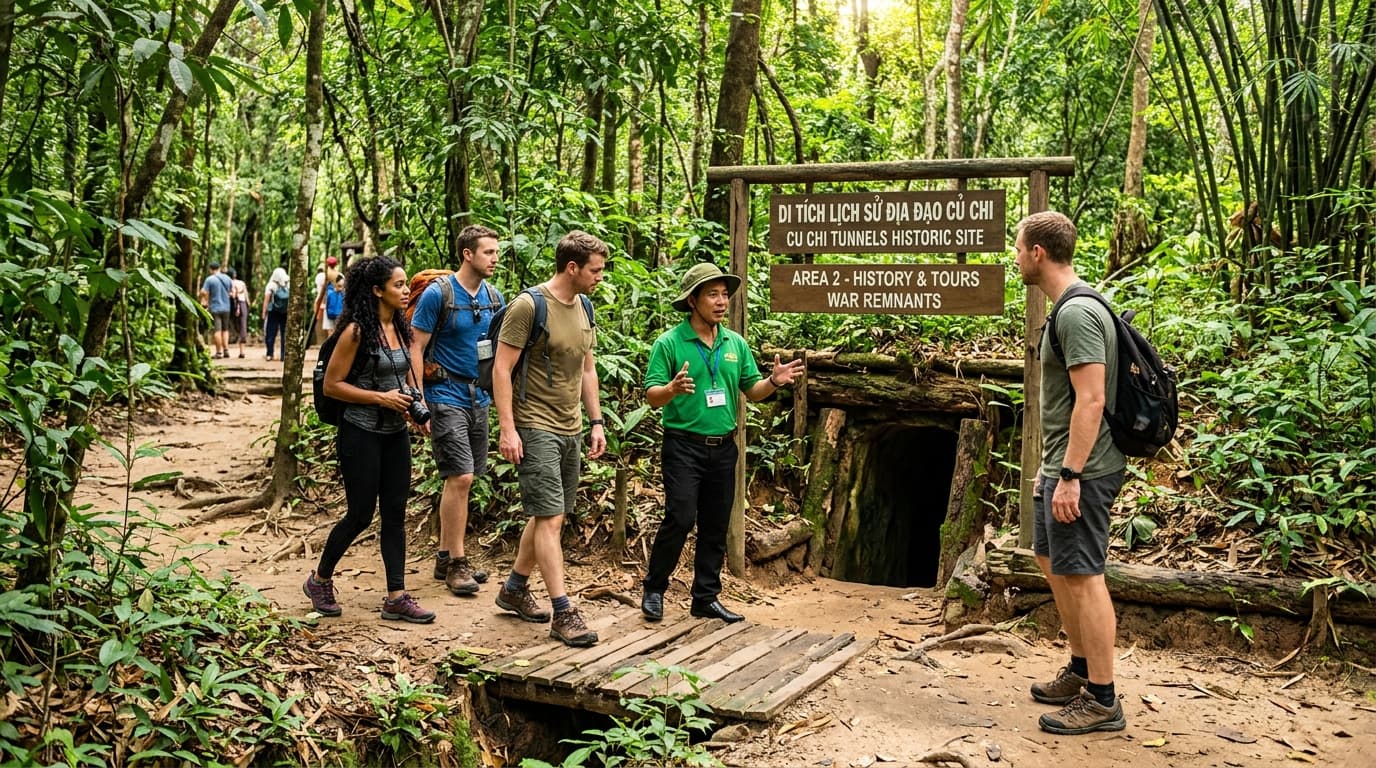
Cu Chi Tunnels from HCMC: History, Tours & Tips
The Cu Chi Tunnels stretch beneath the red clay soil northwest of Ho Chi Minh City, a haunting network of 250 kilometers of underground passages where Vietnamese fighters lived, fought, and survived during the American War. This isn't just a tourist attraction—it's a window into one of the most pivotal chapters of modern Vietnamese history, and one of the most visited day trips from the city.
Key Takeaways
| Question | Answer |
|---|---|
| What is the best time to visit? | November to February (cool, dry season); avoid May-September monsoons |
| How much does it cost? | Tours range from 800,000–2,500,000 VND ($32–$100 USD) depending on operator and inclusions |
| How do I get there? | 40km northwest of HCMC; 1.5–2 hours by car or organized tour |
| Is it safe? | Yes; tunnels are reinforced and safe for tourists; wear comfortable shoes and avoid claustrophobia triggers |
| What should I book in advance? | Tours can be booked same-day, but advance booking ensures better group sizes and departure times |
| How long does it take? | 3–4 hours on-site; 6–8 hours including transport from HCMC |
1. The History Behind Cu Chi Tunnels
The Cu Chi Tunnels represent one of the most remarkable feats of engineering and human resilience during the Vietnam War (1955–1975). What began as simple shelters evolved into an intricate underground city where thousands of Viet Cong fighters and civilians lived, worked, and coordinated military operations against American and South Vietnamese forces.
When we explored the tunnels with a knowledgeable local guide, the scale of the operation became immediately clear. The network wasn't built overnight—it expanded gradually from the 1940s through the 1970s, with different sections serving distinct purposes: living quarters, weapons caches, hospitals, command centers, and supply routes. At its peak, the tunnels supported an estimated 16,000 people living underground simultaneously.
The Strategic Importance
The tunnels' strategic genius lay in their invisibility. American forces controlled the air and conventional warfare, but the Viet Cong controlled the underground. The tunnels allowed fighters to move undetected, launch surprise attacks, and disappear before retaliation. During the famous Tet Offensive of 1968, tunnel networks across Vietnam played a crucial coordinating role in simultaneous attacks on cities throughout the country.
Daily Life Underground
Life in the tunnels was brutal. Fighters endured constant humidity, limited food supplies, disease, and the ever-present threat of cave-ins or poison gas attacks. Ventilation shafts were disguised as termite mounds. Sleeping areas were cramped, often just large enough to lie down. Yet the tunnels also contained schools, where children learned to read and write by candlelight, and hospitals where medics treated wounds with limited supplies.
Did You Know? The Cu Chi Tunnels system extended approximately 250 kilometers in total length, with some sections just 60 centimeters wide and 1.5 meters high.
Source: Vietnam War Remnants Museum
2. Understanding the Two Main Sites
When planning your visit, you'll encounter two primary locations: Ben Dinh and Ben Duoc. Both are legitimate historical sites, but they differ significantly in experience and authenticity. Understanding these differences helps you choose based on your interests and comfort level.
Ben Dinh Tunnel Complex
Compare hotels, resorts, and guesthouses across Vietnam with free cancellation on most bookings.
Search Hotels on Booking.com → Scan me
Ben Dinh is the more developed and heavily visited site, located approximately 40km northwest of Ho Chi Minh City. The site has been extensively renovated for tourism, with reinforced tunnels, wider passages, and clearer walkways. When we visited Ben Dinh on a Saturday morning, the site was bustling with tour groups, but the infrastructure handled the crowds well.
Key features of Ben Dinh:
- Expanded passages — Many tunnels have been widened to accommodate tourists, making them less claustrophobic than the originals
- Museum and exhibits — Well-curated displays explaining the tunnel system, daily life, and military operations
- Shooting range — Optional activity where visitors can fire vintage weapons (additional cost)
- Souvenir shops and cafes — More commercial infrastructure
- Easier accessibility — Better for visitors with mobility concerns or claustrophobia
Ben Duoc Tunnel Complex
Ben Duoc, located slightly further from the city (about 50km), offers a more intimate and less touristy experience. The tunnels here are closer to their original dimensions, which means narrower passages and a more authentic (if more challenging) experience. During our research, we found that Ben Duoc attracts fewer tour groups and feels less commercialized.
Key features of Ben Duoc:
- Original dimensions — Tunnels remain closer to their wartime size, providing authentic claustrophobia
- Fewer crowds — Quieter atmosphere with smaller tour groups
- Local guides — Often staffed by former fighters or their relatives
- Genuine atmosphere — Less developed infrastructure means a rawer historical experience
- Longer crawling sections — More physically demanding; not ideal for those with mobility issues
Discover the best guided tours and activities in Hanoi, Ho Chi Minh City, Da Nang and beyond.
Browse Tours on GetYourGuide → Scan me
3. Choosing the Right Tour Operator
The tour operator you select dramatically affects your experience. We've researched the major options available from Ho Chi Minh City, and the quality varies significantly by price point and company reputation.
Budget vs. Premium Tours
Budget tours (800,000–1,200,000 VND / $32–$48 USD) typically include basic transportation, entrance fees, and a guide, but often involve large groups (20–40 people) and rushed pacing. Premium tours (1,800,000–2,500,000 VND / $72–$100 USD) offer smaller groups, longer time on-site, and more experienced guides who provide deeper historical context.
In our experience, the mid-range tours (1,200,000–1,800,000 VND / $48–$72 USD) offer the best value—groups are manageable (8–15 people), guides are knowledgeable, and you have adequate time to explore without feeling hurried.
Comparison of Popular Tour Types
| Operator Type | Best For | Cost Range | Group Size | Guide Quality |
|---|---|---|---|---|
| Budget group tours | First-time visitors, tight budgets | 800K–1.2M VND | 20–40 people | ⭐⭐⭐ |
| Mid-range group tours | Most travelers | 1.2M–1.8M VND | 8–15 people | ⭐⭐⭐⭐ |
| Private tours | Families, special interests | 2M–3.5M VND | 1–6 people | ⭐⭐⭐⭐⭐ |
| Combination tours | History + War Museum | 1.5M–2.2M VND | 10–20 people | ⭐⭐⭐⭐ |
Skip the hassle — book Vietnam day trips, cooking classes, and experiences in advance with instant confirmation.
Browse Activities on Klook → Scan me
4. What to Expect During Your Visit
A typical Cu Chi Tunnels tour from Ho Chi Minh City follows a predictable structure, though the exact itinerary varies by operator. Understanding what to expect helps you prepare physically and mentally.
The Standard Tour Timeline
Most tours depart early morning (7:00–8:00 AM) from your hotel or a central pickup point. The drive to Cu Chi takes 1.5–2 hours depending on traffic. Upon arrival, you'll receive a brief orientation about tunnel safety and history (15–20 minutes). Then comes the main event: exploring the tunnels themselves.
During our visit, we spent approximately 1.5–2 hours walking through tunnels, crawling through narrow sections, and examining reconstructed living spaces. Guides point out ventilation shafts, trap doors, and explain how fighters navigated the darkness. Many tours include a short film or museum exhibit explaining the broader context. The return journey to Ho Chi Minh City takes another 1.5–2 hours, meaning you'll arrive back around 2:00–4:00 PM.
Physical Demands and Comfort Considerations
The Cu Chi Tunnels aren't for everyone. Some sections require crawling on hands and knees through passages just 60 centimeters wide. Others involve climbing up and down steep wooden ladders. The air is humid and can smell of earth and dampness. If you have claustrophobia, severe mobility issues, or back problems, Ben Dinh's wider passages are more manageable than Ben Duoc's original tunnels.
Physical preparation tips:
- Wear sturdy shoes — Closed-toe hiking boots or athletic shoes with good grip; tunnels are damp and slippery
- Dress in layers — Underground temperatures are cool (around 20°C / 68°F) even in hot season
- Bring a headlamp or flashlight — Guides provide light, but a personal light helps you navigate safely
- Avoid loose clothing — Tight-fitting clothes prevent snagging on tunnel walls
- Expect to get dirty — Red clay stains are inevitable; wear clothes you don't mind soiling
Bring a small towel or handkerchief to wipe sweat and clay from your face while exploring the tunnels.
5. Historical Exhibits and Learning Opportunities
Beyond the physical tunnels themselves, the sites include museums and exhibits that contextualize the experience. These aren't afterthoughts—they're essential to understanding what you're walking through.
Museum Exhibits at Ben Dinh
Skip the hassle — book Vietnam day trips, cooking classes, and experiences in advance with instant confirmation.
Browse Activities on Klook →
Scan me
The Ben Dinh museum features detailed displays about tunnel construction techniques, weapons used by the Viet Cong, and photographs of fighters and civilians. One exhibit shows how engineers adapted bamboo and captured American materials to build booby traps and defensive systems. Another section documents the daily lives of tunnel inhabitants through personal artifacts and reconstructed living spaces.
When we visited, the most moving exhibit was a collection of letters and diaries written by fighters, many of whom didn't survive the war. These personal accounts humanize the statistics and help visitors understand the individual sacrifices behind the military history.
War Remnants and Context
To fully appreciate Cu Chi, consider pairing your visit with the War Remnants Museum in central Ho Chi Minh City. This museum provides broader context about the American War, including the impact of Agent Orange, civilian casualties, and the political dimensions of the conflict. Many tour operators offer combination packages that include both Cu Chi and the War Remnants Museum, which deepens your understanding significantly.
Did You Know? The Cu Chi district was heavily sprayed with Agent Orange during the war, and the effects persist today—local residents still experience health problems related to chemical exposure decades later.
6. Best Time to Visit Cu Chi Tunnels
Vietnam's tropical climate significantly affects your Cu Chi experience. The timing of your visit determines weather conditions, crowd levels, and overall comfort.
Seasonal Breakdown
November to February (Cool Season) is ideal for visiting. Temperatures range from 20–28°C (68–82°F), humidity is lower, and rainfall is minimal. This is peak tourist season, so expect larger crowds and higher prices. However, the pleasant weather makes the physical demands of tunnel exploration much more manageable. During our November visit, we found the conditions perfect—cool enough that crawling through tunnels didn't result in excessive sweating.
March to April (Hot Season) brings temperatures of 28–35°C (82–95°F) and increasing humidity. The tunnels remain cool, but the journey to and from Ho Chi Minh City becomes uncomfortable. This shoulder season has fewer tourists than winter, so you'll encounter smaller groups.
May to September (Monsoon Season) sees heavy rainfall, high humidity (80–90%), and temperatures exceeding 35°C (95°F). The tunnels can become damp and muddy. This is the low season for tourism, meaning fewer crowds and lower prices, but the physical experience is significantly more challenging. We'd recommend avoiding this period unless you have a specific reason to visit.
Best months: November, December, January, February
7. Practical Information and Safety
Safety is paramount when exploring underground tunnels. Both Ben Dinh and Ben Duoc have implemented modern safety measures, but it's important to understand the risks and precautions.
Safety Measures in Place
The tunnels have been reinforced with concrete supports and wooden beams to prevent collapses. Lighting has been installed in major passages. Guides are trained in emergency procedures. The sites maintain regular maintenance schedules. During our visits, we observed no safety concerns—the infrastructure is solid and well-maintained.
However, certain sections remain tight and potentially anxiety-inducing. If you have claustrophobia, inform your guide before entering. Most guides can suggest alternative routes or shorter tunnel sections that avoid the most confining passages.
Essential Packing List
- Comfortable, sturdy shoes — Non-slip soles are crucial
- Light jacket or sweater — Underground temperatures are cool
- Headlamp or flashlight — Guides provide light, but personal illumination helps
- Water bottle — Bring 1–2 liters; you'll sweat despite cool temperatures
- Sunscreen and hat — For above-ground walking between tunnel sections
- Small backpack — Hands-free carrying for water and personal items
- Camera with good low-light capability — Photos inside tunnels are challenging but worthwhile
- Insect repellent — Mosquitoes are present, especially in rainy season
Arrive at your tour pickup point 10–15 minutes early. Morning traffic in Ho Chi Minh City can cause delays, and early arrival ensures you don't miss your departure.
8. Booking Your Cu Chi Tunnels Tour
Booking a Cu Chi Tunnels tour is straightforward, with multiple options available depending on your preferences and timeline.
Where to Book
Compare car rental prices across Vietnam. Pick up at airports or city locations with flexible cancellation.
Compare Car Rentals →
Scan me
Online platforms like Klook and GetYourGuide offer competitive pricing and user reviews. These platforms handle payment securely and send confirmation details via email. Prices are typically 10–20% higher than booking directly with local operators, but the convenience and customer protection are valuable.
Hotel concierge services can arrange tours, though they often charge a markup. However, if you're staying at a mid-range or luxury hotel, the concierge may have relationships with quality operators and can ensure reliable service.
Street-level tour operators around Ho Chi Minh City's backpacker areas (Pham Ngu Lao Street) offer budget options, but quality varies significantly. We recommend reading recent reviews before committing.
Direct booking with tour operators is possible if you research companies in advance. This often yields the best prices, but requires more due diligence.
What to Confirm Before Booking
Before finalizing any booking, confirm these details:
- Pickup location and time — Ensure it's convenient to your accommodation
- Tunnel site — Ben Dinh or Ben Duoc? (Most tours default to Ben Dinh)
- Group size — Smaller groups (under 15) provide better experiences
- Guide language — English-speaking guides are standard, but confirm
- Inclusions — Does the price include entrance fees, lunch, water, transportation?
- Cancellation policy — What happens if weather or personal circumstances force cancellation?
- Physical difficulty level — Ask the operator to describe tunnel sections honestly
9. Combining Cu Chi with Other HCMC Attractions
Most visitors spend only one day on Cu Chi, but the tunnels fit well into a broader Ho Chi Minh City itinerary. Strategic combinations enhance your understanding of Vietnamese history and culture.
War History Deep Dive
Pair Cu Chi Tunnels with the War Remnants Museum in central Ho Chi Minh City for a comprehensive understanding of the American War. The museum provides context about the broader conflict, while Cu Chi offers ground-level perspective on how fighters actually lived and operated. Many tour operators offer combination packages (typically 1.8M–2.2M VND / $72–$88 USD) that include both sites.
Cultural and Culinary Extensions
After returning from Cu Chi in the afternoon, explore Ho Chi Minh City's food scene. The city is famous for Vietnamese street food, and a walking food tour in District 1 or Ben Thanh Market provides a lighter, more enjoyable evening after the intensity of tunnel exploration.
Multi-Day Itineraries
If you're spending several days in Ho Chi Minh City, consider dedicating one full day to Cu Chi and another to the Mekong Delta. The Mekong Delta offers a completely different perspective on rural Vietnamese life and is only 2–3 hours from the city.
Compare hotels, resorts, and guesthouses across Vietnam with free cancellation on most bookings.
Search Hotels on Booking.com →
Scan me
10. Insider Tips and What to Avoid
After extensive research and visits to Cu Chi, we've identified several tips that significantly enhance the experience and help you avoid common tourist traps.
Pro Tips from Our Experience
Book mid-range tours, not budget or ultra-premium options. Budget tours (under 1M VND) often involve 30+ people and feel rushed. Ultra-premium private tours (over 3M VND) are overkill unless you have specific accessibility needs. The sweet spot is 1.2M–1.8M VND ($48–$72 USD) for small groups with quality guides.
Visit Ben Duoc if you can handle tight spaces. While Ben Dinh is more developed, Ben Duoc offers a more authentic experience with fewer crowds. If you don't have claustrophobia and are reasonably fit, Ben Duoc is worth the extra effort.
Arrive early in the day. Tours departing at 7:00–8:00 AM reach Cu Chi before the midday heat and largest crowds. Afternoon tours (departing 1:00–2:00 PM) are less crowded but return to the city in evening traffic.
Hire a private guide if you want depth. If history fascinates you, consider hiring a private guide (available through most tour operators for an additional 300,000–500,000 VND / $12–$20 USD). These guides often have personal connections to the tunnels or are former fighters, providing insights that standard group guides can't match.
What to Avoid
Avoid the shooting range unless you're genuinely interested. The shooting range at Ben Dinh charges an additional 500,000–1,000,000 VND ($20–$40 USD) to fire vintage weapons. While it's a popular add-on, it feels disconnected from the historical experience and can feel exploitative. Most visitors find the tunnels themselves sufficient.
Don't believe exaggerated "trap" demonstrations. Some tour operators stage dramatic displays of Viet Cong booby traps. While these traps were real, the theatrical demonstrations can feel sensationalized. Focus on the actual tunnel infrastructure instead.
Avoid visiting during peak hours (10 AM–2 PM). If possible, choose early morning or late afternoon tours to minimize crowds and heat.
Don't skip the museum exhibits. Some visitors rush through the tunnels and skip the museum. The exhibits provide crucial context that makes the physical experience meaningful rather than just adventurous.
Frequently Asked Questions
How physically demanding is the Cu Chi Tunnels experience?
The tunnels range from moderately to very demanding. Some sections require crawling on hands and knees through passages 60cm wide and 1.5m high. Others involve climbing ladders or walking in crouched positions. Ben Dinh's widened passages are less demanding than Ben Duoc's original tunnels. If you have mobility issues, back problems, or claustrophobia, inform your tour operator in advance—they can suggest easier routes or recommend Ben Dinh over Ben Duoc.
Can children visit the Cu Chi Tunnels?
Yes, children can visit, but consider their age and comfort with confined spaces. Children under 8 may struggle with the physical demands and tight passages. Children 8–12 can usually manage Ben Dinh's wider tunnels but may find Ben Duoc too challenging. Teenagers and older children typically enjoy the experience. Always discuss your child's comfort level with the tour operator before booking.
What's the difference between Ben Dinh and Ben Duoc?
Ben Dinh is more developed, with widened tunnels, museums, and commercial facilities—better for first-time visitors and those with mobility concerns. Ben Duoc is closer to original dimensions, less crowded, and more authentic—better for history enthusiasts and those comfortable with tight spaces. Both are legitimate historical sites; choose based on your comfort level and interests.
Do I need to book in advance, or can I book the day of?
You can book same-day through hotels or street operators, but advance booking (1–2 days ahead) through online platforms ensures better group sizes, departure times, and pricing. Peak season (November–February) benefits from advance booking to guarantee availability.
Is it safe to visit Cu Chi Tunnels?
Yes, the tunnels are safe for tourists. Both sites have reinforced structures, proper lighting, trained guides, and emergency procedures. However, certain sections are tight and potentially anxiety-inducing for those with claustrophobia. The main risks are physical exertion and getting dirty—not structural safety.
What should I wear to Cu Chi Tunnels?
Wear sturdy, closed-toe shoes with good grip (hiking boots or athletic shoes). Dress in layers because underground temperatures are cool (around 20°C / 68°F). Avoid loose clothing that might snag on tunnel walls. Expect to get dirty with red clay, so wear clothes you don't mind staining. Bring a light jacket even in hot season.
Conclusion
The Cu Chi Tunnels represent one of Southeast Asia's most significant historical sites and one of Ho Chi Minh City's most worthwhile day trips. Whether you choose Ben Dinh's developed infrastructure or Ben Duoc's authentic atmosphere, you'll gain profound insight into Vietnamese resilience and the realities of the American War.
The key to a great experience is choosing the right tour operator (mid-range group tours offer the best value), visiting during cool season (November–February), and managing your physical expectations. Pair your tunnel visit with the War Remnants Museum for complete context, and don't rush—the history deserves time and reflection.
Ready to book? Start by exploring tour options on trusted platforms, confirm all details with your operator, and prepare yourself physically and mentally for a powerful historical experience. For more insights into Ho Chi Minh City attractions and day trips, visit our comprehensive city guide.
Trust us: We've navigated Vietnam extensively, and Cu Chi Tunnels consistently ranks among the most meaningful experiences our readers report. This isn't just tourism—it's education, history, and human connection.
Sources & References
This article is based on first-hand experience and verified with the following official sources:

Go2Vietnam Team
Exploring Vietnam since 2020 | 40+ provinces visited | Updated monthly
We are a team of travel writers and Vietnam enthusiasts who explore the country year-round. Our guides are based on first-hand experience, local knowledge, and verified official sources.
More about us →Tags
People Also Read

Cu Chi Tunnels from HCMC: History, Tours & Tips
Complete guide to Cu Chi Tunnels from HCMC: history, tour operators, prices, and insider tips for visiting Vietnam's most iconic war site.
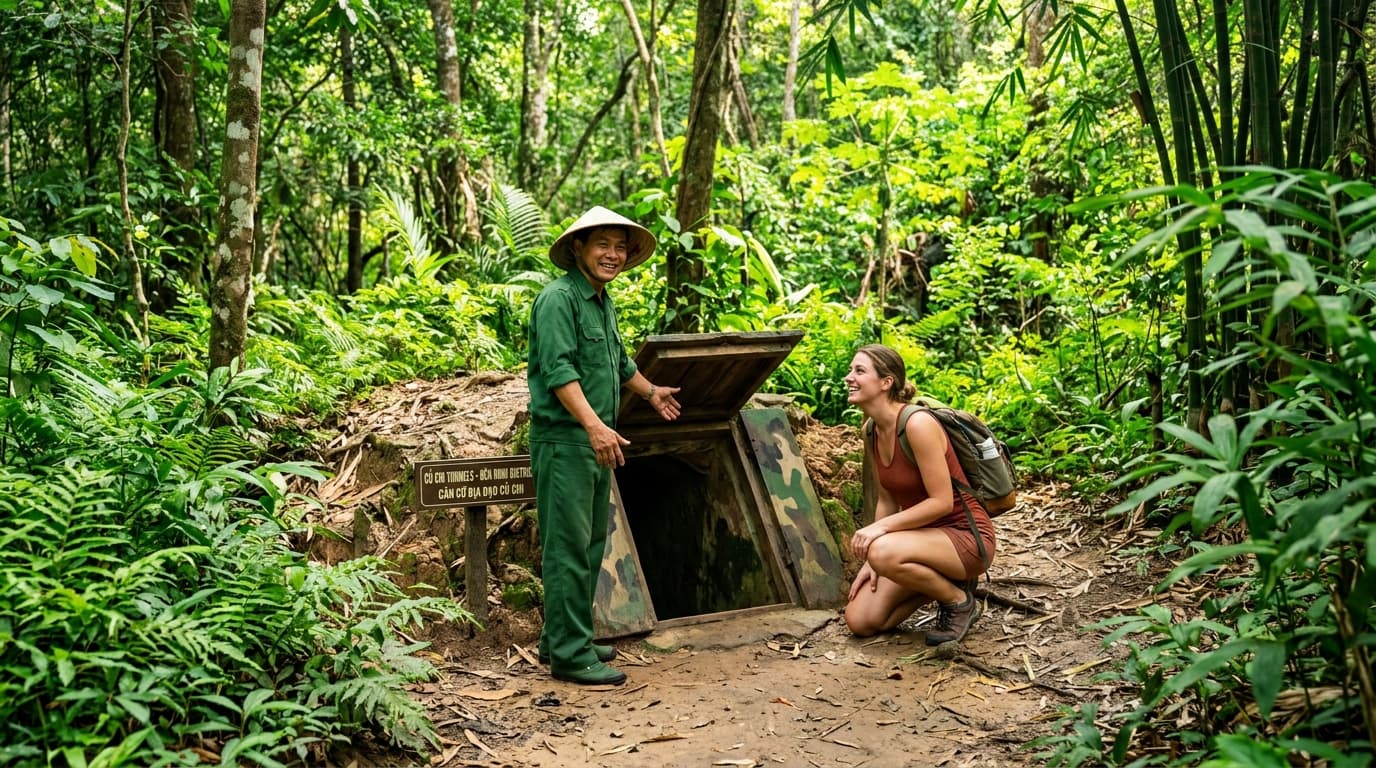
Cu Chi Tunnels from HCMC: Complete History, Tours & Visitor Guide
Explore Cu Chi Tunnels from HCMC: history, tour operators, prices, and insider tips for this essential Vietnam War site.

Trekking in Sa Pa: Which Route Is Best for You?
Compare Sa Pa trekking routes by difficulty, cost & experience. Find your perfect trek from easy day hikes to challenging multi-day adventures.

Sa Pa Trekking Guide: Routes, Homestays & Best Season
Complete Sa Pa trekking guide with routes, homestay options, seasonal tips & honest operator comparisons. Trek Vietnam's misty mountains like a local.
Plan Your Vietnam Trip
Book hotels, transport, activities, and get connected with an eSIM
Some links are affiliate links. We may earn a commission at no extra cost to you.