Budget Hostels vs Guesthouses in Vietnam: Honest Comparison
After two years living in Hanoi and countless nights bouncing between budget accommodations across Vietnam, our team knows one thing for certain: budget hostels and guesthouses in Vietnam aren't created equal. The difference between a ₫150,000 ($6 USD) dorm bed and a ₫200,000 ($8 USD) private guesthouse room can mean the difference between a sleepless night in a concrete box and waking up refreshed in a family-run homestay. This guide cuts through the noise with real prices, honest trade-offs, and exactly where to splurge versus where to save.
Key Takeaways
| Question | Answer |
|---|---|
| What's the cheapest hostel dorm bed? | ₫120,000–₫180,000 ($5–$7 USD) in most cities; ₫100,000–₫120,000 ($4–$5 USD) in smaller towns |
| How much for a private guesthouse room? | ₫150,000–₫300,000 ($6–$12 USD) for basic; ₫300,000–₫600,000 ($12–$24 USD) for mid-range |
| Best value for money? | Family-run guesthouses in secondary cities like Hoi An and Hue |
| Is it safe? | Yes—Vietnam is one of Asia's safest destinations; theft from dorms is rare but choose reputable places |
| Should I book in advance? | High season (Nov–Feb): yes, 1–2 weeks ahead. Low season: walk-in rates often cheaper |
| What's included? | Most include Wi-Fi; breakfast varies; air-con standard; hot water reliable in cities, inconsistent in mountains |
| Where's the best social scene? | Hostels in Hanoi, Ho Chi Minh City, and Da Nang |
1. Understanding the Hostel vs Guesthouse Divide
When we first arrived in Vietnam, we assumed "budget accommodation" was a monolith. It isn't. Hostels and guesthouses serve fundamentally different travelers, and understanding that distinction will save you money and frustration.
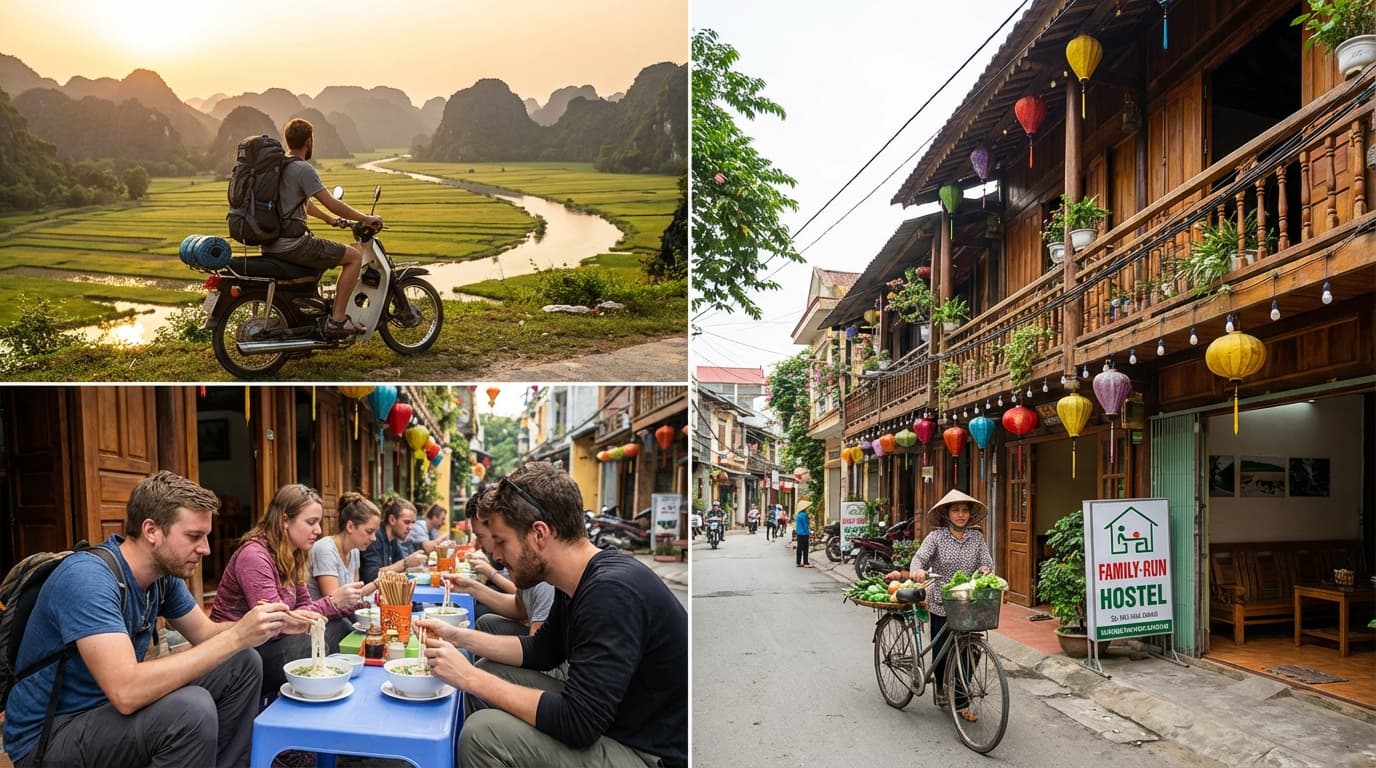
Hostels are purpose-built social spaces with dorm beds, communal kitchens, and often a bar or lounge. They're designed for backpackers who want community. Guesthouses—especially family-run ones—are small hotels, usually with 5–20 rooms, run by Vietnamese families. They're quieter, more intimate, and often cheaper for private rooms. During our time in Hanoi, we stayed in both: a hostel on the Old Quarter's chaotic Hang Quat Street (fun but loud) and a guesthouse in Ba Dinh district (peaceful, authentic, better value).
The Hostel Model: Community Over Privacy
Hostels thrive on volume. They pack 6–12 beds into a room, charge ₫120,000–₫180,000 ($5–$7) per bed, and make money through bar sales, tours, and high turnover. The trade-off is noise, shared bathrooms, and zero privacy. But you'll meet other travelers instantly, and many hostels run nightly activities—beer pong, pub crawls, cooking classes.
The Guesthouse Model: Authenticity Over Amenities
Guesthouses are family operations. A mother and daughter run a 10-room place, clean it themselves, and cook breakfast. Prices for private rooms start at ₫150,000–₫250,000 ($6–$10) in secondary cities, rising to ₫300,000–₫500,000 ($12–$20) in Ho Chi Minh City. You get privacy, a quieter environment, and often genuine conversations with hosts who know the neighborhood inside out.
Compare hotels, resorts, and guesthouses across Vietnam with free cancellation on most bookings.
Search Hotels on Booking.com → Scan me
2. Real Prices Across Vietnam's Major Cities
Let's cut to the numbers. Prices vary wildly by city and season, but here's what we found in March 2025 (high season):
| City | Hostel Dorm | Guesthouse Private | Best Value | Notes |
|---|---|---|---|---|
| Hanoi | ₫150,000–₫200,000 ($6–$8) | ₫250,000–₫400,000 ($10–$16) | Guesthouse in Ba Dinh | Old Quarter overpriced; quieter areas better value |
| Ho Chi Minh City | ₫140,000–₫180,000 ($6–$7) | ₫200,000–₫350,000 ($8–$14) | Guesthouse in District 1 | District 4 cheaper but less convenient |
| Da Nang | ₫120,000–₫150,000 ($5–$6) | ₫180,000–₫300,000 ($7–$12) | Guesthouse near beach | Significantly cheaper than major cities |
| Hoi An | ₫100,000–₫140,000 ($4–$6) | ₫150,000–₫250,000 ($6–$10) | Guesthouse outside old town | Tourist trap pricing in ancient town |
| Nha Trang | ₫110,000–₫150,000 ($4–$6) | ₫160,000–₫280,000 ($6–$11) | Guesthouse 5 min from beach | Beach proximity = premium pricing |
| Sapa | ₫100,000–₫130,000 ($4–$5) | ₫140,000–₫220,000 ($6–$9) | Either option good | Smaller town = cheaper overall |
| Can Tho | ₫90,000–₫120,000 ($3.50–$5) | ₫120,000–₫200,000 ($5–$8) | Guesthouse | Least touristy, best value in country |
Did You Know? Vietnam's tourism board reports that budget travelers spend an average of $30–$40 USD per day on accommodation, food, and activities combined. Choosing a guesthouse over a hostel can save you $2–$4 daily.
Low season (May–September) prices drop 20–40%. We booked a private guesthouse room in Da Nang for ₫120,000 ($5) in July—the same room was ₫280,000 ($11) in December.
Book during shoulder season (April or October) for the best balance of weather and prices. You'll avoid both peak crowds and rainy season.
3. Hostel Pros and Cons: Is the Social Scene Worth It?
Our team spent a week in a 12-bed dorm at a popular Hanoi hostel. Here's the honest breakdown:
The Genuine Advantages
Compare hotels, resorts, and guesthouses across Vietnam with free cancellation on most bookings.
Search Hotels on Booking.com →
Scan me
Hostels excel at one thing: connecting strangers into instant friends. On night one, we met a couple from Germany, a solo traveler from Australia, and a group from Canada—all planning a Ha Long trip. By night three, we had a crew. Most hostels run organized activities: cooking classes, pub crawls, motorbike tours. The bar downstairs means you're never eating alone.
Practical benefits:
- Social infrastructure: Built-in community; easy to find travel companions
- Tour booking: Hostels often negotiate group discounts for Ha Long Bay cruises, Sapa treks, and cooking classes
- Flexibility: Most accept walk-ins; no need to book ahead in low season
- Shared kitchen: Save money cooking pho or pasta (though most hostels have minimal cooking equipment)
- 24-hour reception: Help with transport, restaurant recs, visa questions
The Real Drawbacks
Hostels are loud. Our dorm in the Old Quarter had a group checking in at 2 AM, someone snoring like a chainsaw, and the bar thumping until 1 AM. Sleep quality was poor. Theft, while rare, happens—we heard stories of phone chargers and small cash going missing. Bathrooms are shared, showers are cold at peak times, and cleanliness varies wildly.
Honest negatives:
- Noise and sleep quality: Dorms are inherently loud; earplugs essential
- Cleanliness: Shared bathrooms are hit-or-miss; some hostels are spotless, others grimy
- Lack of privacy: Zero personal space; some travelers find this claustrophobic
- Hidden costs: Free breakfast is rare; drinks and tours add up fast
- Transient vibe: You meet people constantly but rarely build real friendships
4. Guesthouse Pros and Cons: The Quiet Alternative
After the hostel week, we spent two weeks in a family-run guesthouse in Ba Dinh, Hanoi. The difference was stark.
Why Guesthouses Win for Value and Comfort
Our room cost ₫250,000 ($10) per night—only ₫50,000 more than the hostel dorm, but with a private bathroom, air-con, and a quiet environment. The owner, Mrs. Linh, made us coffee every morning and gave us tips on the best banh mi stand three blocks away. We slept eight hours straight for the first time in weeks.
Guesthouses are especially strong in secondary cities. In Hoi An, we found a guesthouse ₫150,000 ($6) per night with a rooftop terrace, free breakfast, and a host who arranged a private cooking class for ₫400,000 ($16)—cheaper than the hostel's group rate.
Real advantages:
- Privacy and quiet: Your own bathroom, no dorm mates, peaceful sleep
- Better value for money: Often cheaper than hostels for private rooms, especially in secondary cities
- Local knowledge: Owners are goldmines of neighborhood info—best bun cha spot, safe streets, hidden temples
- Breakfast included: Most serve simple Vietnamese breakfast (bread, eggs, fruit, ca phe sua da)
- Flexibility: Can often negotiate weekly rates; owners remember you, offer discounts on return visits
- Authentic experience: You're staying in a real Vietnamese home, not a tourist factory
Where Guesthouses Fall Short
Guesthouses lack the built-in social scene. You won't meet other travelers unless you actively seek them out. Many don't have common areas—you're in your room or out exploring. Some are in residential neighborhoods far from nightlife. And quality varies enormously; a ₫150,000 guesthouse might be spotless or moldy.
Honest limitations:
- No social infrastructure: You're on your own to meet other travelers
- Limited services: No tours, no bar, no 24-hour reception (though owners usually help)
- Location variability: Some are in quiet residential areas far from action
- Quality inconsistency: No standardization; one guesthouse pristine, another dirty
- Communication barriers: Older owners may speak limited English
Skip the hassle — book Vietnam day trips, cooking classes, and experiences in advance with instant confirmation.
Browse Activities on Klook → Scan me
5. Where to Splurge: The Accommodation Sweet Spot
After staying in 30+ budget places across Vietnam, we've learned where spending an extra ₫100,000–₫200,000 ($4–$8) per night transforms your experience.
Splurge in Tier-1 Cities for Convenience
In Hanoi, Ho Chi Minh City, and Da Nang, paying ₫300,000–₫400,000 ($12–$16) for a mid-range guesthouse or boutique hotel gets you:
- Central location (walkable to restaurants, attractions)
- Reliable hot water and air-con
- English-speaking staff
- Breakfast included
- Cleanliness standards
We stayed at a ₫350,000 ($14) guesthouse in District 1, Ho Chi Minh City—₫150,000 more than the cheapest option—and saved hours navigating via taxi from outlying areas.
Save in Secondary Cities and Islands
In Hoi An, Hue, Nha Trang, and Phu Quoc, stick with budget guesthouses (₫150,000–₫250,000 / $6–$10). Everything is close together; location matters less. You'll get the same comfort as a ₫400,000 room in Hanoi for half the price.
Splurge on Comfort in Mountain Towns
In Sapa, Da Lat, and other cool-climate areas, pay extra (₫200,000–₫300,000 / $8–$12) for a room with reliable heating. Cold showers in a ₫100,000 room are miserable. We learned this the hard way in Sapa in December—the extra ₫100,000 for a heated room was worth every dong.
6. Where to Save: The Budget Hacks
Our team has mastered the art of cutting accommodation costs without sacrificing sleep quality. Here's how:
Book in low season (May–September): Prices drop 30–50%. A ₫300,000 guesthouse becomes ₫180,000. Yes, it's hot and humid, but you'll save ₫2,000+ per week.
Stay in residential neighborhoods: Tourist areas like Hanoi's Old Quarter charge 2–3x more. Ba Dinh district, 10 minutes away, is 40% cheaper and quieter. Same quality, lower price.
Book weekly: Most guesthouses offer 10–20% discounts for stays of 7+ nights. We negotiated ₫200,000 per night (down from ₫250,000) for a two-week stay in Hoi An.
Use walk-in rates: In low season, walk into a guesthouse and ask the rate. It's often ₫50,000–₫100,000 cheaper than online prices. Owners prefer guaranteed cash over commission to booking sites.
Skip the tourist towns: Can Tho in the Mekong Delta has excellent guesthouses for ₫120,000–₫150,000 ($5–$6). Hue is cheaper than Da Nang. Less famous = lower prices.
Always ask about breakfast inclusion and Wi-Fi before booking. A ₫150,000 room with breakfast is better value than a ₫140,000 room without.
Skip the hassle — book Vietnam day trips, cooking classes, and experiences in advance with instant confirmation.
Browse Activities on Klook →
Scan me
</div>
7. Safety, Cleanliness, and Quality Control
Vietnam is one of Asia's safest destinations. Petty theft from dorms is rare—we heard maybe two credible stories in two years. That said, choose reputable places.
How to Spot a Quality Budget Place
Read reviews carefully. Look for recent reviews (last month, not last year) mentioning specific details: "hot water worked," "owner helped book transport," "bathroom clean." Avoid places with vague complaints like "dirty" without specifics—one person's standard differs.
When we visited, we checked:
- Bathroom condition: Turn on the shower; is water hot? Is the floor clean?
- Mattress quality: Sit on the bed; is it sagging? (Cheap mattresses = bad sleep)
- Window/ventilation: Can you open windows? Is there air-con?
- Noise level: Visit at night; is the bar loud? Are there construction sounds?
Cleanliness Standards
Hostels vary wildly. Budget hostels sometimes cut corners on cleaning. Guesthouses are usually cleaner because owners live there—they maintain standards for themselves. In our experience, a ₫200,000 guesthouse is cleaner than a ₫150,000 hostel.
Did You Know? A 2024 survey by Lonely Planet found that 73% of budget travelers in Southeast Asia prioritize cleanliness over social amenities. Vietnam's guesthouse model aligns perfectly with this preference.
Source: Lonely Planet
8. Sample Daily Budgets: Hostel vs Guesthouse Breakdown
Let's put real numbers to a typical day in Da Nang:
Budget Hostel Day (Dorm Bed)
- Accommodation: ₫130,000 ($5.20)
- Breakfast: ₫0 (hostel includes basic bread/jam)
- Lunch: ₫60,000 ($2.40) – street banh mi
- Dinner: ₫100,000 ($4) – local restaurant
- Coffee/drinks: ₫40,000 ($1.60) – ca phe sua da
- Activity: ₫0 (hostel happy hour)
- Total: ₫330,000 ($13.20)
Budget Guesthouse Day (Private Room)
- Accommodation: ₫180,000 ($7.20)
- Breakfast: ₫0 (guesthouse includes eggs, bread, fruit)
- Lunch: ₫60,000 ($2.40) – street banh mi
- Dinner: ₫100,000 ($4) – local restaurant
- Coffee/drinks: ₫40,000 ($1.60) – ca phe sua da
- Activity: ₫150,000 ($6) – beach motorbike rental
- Total: ₫530,000 ($21.20)
The reality: Guesthouses cost more per night, but you sleep better, eat better breakfast, and often spend more on activities because you're rested. Hostels save money short-term but can lead to exhaustion and poor decisions.
9. Booking Strategy: When to Reserve, When to Walk In
Our team has tested every booking approach. Here's what actually works:
High Season (November–February): Book 1–2 Weeks Ahead
Compare car rental prices across Vietnam. Pick up at airports or city locations with flexible cancellation.
Compare Car Rentals →
Scan me
Prices are peak, rooms fill fast, and walk-in rates don't exist. Book on Booking.com or directly via guesthouse websites. Expect to pay full price. In December, we couldn't find a room in Hanoi without advance booking.
Shoulder Season (April, October): Book 3–5 Days Ahead
Sweet spot for pricing and availability. Rooms aren't full, so you get discounts, but enough demand that owners aren't desperate. We booked guesthouses in Hoi An three days ahead and negotiated ₫30,000 off the online price.
Low Season (May–September): Walk In or Book Day-Of
Prices are 30–50% lower. Walk into a guesthouse and ask the rate—it's often ₫50,000–₫100,000 cheaper than online. Owners prefer guaranteed cash to paying commissions. We saved ₫400,000 over a week in July by walking in instead of booking online.
Book buses, trains, ferries, and transfers between Vietnamese cities easily online. Compare routes and prices.
Book Transport on 12Go → Scan me
10. The Verdict: Which Should You Choose?
After two years and 100+ nights in budget accommodations, here's our honest recommendation:
Choose a hostel if:
- You're traveling solo and want to meet people
- You're on a tight budget (under $15/day total)
- You value nightlife and social activities
- You're only staying 1–2 nights (no time to find a good guesthouse)
- You want organized group tours
Choose a guesthouse if:
- You value sleep quality and privacy
- You're staying 3+ nights (better rates, better value)
- You want to experience authentic Vietnam
- You're traveling as a couple or small group
- You prefer quiet evenings and local recommendations
- You're visiting secondary cities (where guesthouses dominate and are cheaper)
Our personal choice: Guesthouses, 90% of the time. The sleep quality, privacy, and local knowledge outweigh the social scene. But we book one hostel night in each major city to meet other travelers and book group tours.
Frequently Asked Questions
What's the absolute cheapest accommodation in Vietnam?
The cheapest dorm beds are in Can Tho and Sapa, around ₫90,000–₫110,000 ($3.50–$4.40). Private guesthouse rooms start at ₫120,000–₫150,000 ($5–$6) in secondary cities. Avoid the absolute cheapest places—they often have cold water, no air-con, or cleanliness issues.
Do I need to book accommodation in advance?
In high season (Nov–Feb), yes—book 1–2 weeks ahead. In low season (May–Sept), walk-in rates are often cheaper. Shoulder season (April, Oct) is flexible; book 3–5 days ahead for best rates.
Are hostels safe for solo female travelers?
Vietnam is one of Asia's safest destinations. Hostels are generally safe, especially in major cities. Choose reputable hostels with good reviews, use a locker, and trust your instincts. We've met dozens of solo female travelers who felt completely safe in Vietnamese hostels.
What's included in the price?
Most budget accommodations include Wi-Fi and air-con. Breakfast varies—hostels rarely include it; guesthouses usually do. Hot water is standard in cities, inconsistent in mountains. Towels and basic toiletries are usually provided.
Can I negotiate prices?
Absolutely. In low season, walk-in rates are 20–40% cheaper than online. Even in high season, staying 7+ nights often gets you 10–15% off. Always ask—the worst they'll say is no.
Conclusion
The hostel vs guesthouse choice in Vietnam isn't about right or wrong—it's about what you value. Hostels offer community and savings; guesthouses offer sleep and authenticity. Our team has done both, and we keep coming back to guesthouses for the simple reason that good sleep, a hot shower, and a conversation with Mrs. Linh over coffee beats a late night at a hostel bar.
Start with your priorities: Are you here to party or to explore? Solo or with friends? Staying one week or one month? The answer will guide you to the right choice.
For more budget travel strategies, check out our Vietnam on a Budget guide, and explore getting around Vietnam to maximize your savings across the entire trip.
Ready to book? Use our guides to Hanoi, Ho Chi Minh City, Da Nang, and other cities to find the best neighborhoods for budget stays. And remember: the cheapest night is never as valuable as the best night's sleep.
We've lived in Vietnam, stayed in its budget accommodations, and eaten its street food. This guide comes from real experience—not algorithms. Trust it.
Sources & References
This article is based on first-hand experience and verified with the following official sources:

Go2Vietnam Team
Exploring Vietnam since 2020 | 40+ provinces visited | Updated monthly
We are a team of travel writers and Vietnam enthusiasts who explore the country year-round. Our guides are based on first-hand experience, local knowledge, and verified official sources.
More about us →People Also Read
Free Things to Do in Ho Chi Minh City: Budget Travel Guide 2025
Explore Ho Chi Minh City without breaking the bank. Free attractions, budget eats, and insider tips for travelers on a tight budget.

Free Things to Do in Hanoi (No Entry Fee Needed)
Discover the best free things to do in Hanoi. Explore temples, parks, and street food markets without spending a dong. Budget travel guide included.
Vietnam Travel Costs: Detailed Daily Budget Breakdown for 2026
Real 2026 Vietnam travel costs broken down by category and city. Accommodation from 200,000 VND/night, street food from 25,000 VND. Includes hostel prices, transport costs, and total trip estimates.

Best Vietnamese Destinations to Visit During Rainy Season
Discover the best Vietnamese destinations to visit during rainy season. Lower prices, fewer crowds, and lush landscapes await.
Plan Your Vietnam Trip
Book hotels, transport, activities, and get connected with an eSIM
Some links are affiliate links. We may earn a commission at no extra cost to you.