Vietnamese Coffee Culture: From Cà Phê Sữa Đá to Specialty Roasters
Coffee did not exist in Vietnam before 1857. That year, a French Catholic priest named Father Tichot planted the first Arabica tree in the northern highlands near Hanoi -- a small act that would eventually transform Vietnam into the world's second-largest coffee producer, behind only Brazil. Today, Vietnam grows roughly 30% of the world's robusta supply, cultivated primarily on the red basalt soils of the Central Highlands around Buôn Ma Thuột.
But raw production numbers miss the point. What makes Vietnamese coffee culture remarkable is not volume -- it is the specific rituals that grew up around a foreign crop transplanted into Vietnamese daily life. The drip filter, the condensed milk, the plastic stool, the hours spent watching the street from a low table: these are genuinely Vietnamese things.
A Brief History of Cà Phê
The French introduced coffee as a plantation crop in the 1870s and 1880s, mainly in the Central Highlands (Tây Nguyên) and Đà Lạt. Vietnamese workers on French plantations developed a taste for the product, but fresh milk -- a French café staple -- was expensive and difficult to keep. The solution was sweetened condensed milk, shelf-stable in tins, which mixed perfectly with the intense robusta concentrate. By the 1920s, cà phê sữa (milk coffee) was a distinctly Vietnamese thing.
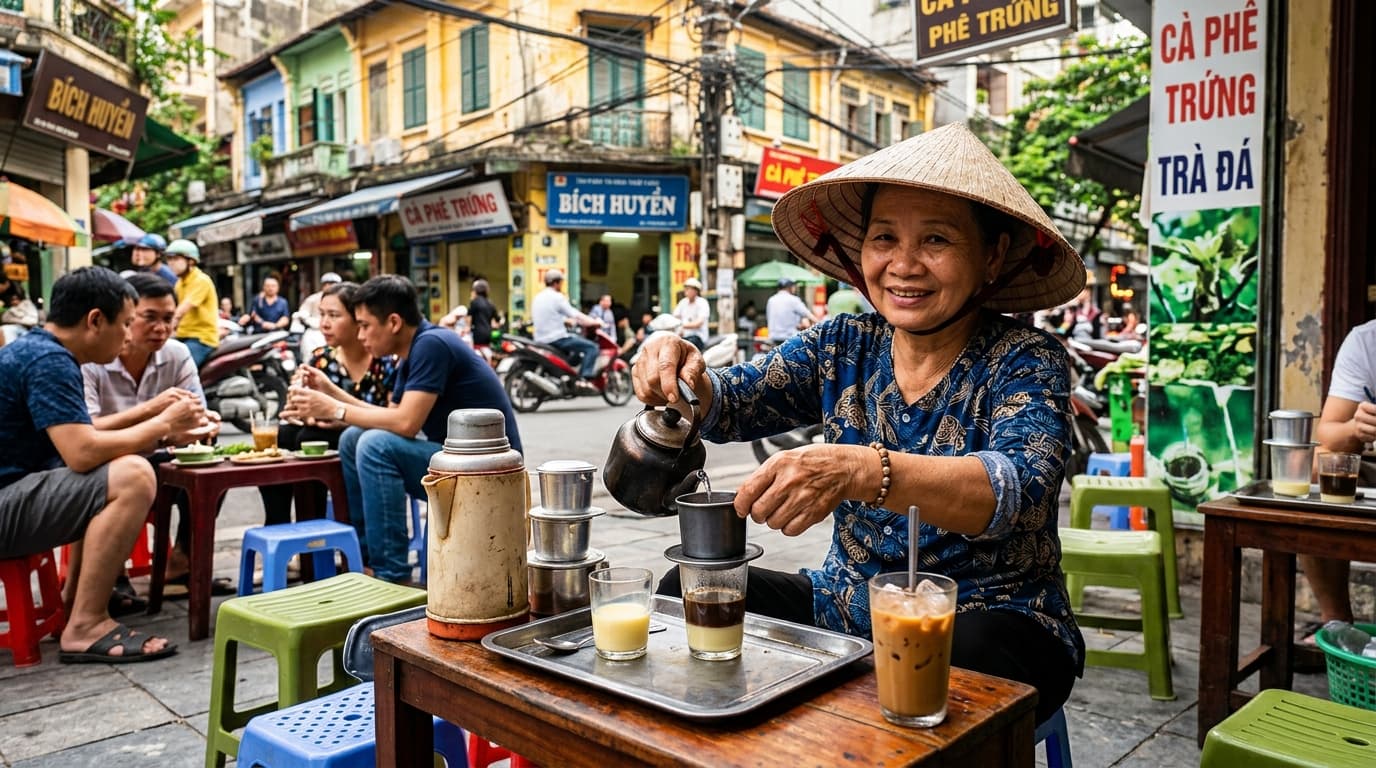
The phin filter (phin cà phê) -- a simple stainless steel dripper that sits on top of a glass -- became the national brewing method by default. No electricity, no expensive equipment. Just hot water, ground coffee, time, and patience. The four-minute wait while the phin drips is, in itself, a distinctive aspect of Vietnamese café culture: you sit, you watch, you do not hurry.
During the French Indochina War and American War periods, access to dairy remained limited. This constraint produced one of Vietnam's most beloved inventions.
Cà Phê Trứng: The Egg Coffee Story
In the late 1940s, Nguyễn Văn Giảng was working as a bartender at the Sofitel Métropole Hotel in Hanoi. Milk was nearly impossible to obtain. Looking for a creamy substitute to serve in coffee, he began experimenting with egg yolks whipped with condensed milk and a little sugar. The result -- a thick, sweet foam somewhere between zabaglione and meringue -- sat on top of a small glass of strong robusta coffee like a cloud over a storm.
Cà phê trứng (egg coffee) became Nguyễn's signature, and when he opened Café Giang at 39 Nguyễn Hữu Huân in the Old Quarter, it became the café's identity. His son Nguyễn Văn Đức runs it today, using the original recipe. The glass arrives warm, nestled in a bowl of hot water to keep the temperature. You drink it slowly, letting the egg foam and the coffee mix gradually with each sip.
Price at Café Giang: 35,000-50,000 VND ($1.40-2). Worth every đồng. Opening hours: 7 AM - 10 PM daily.
The Main Types of Vietnamese Coffee
Cà Phê Sữa Đá (Iced Milk Coffee)
The national drink. Strong robusta dripped through a phin filter into a glass of sweetened condensed milk, then poured over ice. Available at every café in Vietnam, from mountain guesthouses to airport terminals. Cost: 20,000-45,000 VND ($0.80-1.80) at street stalls; 40,000-80,000 VND at sit-down cafes.
Cà Phê Đen (Black Coffee)
The same phin-dripped robusta, no milk, served hot (nóng) or iced (đá). Intensely strong. The preferred morning drink of older Vietnamese men. Pair with a bánh mì or xôi (sticky rice) for the authentic Hanoian breakfast experience.
Cà Phê Trứng (Egg Coffee)
Described above. Primarily a Hanoi specialty. A few cafes in Ho Chi Minh City and Hoi An serve it, but the original is at Café Giang.
Cà Phê Cốt Dừa (Coconut Coffee)
Cold brew or phin coffee layered with blended coconut cream. Originated in Hội An, now available nationwide. Richer and sweeter than standard iced milk coffee. Best version: Rosie's Coffee in Hoi An's Old Town.
Cà Phê Muối (Salt Coffee)
A Huế specialty -- drip coffee with a layer of salted cream on top. The salt amplifies the sweetness and cuts the bitterness in a way that sounds wrong but tastes surprisingly good. The Hue Salted Coffee cafe on Phạm Ngũ Lão Street in Hue is the most famous purveyor.
Cà Phê Sữa Chua (Yogurt Coffee)
Hanoi invention: cold, tangy, dense yogurt mixed with strong coffee concentrate. A texture experience as much as a flavor one. Slightly sour, slightly sweet, very cold. Try it at Cafe Đinh, 13 Đinh Tiên Hoàng, Hanoi.
Bạc Xỉu (Southern-Style White Coffee)
More milk than coffee -- the Vietnamese equivalent of a café au lait. The ratio is roughly 2/3 condensed milk to 1/3 coffee. A Ho Chi Minh City classic, sold at streetside stalls from early morning. Costs 15,000-30,000 VND ($0.60-1.20).
The Phin Filter: How It Works
The phin cà phê is simple hardware: a perforated metal plate sits in the cup, ground coffee goes on top, a metal press compresses the grounds lightly, and a lid sits on top to retain heat. Hot water -- just off the boil -- is poured in and allowed to drip through at roughly 1 drop per second. The process takes 4-6 minutes.
Key variables: grind size (coarser than espresso, finer than French press), water temperature (90-92°C is ideal), and compression pressure (lighter for faster extraction, firmer for stronger coffee). Vietnamese cafes typically use pre-ground dark-roasted robusta blended with a small percentage of arabica and sometimes butter or rice wine for smoothness.
You can buy a phin at any market for 15,000-30,000 VND. Trung Nguyên Coffee (Vietnam's largest domestic brand) sells ground blends specifically calibrated for phin brewing at G7 Mart and supermarkets.
Best Cafes in Hanoi
Café Giang — Egg Coffee Originator
39 Nguyễn Hữu Huân, Hoàn Kiếm District The original. Small, cramped, perpetually busy. Order the hot egg coffee (cà phê trứng nóng) and find a seat upstairs. The atmosphere -- cracked tiles, old photos, the sound of the street -- is as much the experience as the coffee itself. 35,000-50,000 VND.
Cafe Đinh — Classic Hanoi Institution
13 Đinh Tiên Hoàng, Hoàn Kiếm District Hidden up a narrow staircase above a pharmacy near Hoan Kiem Lake. Famous for egg coffee and yogurt coffee. Students, pensioners, and foreign visitors crammed together on wooden chairs. Open since 1979. 30,000-45,000 VND.
The Note Coffee — Old Quarter Landmark
64 Lương Văn Can, Hoàn Kiếm District Every surface covered in hand-written notes from previous visitors. Tourist-oriented, but the coffee is genuinely good and the rooftop view of the Old Quarter is worth the slightly elevated prices (50,000-80,000 VND).
VULAB Coffee Roastery — Specialty
Cầu Giấy District Opened in 2023 by SCA-certified roaster and Q Grader Lê Quang Vũ. Syphon, Aeropress, phin, Moka pot methods. Single-origin Vietnamese highland beans. A different world from the condensesd-milk cafes but an important one. 60,000-120,000 VND per cup.
Bloom Coffee Roastery — Specialty
Hoàn Kiếm District SCA-certified, bright interior, pour-over and espresso. Excellent for travelers who want specialty-grade Arabica with professional brewing rather than the traditional robusta experience. 65,000-110,000 VND.
Best Cafes in Ho Chi Minh City
Saigon Coffee Roastery — Pioneer Specialty
Nguyễn Thượng Hiền Street, Bình Thạnh District One of the first specialty roasters in Vietnam, founded by Vo Thi Thanh Hoa in 2013. Espresso-focused, Italian-influenced, with excellent Vietnamese highland Arabica. The original location is in a converted space that still feels raw and real. 55,000-100,000 VND.
Building Coffee — Robusta Champion
District 4 Founded in 2016 by Will Frith and Kel Norman. Arguably the city's most respected specialty roaster for Vietnamese-grown Arabica and Robusta. Co-roasting space, strong ties to Da Lat highland farmers. 60,000-120,000 VND. Knowledgeable staff who actually want to talk about coffee.
Phúc Long — Vietnamese Chain Done Right
Multiple locations citywide Phúc Long is the quality benchmark for mainstream Vietnamese coffee chains -- better than Highlands Coffee, far better than The Coffee House. Their cà phê sữa đá uses a decent blend and their teas are excellent. 35,000-60,000 VND. A reliable fallback when you just need a decent iced coffee anywhere in the city.
Trung Nguyên Legend Café — Coffee Tourism
212 Võ Thị Sáu, Quận 3 The flagship of Vietnam's biggest domestic coffee brand. Theatrical, self-consciously Vietnamese, educational. Offers tastings of their different blend levels (numbers 1-5 from mild to intense) and the infamous Weasel Blend. Best experienced as a Vietnamese coffee culture introduction rather than a specialty venue. 60,000-200,000 VND.
Best Cafes in Hoi An and Central Vietnam
Rosie's Café — Coconut Coffee Specialist
Near Hội An Old Town The coconut coffee here (cà phê cốt dừa) is legitimately excellent: cold brew layered with a thick coconut cream that has body without being cloying. Small, friendly, well-priced at 45,000-65,000 VND.
Hội An Roastery — Old Town Charm
Lê Lợi Street, Hội An Stone walls, lanterns, and very good filter coffee made with locally sourced Central Highlands beans. Strong wifi. Popular with digital nomads. 50,000-80,000 VND.
Mellow Café — Da Nang Specialty
Nguyễn Chí Thanh, Da Nang The best specialty coffee option in Da Nang. House-roasted blends, pour-over bar, and a comfortable interior that justifies staying for two hours. 60,000-100,000 VND.
Coffee Culture Etiquette
Vietnamese café culture is fundamentally about taking your time. Ordering one drink and staying for two hours is normal, expected, and perfectly acceptable. Cafes are designed for long occupation -- hence the ubiquitous wifi, the multiple power sockets, and the general indifference to whether you order anything else.
Street-side cà phê stalls (hàng cà phê vỉa hè) are different: low plastic stools, fast turnover, shouted orders across the street. These are where office workers grab a morning coffee for 15,000-20,000 VND before heading to work.
Tipping is not expected at local cafes. At specialty shops or international-style cafes, small tips are appreciated but not required.
The Trung Nguyên Factor
Trung Nguyên Coffee, founded in Buôn Ma Thuột in 1996 by Đặng Lê Nguyên Vũ, is Vietnam's Starbucks equivalent -- except it predates Starbucks's Vietnamese entry and has a genuinely good product. Their G7 instant coffee sachets are sold at every convenience store and are actually drinkable, making them a useful backup for early mornings when no café is open.
The blend numbering system (1 = mild, 5 = intense pure robusta) is a useful introduction to Vietnamese coffee's spectrum. Most cafes use their own sourcing, but Trung Nguyên's consistency across thousands of outlets helped standardize what Vietnamese café culture looks like to a national audience.
For the complete food and drink culture picture, see our Vietnam street food guide and our best coffee shops in Hanoi deep-dive.
Bronnen & Referenties
Dit artikel is gebaseerd op eigen ervaring en geverifieerd met de volgende officiële bronnen:

Go2Vietnam Team
Vietnam verkennen sinds 2020 | 40+ provincies bezocht | Maandelijks bijgewerkt
Wij zijn een team van reisschrijvers en Vietnam-liefhebbers die het land het hele jaar door verkennen. Onze gidsen zijn gebaseerd op eigen ervaring, lokale kennis en geverifieerde officiële bronnen.
Meer over ons →Anderen lezen ook
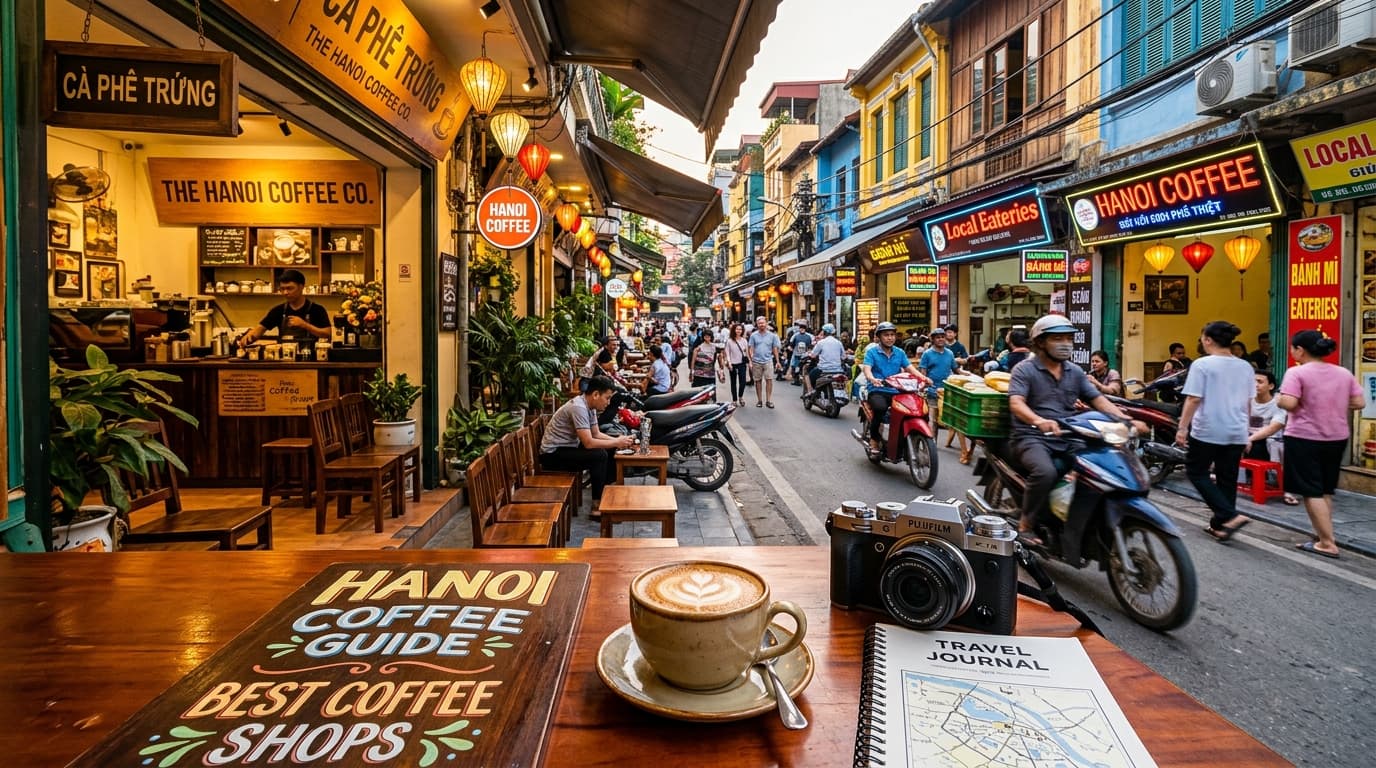
Best Coffee Shops in Hanoi: From Egg Coffee to Ca Phe Sua Da
Discover Hanoi's best coffee shops, from iconic egg coffee to traditional ca phe sua da. Local favorites, hidden gems, and how to order like a local.
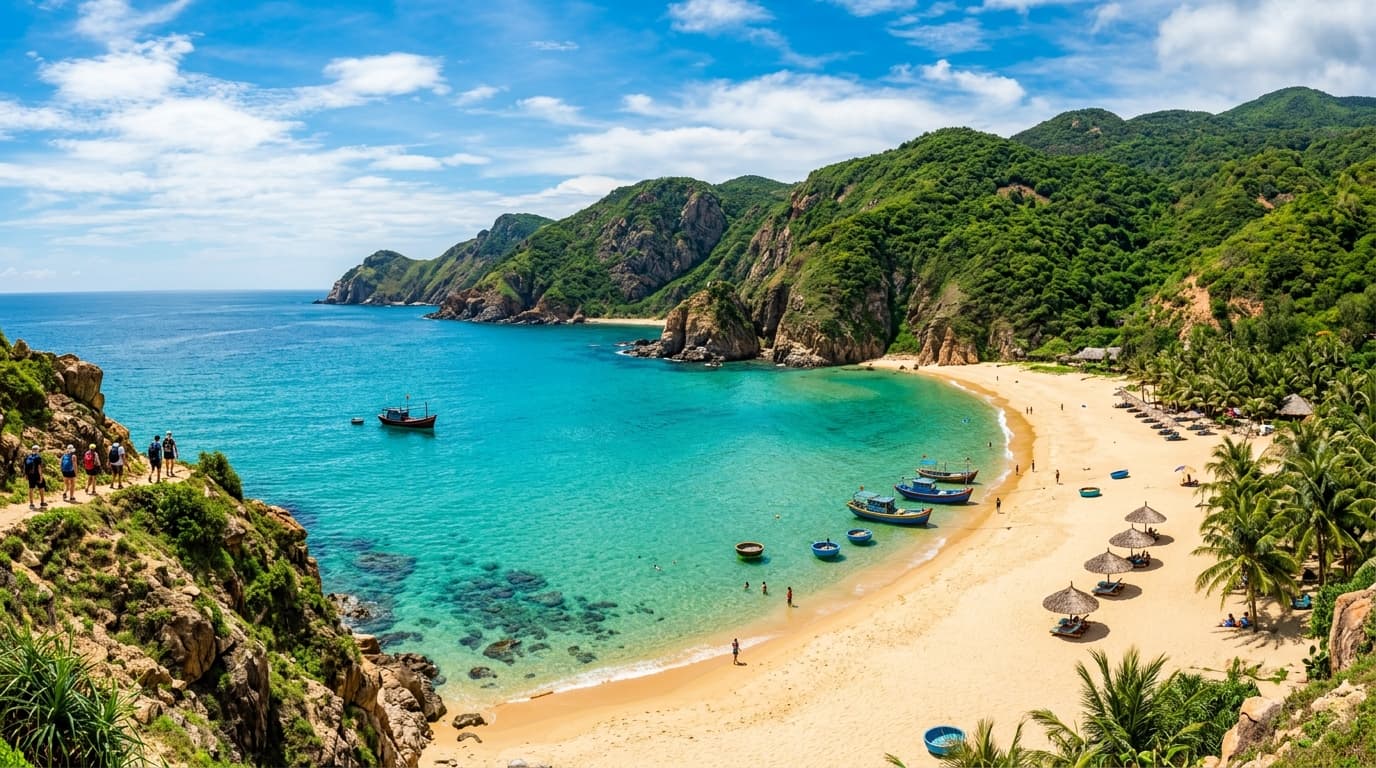
12 Best Beaches in Vietnam: From Secret Coves to Resort Shores
The 12 best beaches in Vietnam for 2026, including secret coves, resort beaches, and island escapes. Best season, how to get there, and what to expect.

Vietnam in 2 Weeks: The Perfect North-to-South Itinerary
The ultimate 14-day Vietnam itinerary from Hanoi to Ho Chi Minh City. Day-by-day breakdown with transport options, costs in VND and USD, and honest advice on what to skip.
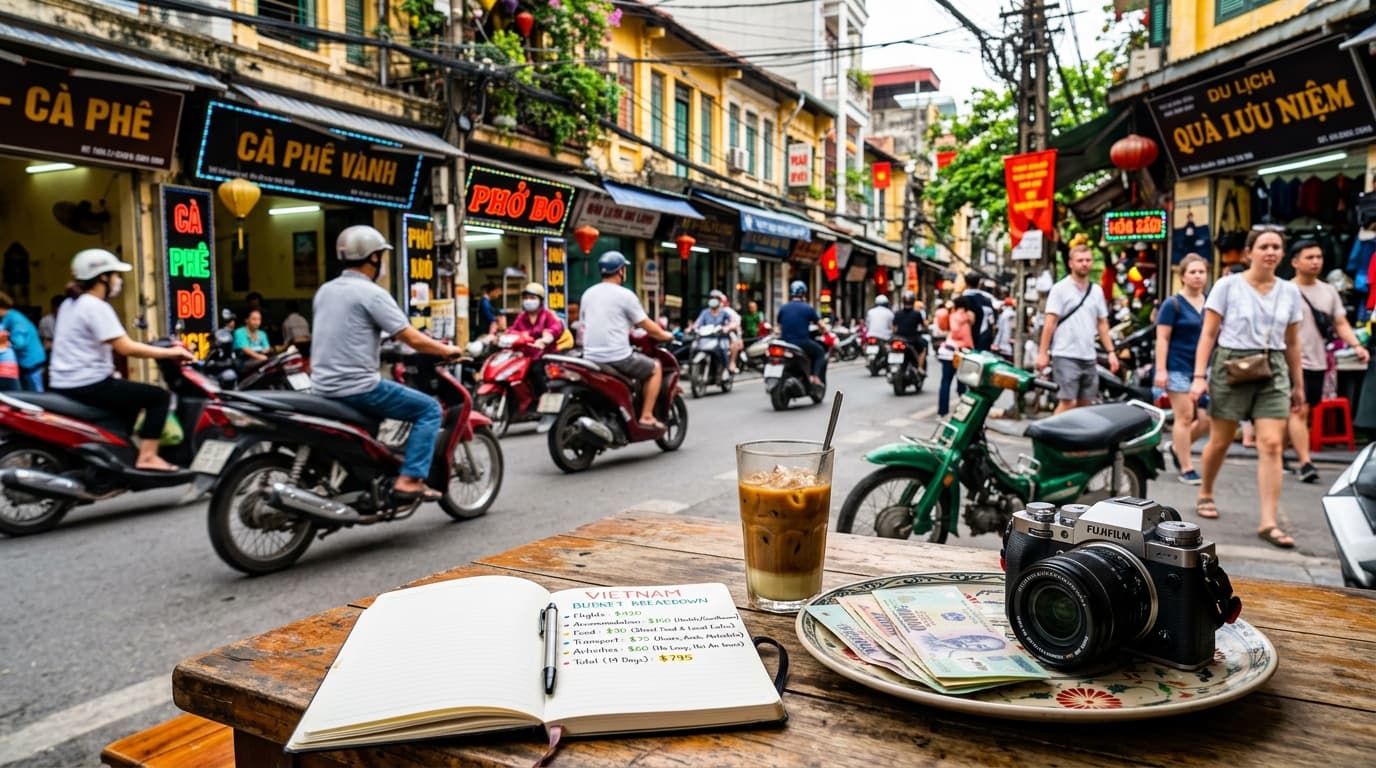
Vietnam Travel Costs: Detailed Daily Budget Breakdown for 2026
Real 2026 Vietnam travel costs broken down by category and city. Accommodation from 200,000 VND/night, street food from 25,000 VND. Includes hostel prices, transport costs, and total trip estimates.
Plan Your Vietnam Trip
Book hotels, transport, activities, and get connected with an eSIM
Some links are affiliate links. We may earn a commission at no extra cost to you.