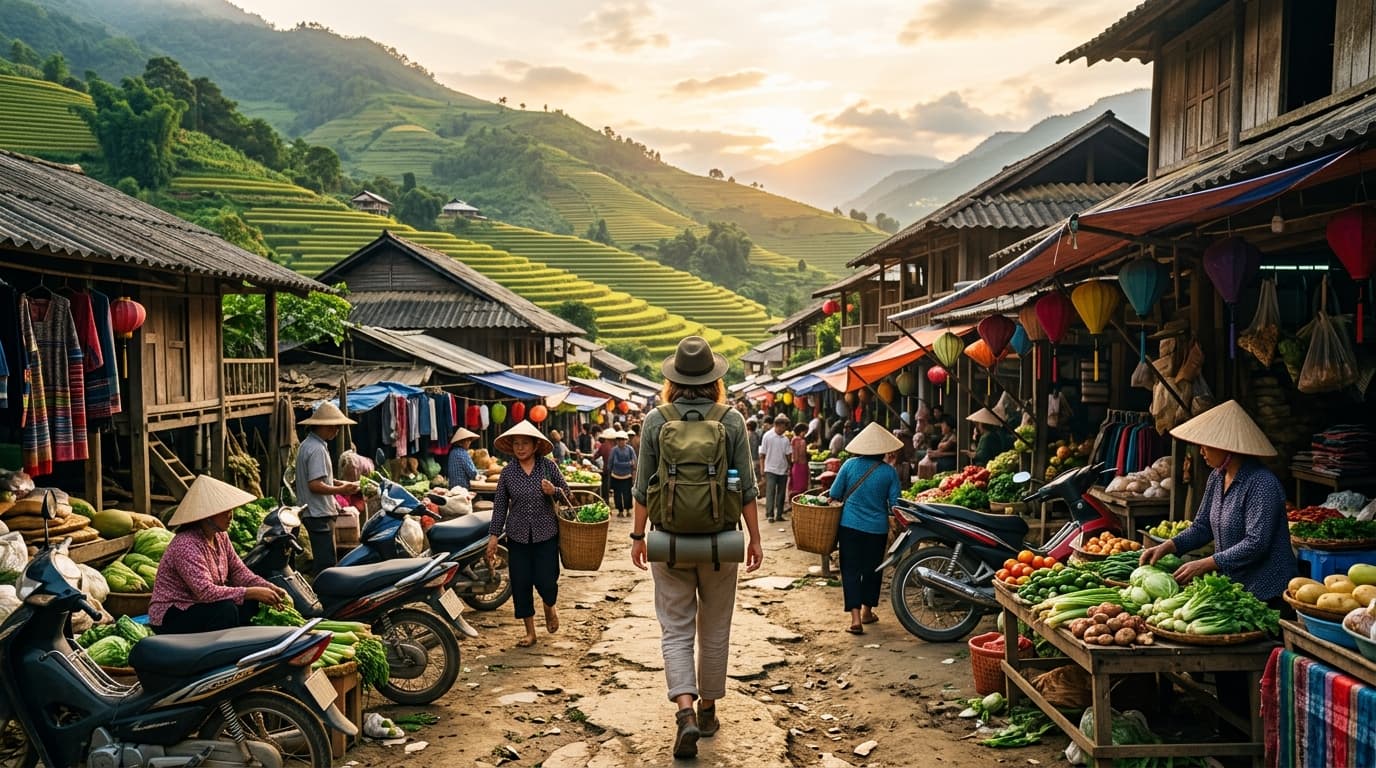
Can you really travel Vietnam on $25 per day? Yes—but it requires strategy, local knowledge, and honest choices about where to compromise. We've spent years living and traveling across Vietnam, from the chaotic streets of Hanoi to the Mekong Delta's quiet villages, and we've learned exactly where your money goes and where you can stretch it further.
This isn't a fantasy budget. It's real, tested, and achievable—though it means staying in basic guesthouses, eating where locals eat, and using buses instead of flights. Some links in this guide are affiliate links — if you book through them, we earn a small commission at no extra cost to you, which helps us keep this site running.
Key Takeaways
| Question | Answer |
|---|---|
| What is the best time to visit? | October–November and February–March offer ideal weather and lower prices than peak season |
| How much does it cost? | $25/day is realistic; expect 575,000–600,000 VND daily for budget travelers |
| How do I get there? | Fly into Hanoi or Ho Chi Minh City; use buses and trains for overland travel |
| Is it safe? | Vietnam is very safe for tourists; petty theft is rare, violent crime almost non-existent |
| What should I book in advance? | Flights during peak season (Dec–Jan); everything else can be booked day-of or a few days ahead |
| What's the exchange rate? | Approximately 24,000–25,000 VND = 1 USD (rates fluctuate; check current rates) |
| Can I really eat well on this budget? | Absolutely—street food and local restaurants serve incredible meals for 30,000–80,000 VND |
1. Understanding the Real Cost of Vietnam Travel
Vietnam is one of Southeast Asia's cheapest destinations, but "$25 per day" comes with caveats. That figure assumes you're staying in a basic fan-cooled room, eating street food and local restaurants, using public transport, and skipping expensive tours. It's not backpacker-hostel-party budget—it's sustainable, comfortable travel on a shoestring.
When we spent three months in Hanoi tracking expenses, we discovered that most budget travelers actually spend between $20–$35 daily, depending on their choices. The difference between $20 and $35 often comes down to one decision: whether you splurge on a private room (600,000 VND / $25) or share a dorm (200,000 VND / $8).
Here's what $25/day typically covers:
-
Accommodation: 400,000–500,000 VND ($17–$21)
-
Transport & activities: 50,000–100,000 VND ($2–$4)
-
Miscellaneous: 25,000–50,000 VND ($1–$2)
The math works because Vietnam's infrastructure is built for locals, not tourists. You're not paying Western prices; you're paying Vietnamese prices. A bowl of pho costs 30,000–50,000 VND. A bus ticket across the country costs 200,000–400,000 VND. A basic private room in a guesthouse costs 300,000–500,000 VND.
Did You Know? Vietnam ranks as the 7th cheapest country in the world for budget travelers, according to Numbeo's cost of living index. Only countries like India, Pakistan, and Bangladesh consistently undercut Vietnamese prices.
Source: Numbeo Cost of Living Database
2. Accommodation: Where to Sleep Without Breaking the Bank
Finding the right place to sleep is the biggest budget decision you'll make—it typically accounts for 60–70% of your daily spend. The good news: Vietnam has incredible options at every price point, and you don't need to sacrifice comfort to stay cheap.
Budget Guesthouse Rooms (300,000–500,000 VND / $12–$21)
This is the sweet spot for most budget travelers. You get a private room with a bed, fan or basic AC, and a bathroom. It won't be fancy—expect thin walls, creaky beds, and occasional quirks—but it's clean, safe, and often includes free Wi-Fi. In Ho Chi Minh City, these rooms cluster in District 1 and the Pham Ngu Lao area. In Hanoi, Old Quarter guesthouses are packed into narrow buildings, but prices are similar.
During our time in Ho Chi Minh City, we stayed in a family-run guesthouse in District 3 for 350,000 VND per night. The owner, Mrs. Linh, became a friend—she'd recommend restaurants, help arrange transport, and occasionally offer tea. That human connection is something you won't get in a chain hotel.
Shared Dorm Beds (150,000–250,000 VND / $6–$10)
Hostels exist in major cities, though Vietnam isn't a hostel-heavy country like Thailand. Dorm beds are cheapest in Hanoi and Ho Chi Minh City, where you'll find proper hostels with common areas and social scenes. Smaller cities like Hoi An and Da Nang have fewer hostels; guesthouses are more common.
Budget Accommodation Comparison:
| Option | Best For | Cost | Rating |
|---|---|---|---|
| Private guesthouse room | Solo travelers wanting privacy | 350,000–500,000 VND | ⭐⭐⭐⭐ |
| Shared dorm bed | Social backpackers, groups | 150,000–250,000 VND | ⭐⭐⭐⭐ |
| Homestay/family room | Families, cultural immersion | 400,000–600,000 VND | ⭐⭐⭐⭐⭐ |
| Budget hotel chain | Comfort-focused travelers | 600,000–800,000 VND | ⭐⭐⭐ |
Pro Tips for Finding Cheap Rooms
Walk the streets. In smaller cities, the cheapest rooms aren't listed online. Walk around the town center, and you'll see signs in windows: "Phòng cho thuê" (room for rent). Negotiate directly with owners—you can often knock 10–20% off the asking price, especially for multi-night stays. Book directly. Booking platforms add 10–15% commission. Call the guesthouse directly or use WhatsApp (nearly every Vietnamese business uses it) to book and negotiate.
Stay outside tourist zones. A room in Hanoi's Old Quarter costs 450,000 VND; the same room three blocks away costs 300,000 VND. You'll walk an extra 10 minutes to the action, but your wallet will thank you.
3. Food: Eating Like a Local (and Eating Well)
This is where budget travel in Vietnam shines. You can eat incredibly well for $4–$6 per day, and honestly, some of the best meals we've had cost less than a coffee back home.
The secret: eat where locals eat. Skip the tourist restaurants with laminated menus and English-speaking staff. Instead, find the hole-in-the-wall places with plastic stools, no signage, and a line of Vietnamese people at lunch. That's where a bowl of bun cha (grilled pork with noodles) costs 35,000 VND and tastes like someone's grandmother made it.
Street Food & Local Restaurants (30,000–80,000 VND / $1.25–$3.35 per meal)
When we explored Hanoi's Old Quarter, we ate breakfast at a street stall for 20,000 VND—a bánh mì sandwich with pâté, pickled vegetables, and cilantro. Lunch was pho for 40,000 VND. Dinner was banh xeo (crispy pancakes) for 50,000 VND. Total: 110,000 VND ($4.60) for three meals.
Best Budget Meals by Region:
- North Vietnam: Pho (40,000–60,000 VND), bun cha (35,000–50,000 VND), egg coffee and pastries (25,000–40,000 VND)
- Central Vietnam: Banh mi (20,000–40,000 VND), cao lau in Hoi An (40,000–60,000 VND), bun bo Hue (35,000–50,000 VND)
- South Vietnam: Com tam (30,000–50,000 VND), hu tieu (35,000–50,000 VND), fresh tropical fruit (10,000–30,000 VND)
Drinks: Coffee & Fresh Juice (15,000–40,000 VND / $0.60–$1.70)
Vietnamese coffee is legendary, and it's cheap. Ca phe sua da (iced coffee with condensed milk) costs 15,000–25,000 VND at a street café. Fresh sugar cane juice (nuoc mia) costs 10,000–20,000 VND. Smoothies (sinh to) made with fresh mango, papaya, or avocado cost 20,000–40,000 VND.
Markets & Self-Catering (50,000–100,000 VND / $2–$4 for groceries)
If you're staying longer or want to save aggressively, buy groceries at local markets. A kilogram of rice costs 8,000–12,000 VND. Fresh vegetables cost 5,000–15,000 VND per item. Eggs cost 2,000–3,000 VND each. You can assemble a week of meals for 200,000–300,000 VND if you cook in your guesthouse (though many budget places don't have kitchens).
Did You Know? Vietnam produces some of the world's finest coffee, yet a cup costs a fraction of what you'd pay in Western cafés. Vietnamese coffee culture is so strong that there are over 3,000 coffee shops in Hanoi alone.
Source: VnExpress International
4. Getting Around: Buses, Trains & Motorbikes
Transport is where you can save significantly—or spend more if you choose comfort. Vietnam's public transport system is extensive, cheap, and surprisingly reliable once you understand how it works.
Intercity Buses (200,000–400,000 VND / $8–$17 for long distances)
Buses connect every city and town. A journey from Hanoi to Ha Long (165 km) costs 150,000–200,000 VND and takes 3–4 hours. Hanoi to Ho Chi Minh City (1,700 km) costs 300,000–500,000 VND for a sleeper bus and takes 24–30 hours.
During our motorbike journey through North Vietnam, we met backpackers who'd taken sleeper buses from Hanoi to the south. They saved money compared to flying, though they lost a day of travel. It's a trade-off: time versus money.
Trains (250,000–600,000 VND / $10–$25 for long distances)
Trains are slower than buses but more comfortable. A soft sleeper berth from Hanoi to Ho Chi Minh City costs around 500,000–700,000 VND. The journey takes 30+ hours, but you sleep and wake up in a new city. We've found trains are worth the splurge if you're traveling long distances—you save a night's accommodation and arrive refreshed.
Local Transport (5,000–20,000 VND / $0.20–$0.85 per trip)
Buses within cities cost 5,000–7,000 VND per trip. Taxis are metered and cost 10,000–20,000 VND for short trips. Motorbike taxis (Grab, the Southeast Asian Uber) cost 15,000–50,000 VND depending on distance. In our experience, Grab is safer than hailing random taxis, and prices are transparent.
Motorbike Rentals & Self-Driving (100,000–200,000 VND / $4–$8 per day)
Renting a motorbike costs 100,000–150,000 VND daily. Fuel is cheap (around 20,000 VND per liter). If you're comfortable riding, this is the cheapest way to explore regions like Central Vietnam or the Mekong Delta. We spent two weeks motorbike touring from Da Nang to Nha Trang for under $300 total (including fuel, food, and basic accommodation).
Transport Cost Comparison:
| Route | Bus | Train | Flight |
|---|---|---|---|
| Hanoi → Ho Chi Minh City | 300,000–500,000 VND | 500,000–700,000 VND | 800,000–1,500,000 VND |
| Hanoi → Da Nang | 200,000–350,000 VND | 300,000–500,000 VND | 600,000–1,200,000 VND |
| Ho Chi Minh City → Phu Quoc | 250,000–400,000 VND | N/A | 800,000–1,200,000 VND |
5. Activities & Experiences: Free & Cheap Things to Do
Vietnam's best experiences don't cost much. Hiking, beaches, temples, and markets are either free or cost a few dollars.
Free Activities
Walking tours of Hanoi and Ho Chi Minh City are free (though tipping your guide $2–$5 is customary). Exploring temples like Hoan Kiem Lake's Jade Island Temple in Hanoi is free. Swimming at beaches in Da Nang, Nha Trang, and Phu Quoc is free. Wandering markets, watching sunrise over rice paddies, and sitting in cafés people-watching costs nothing.
Budget Activities (50,000–200,000 VND / $2–$8)
Temple entry fees are minimal (20,000–50,000 VND). Cave tours like Ha Long Bay grottoes cost 50,000–100,000 VND. Cooking classes in Hoi An range from 150,000–300,000 VND. Motorbike day trips to nearby villages cost 100,000–200,000 VND (including guide and fuel).
Where to Splurge (200,000–500,000 VND / $8–$21)
If you have a bit of extra budget, consider:
- Ha Long Bay cruise: A budget overnight cruise costs 400,000–600,000 VND and includes meals and accommodation
- Sapa trekking: A guided trek in Sapa costs 300,000–500,000 VND for a full day
- Mekong Delta tour: A day trip from Can Tho costs 200,000–350,000 VND
These aren't luxuries—they're experiences that define your trip. Splurging on one or two meaningful activities is worth cutting back elsewhere.
6. Sample Daily Budgets: Real Numbers
Let's break down what a real day looks like on $25/day:
Budget Day in Hanoi
- Accommodation: 400,000 VND ($16.70) — private guesthouse room
- Breakfast: 25,000 VND ($1.05) — bánh mì and coffee
- Lunch: 50,000 VND ($2.10) — pho at a local restaurant
- Snack: 20,000 VND ($0.85) — sugar cane juice
- Dinner: 60,000 VND ($2.50) — bun cha with beer
- Transport: 30,000 VND ($1.25) — local buses and Grab
- Activity: Free — walking tour of Old Quarter
- Total: 585,000 VND ($24.45)
Moderate Day in Da Nang
- Accommodation: 450,000 VND ($18.75) — beachfront guesthouse
- Breakfast: 30,000 VND ($1.25) — banh mi
- Lunch: 70,000 VND ($2.90) — seafood at a local spot
- Snack: 25,000 VND ($1.05) — fresh mango
- Dinner: 80,000 VND ($3.35) — grilled fish
- Transport: 40,000 VND ($1.70) — motorbike rental (shared cost across multiple days)
- Activity: 100,000 VND ($4.15) — motorbike day trip to nearby villages
- Total: 795,000 VND ($33.15)
Splurge Day in Hoi An
- Accommodation: 500,000 VND ($20.85) — mid-range guesthouse
- Breakfast: 35,000 VND ($1.45) — cao lau
- Lunch: 80,000 VND ($3.35) — seafood
- Snack: 30,000 VND ($1.25) — coffee and pastry
- Dinner: 100,000 VND ($4.15) — restaurant with atmosphere
- Transport: 30,000 VND ($1.25) — local transport
- Activity: 200,000 VND ($8.35) — half-day cooking class
- Total: 975,000 VND ($40.65)
The key insight: you can stay under $25/day on most days, but splurge on 1–2 meaningful experiences per week. That balances budget travel with actual enjoyment.
7. Money-Saving Hacks: Insider Tips
Book Accommodation Directly
Booking platforms charge 10–15% commission. Call your guesthouse on WhatsApp and book directly. You'll often get a discount, especially for multi-night stays. We saved 50,000 VND per night by booking a 5-night stay directly instead of through an app.
Eat Where Locals Eat
Tourist restaurants charge 2–3x more than local spots. If you see a Vietnamese family eating somewhere, that's your sign. The best meals we've had cost 30,000–50,000 VND and were found by following our nose or asking locals.
Use Grab Instead of Taxis
Grab (Southeast Asia's Uber) is cheaper, safer, and transparent. You know the price before you book. Random taxis might overcharge, especially if you don't speak Vietnamese.
Travel During Shoulder Season
October–November and February–March offer great weather and lower prices than December–January and July–August. Accommodation prices drop 10–20%, and attractions are less crowded.
Skip Organized Tours; Hire Local Guides
A group tour might cost 500,000 VND. A private motorbike guide for the same experience costs 300,000–400,000 VND. Ask your guesthouse to connect you with a local guide—they often work cheaper than tour companies.
Buy a Local SIM Card
International roaming is expensive. A local SIM card costs 50,000–100,000 VND, and data plans cost 50,000–150,000 VND for 30 days. You'll save hundreds compared to roaming.
8. Where to Splurge vs. Save: Strategic Spending
Budget travel isn't about being cheap—it's about spending intentionally.
Save Money On:
- Accommodation in small towns: A room in Sapa or Ninh Binh costs 250,000–350,000 VND. In Hanoi, expect 400,000–500,000 VND.
- Transport: Buses are cheaper than flights. Trains are cheaper than buses but slower.
- Food: Street food is 1/3 the price of restaurants.
- Attractions: Many temples and natural sites are free or cost under 50,000 VND.
Splurge On:
- One memorable experience per week: A cooking class, cave tour, or trekking trip. These cost 150,000–400,000 VND but create lasting memories.
- Comfort on long journeys: A sleeper train or bus is worth the extra 100,000–200,000 VND if you're traveling 24+ hours.
- A nice meal: Eating at a proper restaurant once or twice a week (100,000–200,000 VND per meal) won't break your budget and breaks up street food monotony.
- Travel insurance: Don't skip this. A month of coverage costs 300,000–500,000 VND and protects you against medical emergencies.
9. Visa, Insurance & Hidden Costs
Visa (varies by nationality)
Most Western nationalities can get a 90-day e-visa for Vietnam for 25 USD (roughly 600,000 VND). Processing takes 3 business days. Some nationalities get visa-free entry for 90 days. Check your country's requirements on the official Vietnam visa website.
Travel Insurance (300,000–500,000 VND / $12–$21 per month)
Don't skip this. Medical costs can be high if something goes wrong. A month of basic travel insurance costs around 300,000–500,000 VND and covers emergencies, evacuation, and trip cancellation.
ATM Fees & Currency Exchange
Vietnamese ATMs charge 20,000–50,000 VND per withdrawal (roughly $1–$2). Withdraw larger amounts less frequently to minimize fees. Exchange rates are best at ATMs; avoid exchanging money at airports or tourist areas.
Unexpected Costs
Laundry: 20,000–50,000 VND per load. Phone calls home: use WhatsApp or Skype (free on Wi-Fi). Souvenirs: budget 100,000–500,000 VND if you want to bring gifts home.
10. Regional Budget Breakdown: North, Central & South
Budget varies by region. North Vietnam (Hanoi, Sapa, Ha Long) is slightly cheaper than the south. Central Vietnam (Da Nang, Hoi An, Hue) offers the best value. South Vietnam (Ho Chi Minh City, Mekong Delta) is pricier but still affordable.
North Vietnam Budget
- Accommodation: 350,000–450,000 VND
- Food: 80,000–120,000 VND
- Transport & activities: 60,000–100,000 VND
- Daily total: 490,000–670,000 VND ($20–$28)
Hanoi and Sapa are popular; prices reflect that. Smaller towns like Ninh Binh are cheaper.
Central Vietnam Budget
- Accommodation: 300,000–400,000 VND
- Food: 80,000–130,000 VND
- Transport & activities: 50,000–100,000 VND
- Daily total: 430,000–630,000 VND ($18–$26)
Central Vietnam offers the best value. Hoi An and Da Nang are touristy but still affordable. Smaller towns like Hue are even cheaper.
South Vietnam Budget
- Accommodation: 400,000–550,000 VND
- Food: 100,000–150,000 VND
- Transport & activities: 60,000–120,000 VND
- Daily total: 560,000–820,000 VND ($23–$34)
Ho Chi Minh City is pricier than the north. The Mekong Delta is cheaper; island destinations like Phu Quoc are mid-range.
Did You Know? Vietnam's minimum wage is approximately 4.68 million VND per month (around $195), which puts budget travel costs in perspective. When you eat a 40,000 VND meal, you're paying what a Vietnamese worker earns in roughly 20 minutes.
Source: VnExpress International
11. Practical Tips for Managing Money in Vietnam
Cash vs. Cards
Vietnam is still largely cash-based. ATMs are everywhere in cities; carry cash in smaller towns. Credit cards work in hotels and restaurants but incur 2–3% fees. Debit cards at ATMs are your best bet.
Haggling & Negotiation
Haggling is expected at markets and for services like motorbike rentals or private guides. For fixed-price items (food, transport), prices are non-negotiable. For accommodation, tours, and rentals, always ask for a discount, especially for multi-day bookings.
Tipping
Tipping isn't mandatory in Vietnam, but it's appreciated. Round up restaurant bills or leave 5–10% for good service. Tour guides and drivers appreciate 50,000–100,000 VND tips.
Scams to Avoid
- Taxi overcharging: Use Grab instead of hailing taxis
- Fake bills: Check large denominations carefully
- Overpriced tours: Book through your guesthouse, not street touts
- Gem scams: Don't buy gemstones from street vendors
Frequently Asked Questions
Can I really travel Vietnam on $25 per day?
Yes, but it requires staying in basic guesthouses, eating street food, and using public transport. Most budget travelers spend $20–$35 daily depending on their choices. Splurging on one activity per week will push you to $30–$35 on those days.
What's the cheapest time to visit Vietnam?
May–September is the low season (monsoon rains in some regions) and cheapest. October–November and February–March offer ideal weather and moderate prices. December–January is peak season and most expensive.
Is Vietnam safe for budget travelers?
Vietnam is very safe. Violent crime against tourists is rare. Petty theft happens, but it's uncommon if you use basic precautions: don't flash expensive items, use hotel safes, and avoid walking alone late at night in unfamiliar areas.
Do I need to book accommodation in advance?
In major cities during peak season (Dec–Jan), yes. Otherwise, you can book 1–2 days ahead or walk in and negotiate. Booking directly by phone/WhatsApp is cheaper than online platforms.
What's the best way to get around Vietnam?
Buses are cheapest and connect all cities. Trains are comfortable for long distances. Motorbikes are best for exploring regions. Flights are expensive and unnecessary for budget travel.
Can I work remotely while traveling Vietnam?
Yes. Wi-Fi is available in most guesthouses and cafés. Internet is reliable in cities, slower in remote areas. Many digital nomads base themselves in Hanoi, Da Nang, or Ho Chi Minh City for work.
What should I pack for budget travel in Vietnam?
Light clothing (it's hot and humid), comfortable walking shoes, a reusable water bottle, sunscreen, and a small first-aid kit. Avoid overpacking; you can buy most things cheaply in Vietnam.
Conclusion
Vietnam on $25 per day is realistic, achievable, and genuinely enjoyable. It's not about deprivation—it's about living like a local, eating incredible food, and spending your money on experiences rather than luxury. We've done it for months at a time, and we've never felt like we were missing out.
The key is intention. Choose budget accommodation so you can afford a cooking class. Eat street food so you can take a motorbike tour. Use buses instead of flights so you can stay longer and see more. Every dollar you save is a day you can stay in Vietnam, and every day reveals something new.
For more detailed planning, check out our comprehensive Vietnam travel guides for specific cities, or explore our regional guides to plan your route. And if you're looking for activities and tours, we've got recommendations for every budget.
Safe travels, and welcome to Vietnam. You're going to love it.
Bronnen & Referenties
Dit artikel is gebaseerd op eigen ervaring en geverifieerd met de volgende officiële bronnen:

Go2Vietnam Team
Vietnam verkennen sinds 2020 | 40+ provincies bezocht | Maandelijks bijgewerkt
Wij zijn een team van reisschrijvers en Vietnam-liefhebbers die het land het hele jaar door verkennen. Onze gidsen zijn gebaseerd op eigen ervaring, lokale kennis en geverifieerde officiële bronnen.
Meer over ons →Anderen lezen ook
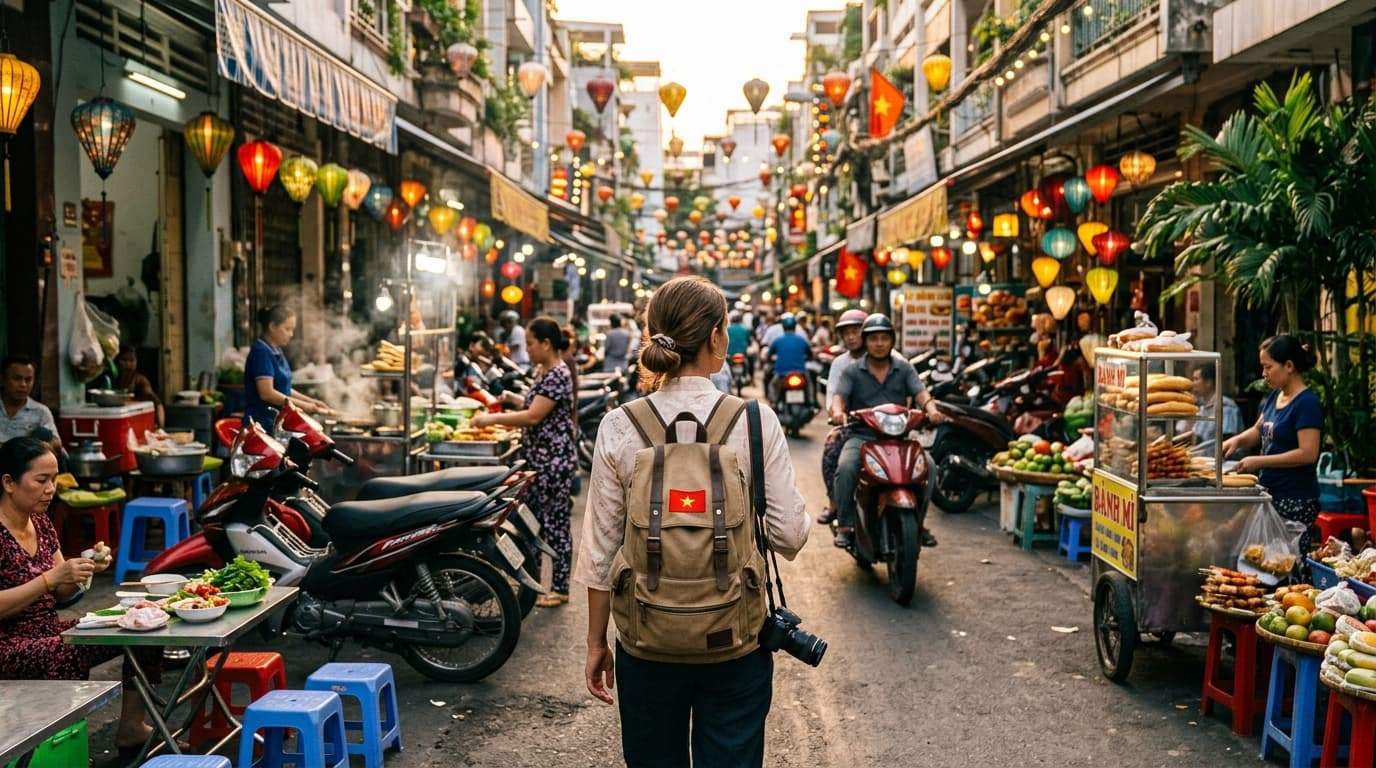
Free Things to Do in Ho Chi Minh City: Budget Travel Guide 2025
Explore Ho Chi Minh City without breaking the bank. Free attractions, budget eats, and insider tips for travelers on a tight budget.
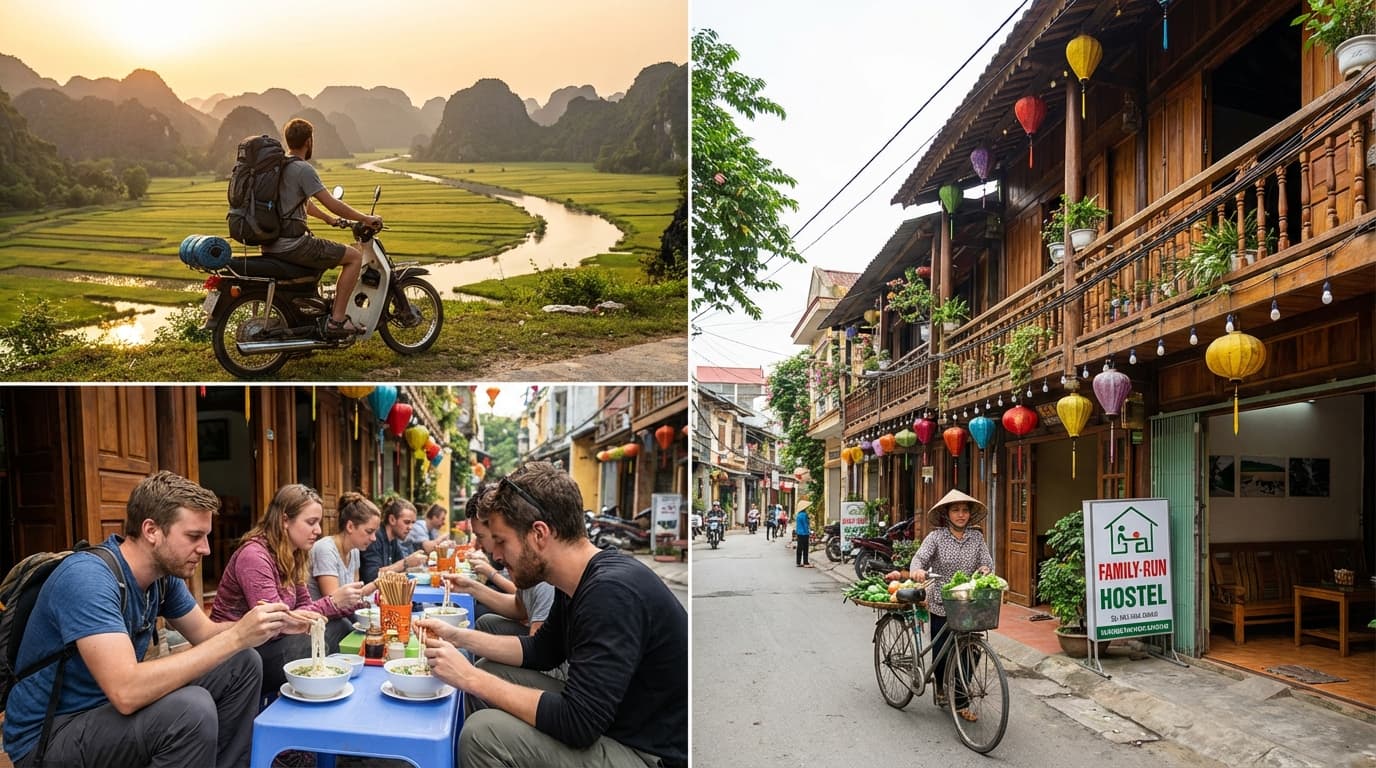
Budget Hostels vs Guesthouses in Vietnam: Honest Comparison
Compare budget hostels and guesthouses in Vietnam with real prices in VND and USD. Honest guide to where to stay, save money, and splurge.

Best Vietnamese Destinations to Visit During Rainy Season
Discover the best Vietnamese destinations to visit during rainy season. Lower prices, fewer crowds, and lush landscapes await.
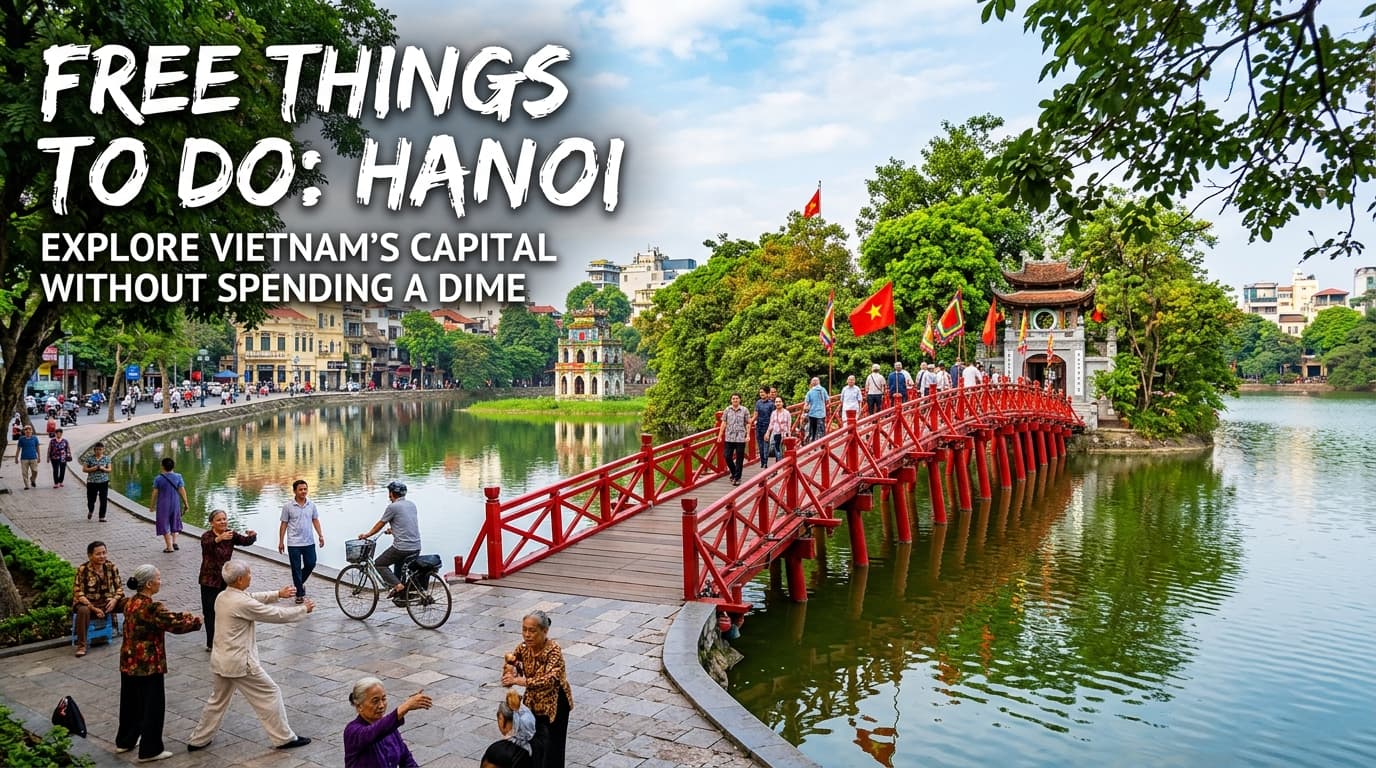
Free Things to Do in Hanoi (No Entry Fee Needed)
Discover the best free things to do in Hanoi. Explore temples, parks, and street food markets without spending a dong. Budget travel guide included.
Plan Your Vietnam Trip
Book hotels, transport, activities, and get connected with an eSIM
Some links are affiliate links. We may earn a commission at no extra cost to you.