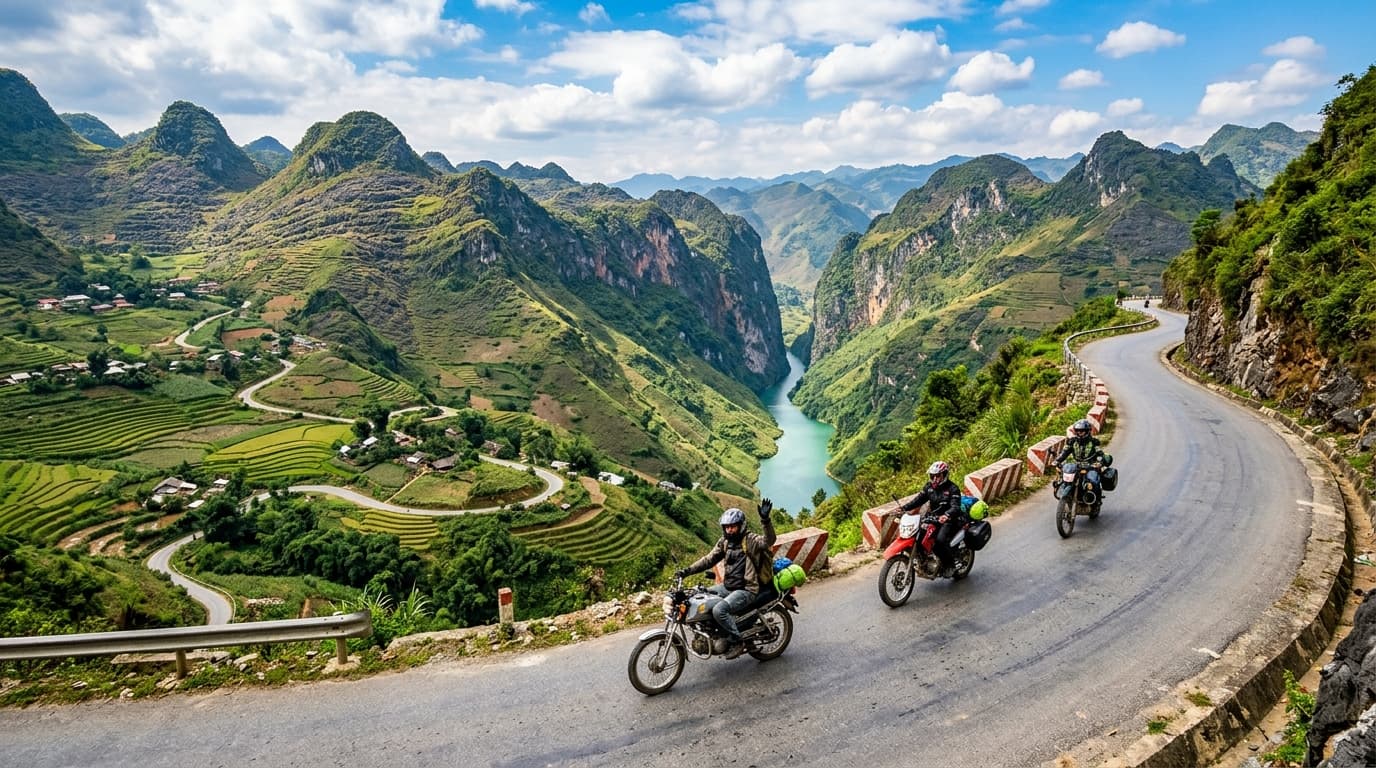
Ha Giang Loop by Motorbike: The Ultimate 4-Day Itinerary
The Ha Giang Loop is one of Southeast Asia's most exhilarating motorcycle journeys—a 350km circuit through Vietnam's most remote and mountainous northern province that will test your riding skills and reward you with some of the most jaw-dropping scenery you'll ever witness. We've ridden this loop multiple times, and each time we discover something new: a hidden village, a better viewpoint, or a friendlier homestay family.
Key Takeaways
| Question | Answer |
|---|---|
| What is the best time to visit? | September to November and March to May offer the clearest skies and most stable weather. Avoid June-August (monsoon) and December-February (cold, misty). |
| How much does it cost? | Budget 4.5–7 million VND ($180–280 USD) per person for a 4-day guided tour, including bike rental, fuel, accommodation, and most meals. Solo self-guided trips cost 2–3 million VND ($80–120 USD). |
| How do I get there? | Fly to Hanoi (most international flights), then take a bus or domestic flight to Ha Giang town (5–6 hours by bus from Hanoi). |
| Is it safe? | Yes, with caveats. Roads are narrow and winding; riders need intermediate-to-advanced skills. Accidents happen—wear protective gear always. Politically, the area is stable and welcoming to tourists. |
| What should I book in advance? | Book your tour operator 2–3 weeks ahead during peak season (Oct-Nov, Apr-May). Accommodation fills quickly. Domestic flights to Ha Giang should be booked at least 1 week prior. |
1. Understanding the Ha Giang Loop: What You're Getting Into
The Ha Giang Loop is a legendary motorcycle circuit that winds through limestone karst mountains, ethnic minority villages, and some of Vietnam's most isolated terrain. This isn't a casual Sunday ride—it's a serious adventure that demands respect for the road, the weather, and the culture you're passing through. When we first rode it in 2022, we understood immediately why it's become a pilgrimage for adventure riders worldwide.
The loop covers approximately 350km and takes 4 days to complete comfortably. You'll ride through valleys inhabited by Hmong, Tay, and other ethnic minorities, cross dramatic suspension bridges, and experience hospitality that feels genuinely untouched by mass tourism. The roads are a mix of newly paved sections and older, rougher mountain passes—some with hairpin turns and minimal guardrails.
The Route Overview
The classic loop starts and ends in Ha Giang town and follows a roughly circular path: Ha Giang → Yen Minh → Dong Van → Meo Vac → back to Ha Giang. Each day typically covers 80–100km, which sounds short until you realize you're climbing and descending constantly. Our first day took us 8 hours for what looked like a 70km route on the map.
Why It's Worth the Challenge
The Ha Giang Loop offers something genuinely rare in modern travel: a sense of genuine remoteness combined with warm local hospitality. You'll meet families who've never seen a Western tourist before, stay in simple but comfortable homestays, and experience North Vietnam in a way that most visitors never do. The landscape is stunning—think dramatic limestone peaks, emerald rice paddies, and misty mountain passes that appear in your dreams for years afterward.
2. Best Time to Visit: Seasonal Breakdown and Weather Considerations
Timing is everything on the Ha Giang Loop. The weather determines road conditions, visibility, and your overall experience. During our research trips, we learned that visiting in the wrong season can transform a dream ride into a frustrating, dangerous slog.
September to November is peak season for good reason. The monsoon rains have stopped, the air is clear, and temperatures are cool but comfortable (15–25°C). October and early November offer the best visibility for photography and the most stable riding conditions. This is when you'll see the most tourists, so book accommodation early.
March to May is the second-best window. Spring weather brings clear skies and wildflowers blooming in the valleys. Temperatures range from 18–28°C. May can get humid as the monsoon approaches, but early May is excellent. Fewer tourists visit during this period compared to autumn.
Avoid June to August entirely. The southwest monsoon dumps heavy rain on Ha Giang, roads become slippery and dangerous, and visibility drops to near zero on many days. We've spoken with riders who attempted the loop during monsoon season and turned back after day one.
December to February is cold and misty. Temperatures drop to 5–12°C, and the mountains are often shrouded in fog, eliminating the views that make this loop special. Some roads can be treacherous with frost or occasional ice at higher elevations.
Did You Know? Ha Giang province sits at an average elevation of 800–1,000 meters, making it one of Vietnam's highest regions. Temperature can drop 5–7°C compared to lowland areas like Hanoi, even during the same season.
Get a Vietnam eSIM before you land. No physical SIM needed — activate instantly on your phone.
Get Saily eSIM for Vietnam → Scan me
3. Motorbike Options: Rental vs. Guided Tours vs. Self-Guided Adventures
Your choice of how to experience the loop—renting independently, joining a guided group, or booking a private guide—fundamentally shapes your trip. Each option has distinct advantages and trade-offs.
Guided Group Tours
Compare hotels, resorts, and guesthouses across Vietnam with free cancellation on most bookings.
Search Hotels on Booking.com → Scan me
Best For: First-time riders, those uncomfortable navigating alone, travelers who want social connection, and anyone wanting mechanical support.
Guided tours typically include a professional rider leading a small group (4–8 people), a support vehicle, accommodation, meals, and insurance. Operators like Hanoi-based companies offer 4-day packages ranging from 4.5–7 million VND ($180–280 USD) per person. The guide handles navigation, knows where to stop for the best photos, and can assist if your bike breaks down (which happens occasionally on these roads).
Pros:
- Safety net: Mechanical support and navigation guidance
- Local knowledge: Guides know hidden villages and the best homestays
- Social experience: Meet other travelers, share the adventure
- Stress-free: No worrying about directions or bike maintenance
Cons:
- Less flexibility: You follow the group's schedule and route
- Higher cost: Group tours are 2–3x more expensive than self-guided
- Crowded homestays: Popular tour operators book the same homestays, reducing authenticity
Self-Guided Rental
Best For: Experienced riders, those comfortable with uncertainty, budget travelers, and riders who want complete freedom.
Renting a motorbike in Ha Giang town costs 150,000–300,000 VND ($6–12 USD) per day for a basic 110cc semi-automatic or 250,000–500,000 VND ($10–20 USD) for a larger manual bike. You navigate using offline maps (download Google Maps or use Maps.me), stay where you choose, and eat where you want.
Pros:
- Lowest cost: Bike rental + fuel + basic accommodation = 2–3 million VND total
- Complete freedom: Stop whenever, ride at your pace, change plans on the fly
- Authentic encounters: You'll interact more directly with locals without a guide mediating
- Adventure: The uncertainty is part of the appeal
Cons:
- Navigation challenges: Roads are poorly signed; offline maps sometimes lag reality
- Mechanical risk: If your bike breaks down, you're responsible for repairs
- Language barrier: Communicating with mechanics or locals is harder without a guide
- Safety: You're alone if you have an accident; no support vehicle
Private Guide (1-on-1 or Small Group)
Best For: Couples, small groups of friends, travelers with specific interests (photography, culture, geology), and those wanting personalized pacing.
Private guides can be arranged through tour operators or directly through homestay owners. Cost ranges from 3–5 million VND ($120–200 USD) for a 4-day private guide plus bike rental. You get a dedicated guide and often a support vehicle.
Pros:
- Customizable: Adjust the route, pacing, and stops to your interests
- Personal attention: The guide focuses entirely on your group
- Better photos: Guides know the best sunrise/sunset spots and wait for perfect light
- Flexibility: Change plans mid-trip without affecting others
Cons:
- Mid-range pricing: More expensive than self-guided but less social than group tours
- Dependent on guide quality: Your experience hinges on one person's knowledge and personality
Skip the hassle — book Vietnam day trips, cooking classes, and experiences in advance with instant confirmation.
Browse Activities on Klook → Scan me
4. Day-by-Day Itinerary: What to Expect Each Day
Day 1: Ha Giang Town to Yen Minh (85km, 6–8 hours riding)
You'll start early—most tours depart around 7 AM—and immediately face the loop's first major climb: the Quan Ba Pass. This 1,000-meter ascent offers your first "wow" moment: the Twin Mountains (Nui Doi) appear below you like giant breasts rising from the valley. The road is well-paved but steep with hairpin turns.
After descending into Yen Minh district, you'll pass through Hmong villages where children wave from roadside stalls selling corn and wild honey. Lunch is typically at a small restaurant in Yen Minh town—expect simple pho or rice with vegetables and meat. Accommodation is usually a homestay run by a Hmong or Tay family. These are basic but clean: a simple bed, shared bathroom, and a hearty dinner cooked by the family.
Riding difficulty: Moderate to challenging. The Quan Ba Pass is steep but the road is good. Watch for loose gravel on hairpin turns.
Highlight: Quan Ba Pass viewpoint at sunrise (if you stay nearby and wake early).
Day 2: Yen Minh to Dong Van (70km, 6–7 hours riding)
This is arguably the most spectacular day. You'll tackle the Ma Pi Leng Pass, one of Vietnam's most dramatic mountain roads. The pass climbs 1,200 meters with switchbacks that seem to defy gravity. On clear days, you can see 20km across the valley below.
The road is narrower and rougher than Day 1—some sections are unpaved or partially paved. Riders often stop at the Ma Pi Leng viewpoint (about halfway through the pass) to catch their breath and take photos. The descent is equally thrilling, with the Nho Que River visible far below.
Dong Van town is the loop's cultural heart. It's home to the Dong Van Karst Plateau UNESCO Geopark and has a small but charming old town with French colonial architecture. Accommodation here is slightly more developed than Yen Minh—some homestays have private bathrooms and hot water.
Riding difficulty: Challenging. Ma Pi Leng Pass is steep, narrow, and requires confident handling of hairpin turns. Loose gravel is common.
Highlight: Ma Pi Leng Pass itself—the views are genuinely world-class.
Day 3: Dong Van to Meo Vac (65km, 5–6 hours riding)
Day 3 is slightly easier in terms of distance but introduces you to the loop's most remote sections. You'll ride through the Dong Van Karst Plateau, a landscape of dramatic limestone formations and Hmong villages that feel genuinely untouched by tourism.
The road to Meo Vac is less trafficked than Days 1–2, which means fewer tourists but also fewer services. You'll pass through villages where motorbikes are still a novelty. Many tour groups stop at Lung Cu Flag Tower, a small monument at the northernmost point of Vietnam (near the Chinese border). The tower itself is modest, but the surrounding views of the Karst plateau are stunning.
Meo Vac is a small, quiet town. Homestays here are very basic—expect squat toilets and cold water showers. But the authenticity is unmatched. You'll likely eat dinner with the family, and conversations (through a guide or translation app) often reveal stories of life in this remote region.
Riding difficulty: Moderate. The road is rougher and less developed than Days 1–2, but the terrain is less steep. Watch for livestock on the road.
Highlight: Lung Cu Flag Tower and the surrounding Karst plateau landscape.
Day 4: Meo Vac to Ha Giang Town (130km, 8–9 hours riding)
The final day is the longest in terms of distance and time. You'll descend from the mountains back toward Ha Giang town, passing through more Hmong villages and agricultural areas. The road gradually improves as you approach lower elevations.
Many tours include a stop at Thang Hen Lake, a scenic freshwater lake surrounded by limestone karst. If you have time, a short boat ride on the lake is peaceful after days of intense riding. You'll arrive back in Ha Giang town in late afternoon, tired but exhilarated.
Riding difficulty: Moderate. The road is mostly downhill and better paved, but the distance is long. Fatigue becomes the main challenge.
Highlight: The sense of completion and the memories you've made.
Did You Know? The Ha Giang Loop passes through the Dong Van Karst Plateau UNESCO Geopark, designated in 2010 for its exceptional geological significance and cultural landscape. The plateau contains over 2,000 limestone peaks and is home to five ethnic minority groups.
Source: Lonely Planet Vietnam
5. Accommodation: Homestays, Guesthouses, and What to Expect
Accommodation on the Ha Giang Loop ranges from basic homestays to slightly more comfortable guesthouses. Your choice affects both cost and experience.
Homestays (Most Common)
Cost: 200,000–400,000 VND ($8–16 USD) per night.
Homestays are family-run accommodations in traditional wooden or concrete houses. You'll sleep in a simple room (usually shared with one or two other travelers if you're on a group tour), eat dinner and breakfast with the family, and experience daily life in a mountain village.
What to expect:
- Bedding: Clean sheets, but mattresses are often firm
- Bathrooms: Shared, squat toilet, cold water shower (some have hot water heated by wood fire)
- Meals: Hearty, simple food—rice, vegetables, occasionally meat or fish
- Amenities: No WiFi, no air conditioning, no hot water (except in a few upgraded homestays)
- Interaction: Families are warm and curious; dinner is often a social event
Pros: Authentic, affordable, includes meals, direct connection with local culture.
Cons: Very basic facilities, language barrier, limited privacy.
Upgraded Guesthouses
A few towns (especially Dong Van and Meo Vac) have small guesthouses offering private rooms with private bathrooms and sometimes hot water.
Cost: 400,000–700,000 VND ($16–28 USD) per night.
Pros: More comfort and privacy, still affordable, often run by locals.
Cons: Less authentic than homestays, fewer meals included.
Booking Accommodation
Most tour operators pre-book homestays as part of their package. If you're self-guided, book homestays directly through platforms like Airbnb or contact the homestay owners through local tourism offices. During peak season (Oct-Nov), homestays fill quickly—book at least 2 weeks ahead.
Compare hotels, resorts, and guesthouses across Vietnam with free cancellation on most bookings.
Search Hotels on Booking.com →
Scan me
6. Safety Considerations: Roads, Weather, and Cultural Sensitivity
The Ha Giang Loop has a reputation for danger, but the risks are manageable with proper preparation and respect for the road.
Road Safety
Skip the hassle — book Vietnam day trips, cooking classes, and experiences in advance with instant confirmation.
Browse Activities on Klook →
Scan me
The loop's roads are narrow, winding, and sometimes poorly maintained. Accidents happen—we've met several travelers with stories of crashes. However, most accidents result from overconfidence, excessive speed, or poor bike maintenance, not the road itself.
Essential safety practices:
- Wear protective gear always: Helmet (non-negotiable), jacket, gloves, long pants, closed-toe shoes. Many accidents result in road rash that could have been prevented with proper gear.
- Ride within your skill level: If you're uncomfortable with steep mountain passes, join a guided tour where you can follow an experienced rider.
- Check your bike: Before each day's ride, check tire pressure, brakes, and chain tension. Rental bikes are sometimes poorly maintained.
- Ride defensively: Assume vehicles coming around blind corners won't see you. Use your horn on hairpin turns.
- Avoid riding at night: Visibility is poor, and locals sometimes drive without lights.
- Don't ride in heavy rain: Roads become slippery; visibility drops dangerously.
Weather Hazards
Sudden weather changes are common in the mountains. We've experienced clear skies turning to heavy fog within 30 minutes. Fog reduces visibility to 10 meters, making riding treacherous.
Weather safety:
- Check forecasts: Use weather apps to monitor conditions; be willing to adjust your itinerary.
- Ride early: Start early to avoid afternoon thunderstorms.
- Know when to stop: If visibility becomes dangerous, find shelter and wait it out.
Cultural Sensitivity
The Ha Giang Loop passes through ethnic minority villages. These communities are welcoming but deserve respect.
Cultural considerations:
- Ask before photographing: Always ask permission before taking photos of people or homes.
- Dress modestly: Wear long pants and shirts that cover your shoulders, especially in villages.
- Learn basic phrases: A few words of Vietnamese ("Xin chào" = hello, "Cảm ơn" = thank you) go a long way.
- Support local economy: Eat at family-run restaurants, buy handicrafts directly from artisans, and stay at homestays rather than chain hotels.
- Respect sacred sites: Some villages have communal houses or temples; ask before entering.
Political Sensitivity
Ha Giang is near the Chinese border, and the area is politically sensitive. However, tourists are welcome, and there are no restrictions on travel for foreigners. Simply avoid discussing politics or taking photos of military installations.
7. Costs Breakdown: Budget Planning for the Ha Giang Loop
Understanding costs helps you choose the right option and budget accordingly.
Guided Group Tour (Most Popular)
| Item | Cost |
|---|---|
| 4-day tour (all-inclusive) | 4.5–7 million VND ($180–280 USD) |
| Includes: Bike rental, fuel, accommodation, meals, guide | |
| Does NOT include: Tips, drinks, snacks, personal items |
Budget estimate: 5 million VND ($200 USD) per person for a mid-range group tour.
Self-Guided Rental
| Item | Cost |
|---|---|
| Bike rental (4 days) | 600,000–1.2 million VND ($24–48 USD) |
| Fuel (350km) | 200,000–300,000 VND ($8–12 USD) |
| Accommodation (3 nights) | 600,000–1.2 million VND ($24–48 USD) |
| Food (4 days) | 400,000–800,000 VND ($16–32 USD) |
| Miscellaneous (snacks, drinks, entry fees) | 200,000–400,000 VND ($8–16 USD) |
| TOTAL | 2–3.9 million VND ($80–156 USD) |
Budget estimate: 2.5 million VND ($100 USD) per person for a self-guided trip with basic accommodation and meals.
Private Guide (1-on-1 or Small Group)
| Item | Cost |
|---|---|
| Private guide (4 days) | 1.5–2.5 million VND ($60–100 USD) |
| Bike rental (4 days) | 600,000–1.2 million VND ($24–48 USD) |
| Fuel | 200,000–300,000 VND ($8–12 USD) |
| Accommodation (3 nights) | 600,000–1.2 million VND ($24–48 USD) |
| Food | 400,000–800,000 VND ($16–32 USD) |
| TOTAL | 3.9–6.8 million VND ($156–272 USD) |
Budget estimate: 5 million VND ($200 USD) per person for a private guide with comfortable accommodation.
Fuel costs vary by bike size and riding style. Larger bikes (250cc+) consume more fuel; aggressive riding increases consumption. Budget conservatively.
8. Operator Comparison: Top Tour Companies and What to Expect
Several tour operators run Ha Giang Loop tours. Based on our research and conversations with travelers, here's a breakdown:
| Operator | Best For | Price (4-day) | Highlights | Drawbacks |
|---|---|---|---|---|
| Hanoi-based adventure companies | First-time riders, social groups | 4.5–6 million VND | Professional guides, good bikes, established routes | Can feel touristy, popular homestays crowded |
| Local Ha Giang operators | Budget travelers, flexibility seekers | 3.5–5 million VND | Authentic local guides, support local economy, often more flexible | Less English, less structured, variable quality |
| Premium operators | Comfort-focused travelers, photography enthusiasts | 6–8 million VND | Smaller groups (2–4 people), premium bikes, private guides, better accommodation | Expensive, less adventurous feel |
| Self-guided rental shops | Independent riders, budget travelers | 600,000–1.2M VND (bike only) | Complete freedom, lowest cost, flexible schedule | No support, navigation challenges, mechanical risk |
Our recommendation: For first-time riders, book with an established Hanoi operator (they have better bikes and English-speaking guides). For experienced riders, self-guided or local operators offer better value and authenticity.
9. Practical Preparation: What to Pack and How to Prepare
Essential Gear
Protective equipment (non-negotiable):
- Full-face or half-face helmet (bring your own if you have a favorite; rental helmets vary in quality)
- Motorcycle jacket (leather or textile with armor)
- Gloves (leather or reinforced textile)
- Long pants (jeans are acceptable; motorcycle pants are better)
- Closed-toe shoes (sturdy hiking boots are ideal)
Clothing (for 4 days in the mountains):
- 2–3 long-sleeve shirts (sun protection, warmth at elevation)
- 1 light jacket or fleece (mornings and evenings are cool, especially at higher elevations)
- 1 rain jacket (essential; afternoon thunderstorms are common)
- Underwear and socks (4–5 sets; laundry facilities are limited)
- Comfortable shoes for evenings (your feet will appreciate a break from riding boots)
Personal items:
- Sunscreen (SPF 50+; sun exposure is intense at altitude)
Compare car rental prices across Vietnam. Pick up at airports or city locations with flexible cancellation.
Compare Car Rentals →
Scan me
- Sunglasses (UV protection)
- Toiletries (toothbrush, toothpaste, shampoo; homestays provide basic soap)
- Medications (pain relief, anti-diarrhea, any personal prescriptions)
- Insect repellent (mosquitoes are present, especially in lower elevations)
- Wet wipes or hand sanitizer (useful for cleaning hands before meals)
Optional but useful:
- Waterproof phone case or bag
- Portable charger (electricity is available at homestays but outlets are limited)
- Offline maps (download Google Maps or Maps.me for the entire region)
- Translation app (Google Translate works offline with pre-downloaded language packs)
- Camera or GoPro (for documenting the adventure)
Physical Preparation
The Ha Giang Loop is physically demanding. You'll be sitting on a motorbike for 6–9 hours daily, navigating steep mountain passes, and dealing with altitude changes.
Preparation:
- Practice riding: If you're renting a bike and self-guiding, ride a motorbike for at least a few hours before the loop to build muscle memory and confidence.
- Build endurance: Spend time on a motorbike before the trip. Your legs, back, and wrists will thank you.
- Stretch regularly: Stop every 1–2 hours to stretch your legs and back.
- Stay hydrated: Bring a water bottle and drink regularly. Dehydration at altitude is common.
Mental Preparation
The loop can be mentally challenging. You'll face steep descents, narrow roads, and moments of doubt.
Mental strategies:
- Accept uncertainty: You won't know exactly what each day brings. Embrace it.
- Ride at your pace: Don't feel pressured to keep up with faster riders. Safety first.
- Focus on the experience: The road itself is the destination, not just the destination.
10. Booking Your Ha Giang Loop Adventure: Step-by-Step Guide
Step 1: Decide Your Travel Style (2–3 weeks before)
Choose between guided group tour, self-guided, or private guide based on your budget, experience level, and preferences. Use the comparison tables above to guide your decision.
Step 2: Book Your Tour or Arrange Bike Rental (2–3 weeks before)
For guided tours:
- Search for "Ha Giang Loop tour" or "Ha Giang motorbike tour" on Google or travel platforms
- Read reviews on TripAdvisor, Google, and backpacker forums
- Contact 2–3 operators and ask specific questions: bike condition, group size, accommodation details, cancellation policy
- Book directly with the operator or through a travel platform
- Confirm your booking 1 week before departure
For self-guided:
- Arrange bike rental directly in Ha Giang town (you can do this upon arrival, but booking ahead ensures availability)
- Contact Ha Giang tourism office or search "motorbike rental Ha Giang" online
- Confirm rental details: bike condition, fuel tank capacity, helmet quality, insurance coverage
Step 3: Arrange Transportation to Ha Giang (1–2 weeks before)
Ha Giang is 5–6 hours from Hanoi by bus or 1 hour by domestic flight.
Bus options:
- Hanoi to Ha Giang: Several companies operate daily buses (5–6 hours, 150,000–250,000 VND / $6–10 USD)
- Book through 12Go Asia or directly with bus companies
Flight options:
- Hanoi to Ha Giang: Domestic flights available through Vietnam Airlines or budget carriers (1 hour, 1–2 million VND / $40–80 USD)
- Book through travel platforms or directly with airlines
Book buses, trains, ferries, and transfers between Vietnamese cities easily online. Compare routes and prices.
Book Transport on 12Go → Scan me
Step 4: Arrange Accommodation (If Self-Guided) (2 weeks before)
If you're not on a guided tour, book homestays directly through Airbnb, contact local tourism offices, or ask your bike rental shop for recommendations.
Step 5: Prepare Your Bike and Gear (1 week before)
If renting, inspect the bike thoroughly upon pickup:
- Check tire pressure and tread
- Test brakes (front and rear)
- Check chain tension and lubrication
- Test lights and horn
- Verify helmet quality and fit
- Confirm insurance coverage and liability
If bringing your own bike, service it before the trip.
Step 6: Download Offline Maps and Guides (1 week before)
Download offline maps using Google Maps or Maps.me. Mark key towns, homestays, and viewpoints. This is essential if you're self-guiding.
Step 7: Get Travel Insurance (1 week before)
Motorbike travel carries risk. Ensure your travel insurance covers motorcycle accidents and medical evacuation. Some policies exclude motorbike travel—verify before purchasing.
Frequently Asked Questions
Do I need an International Driving Permit (IDP) to rent a motorbike in Ha Giang?
Technically, yes—Vietnam law requires an IDP for foreigners. However, enforcement is inconsistent. Many rental shops don't ask for it. That said, if you're stopped by police and don't have one, you could face a fine (200,000–500,000 VND / $8–20 USD). Get an IDP before traveling to be safe. It's inexpensive and valid in Vietnam.
What's the minimum riding experience needed for the Ha Giang Loop?
You should be comfortable riding a motorbike on mountain roads with hairpin turns. If you've only ridden on flat, straight roads, the loop will be challenging. Consider taking a guided tour where you can follow an experienced rider. If you're self-guiding, practice on easier mountain roads (like the route to Sapa) before attempting the Ha Giang Loop.
Is it possible to do the Ha Giang Loop in 3 days instead of 4?
Yes, but it's exhausting. A 3-day itinerary compresses the route into longer daily rides (100–120km per day, 8–10 hours of riding). You'll see the same sights but with less time to rest, interact with locals, or enjoy the scenery. We recommend 4 days minimum. If you have only 3 days, consider a shorter loop (Ha Giang to Dong Van and back) instead.
What if I'm not confident riding a manual motorbike?
Most rental bikes in Ha Giang are semi-automatic (no clutch), which are much easier to ride than manual bikes. If you prefer, you can request a semi-automatic bike when booking. They're slightly slower and less fuel-efficient but much more forgiving for less experienced riders.
Can I do the Ha Giang Loop on a bicycle or scooter instead of a motorbike?
Bicycles are theoretically possible but impractical—the distances are long and the climbs are steep. Scooters (small automatic bikes) are possible but underpowered for the mountain passes. A 110cc semi-automatic or larger is recommended.
What's the best place to stop for photos on the Ha Giang Loop?
Ma Pi Leng Pass (Day 2) offers the most dramatic views. Quan Ba Pass (Day 1) is also spectacular, especially at sunrise. Lung Cu Flag Tower (Day 3) provides sweeping views of the Karst plateau. Thang Hen Lake (Day 4) is peaceful and photogenic. Your tour guide will know the best times and angles for photos.
Conclusion
The Ha Giang Loop is one of North Vietnam's most rewarding adventures—a 4-day motorcycle journey that challenges your riding skills, expands your perspective, and creates memories that last a lifetime. Whether you choose a guided tour for safety and social connection, a private guide for personalized pacing, or self-guided exploration for ultimate freedom, the loop offers something genuinely special.
The key is preparation: choose the right season (September–November or March–May), select a travel style that matches your experience and budget, wear proper protective gear, and approach the roads with respect. The landscape, the people, and the sense of accomplishment make every challenging moment worthwhile.
Ready to book your Ha Giang adventure? Start by exploring our comprehensive North Vietnam travel guide for context on the broader region, then use the booking steps above to arrange your trip. Most operators can accommodate bookings 2–3 weeks out, so plan ahead during peak season.
Trust us: This loop will change how you see Vietnam and yourself. Safe travels, and enjoy every twist in the road.
Have you ridden the Ha Giang Loop? Share your experience in the comments below or contact our team at Go2Vietnam for personalized trip planning.
Bronnen & Referenties
Dit artikel is gebaseerd op eigen ervaring en geverifieerd met de volgende officiële bronnen:

Go2Vietnam Team
Vietnam verkennen sinds 2020 | 40+ provincies bezocht | Maandelijks bijgewerkt
Wij zijn een team van reisschrijvers en Vietnam-liefhebbers die het land het hele jaar door verkennen. Onze gidsen zijn gebaseerd op eigen ervaring, lokale kennis en geverifieerde officiële bronnen.
Meer over ons →Anderen lezen ook
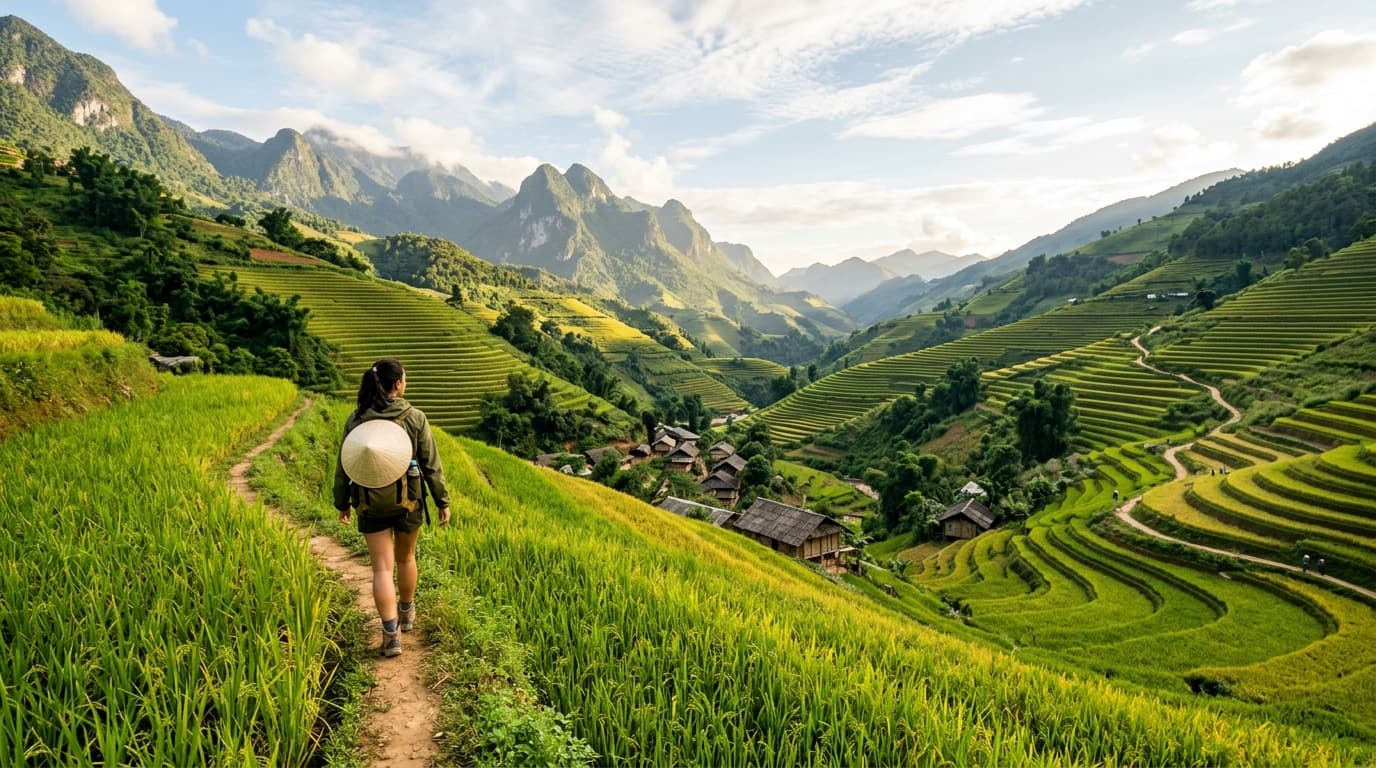
Trekking in Sa Pa: Which Route Is Best for You?
Compare Sa Pa trekking routes by difficulty, cost & experience. Find your perfect trek from easy day hikes to challenging multi-day adventures.

Phong Nha Caves Guide: Son Doong, Paradise Cave & More
Complete guide to Phong Nha Caves including Son Doong, Paradise Cave & more. Prices, operators, booking tips & honest reviews.
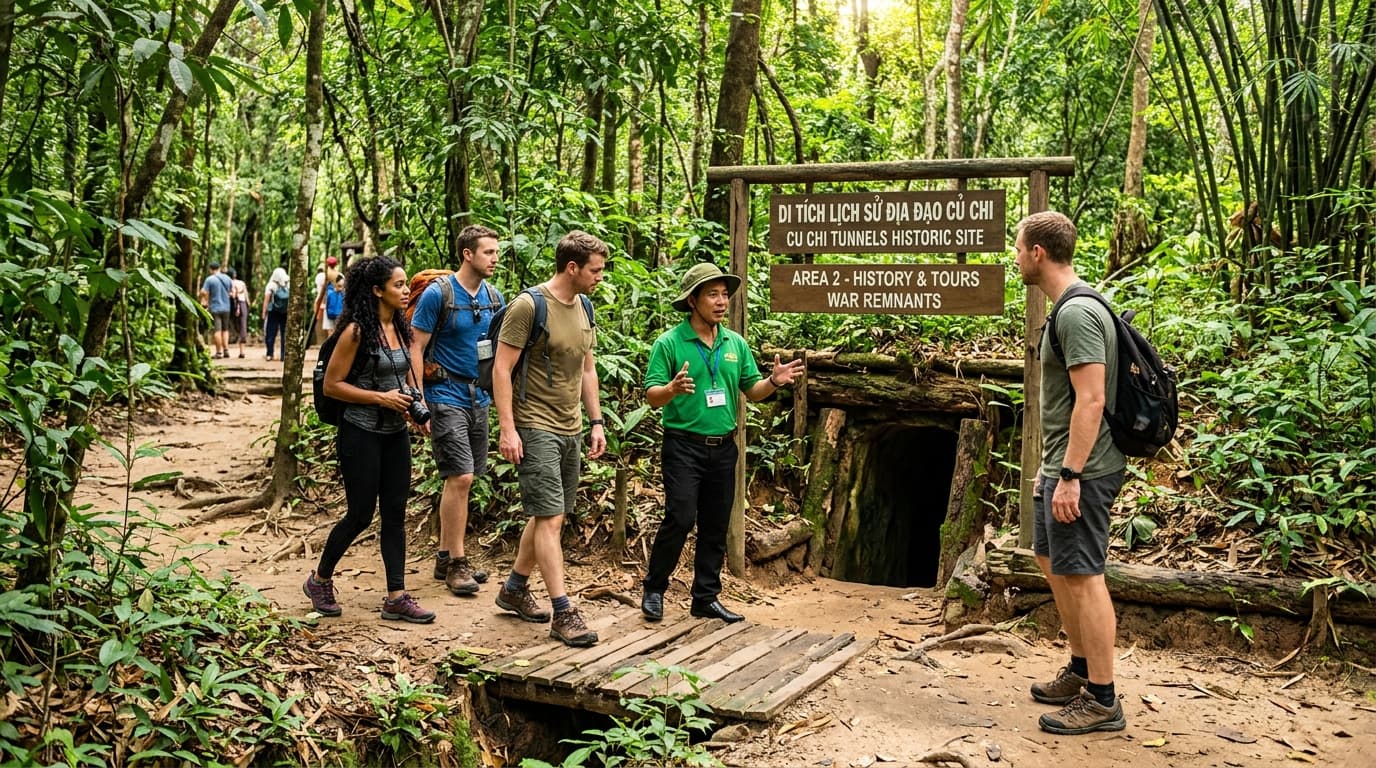
Cu Chi Tunnels from HCMC: History, Tours & Tips
Complete guide to Cu Chi Tunnels from HCMC: history, tour operators, prices, and insider tips for visiting Vietnam's most iconic war site.
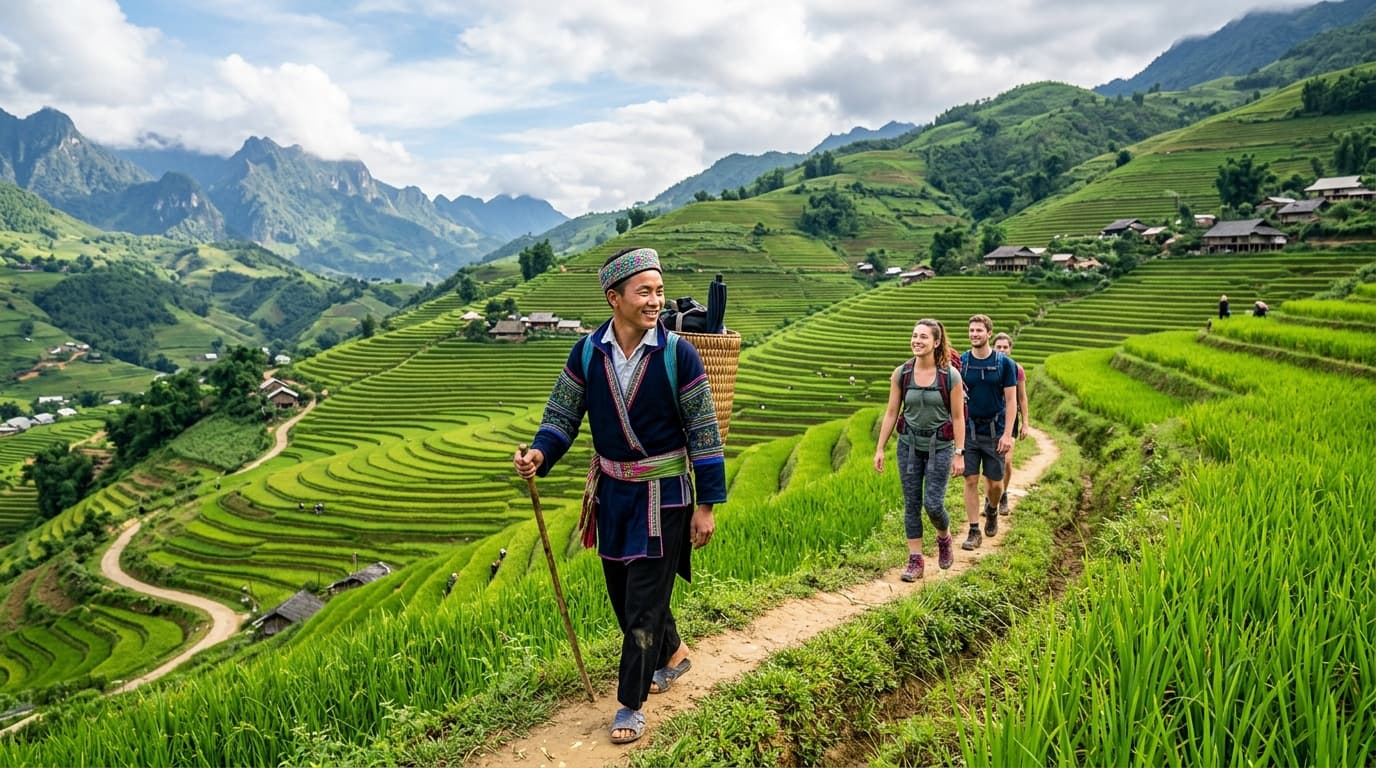
Sa Pa Trekking Guide: Routes, Homestays & Best Season
Complete Sa Pa trekking guide with routes, homestay options, seasonal tips & honest operator comparisons. Trek Vietnam's misty mountains like a local.
Plan Your Vietnam Trip
Book hotels, transport, activities, and get connected with an eSIM
Some links are affiliate links. We may earn a commission at no extra cost to you.