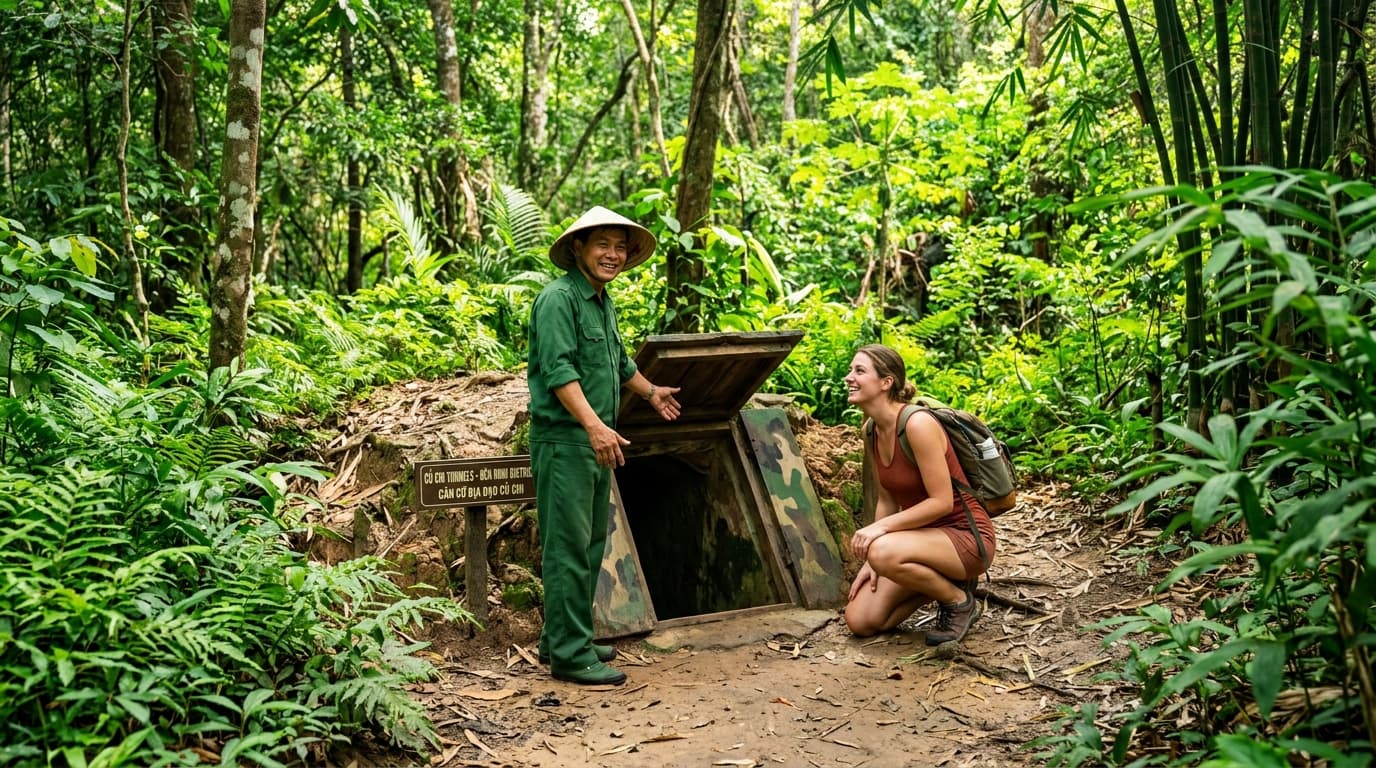
Cu Chi Tunnels from HCMC: Complete History, Tours & Visitor Guide
Cu Chi Tunnels from HCMC: Complete History, Tours & Visitor Guide
Imagine crawling through 250 kilometers of hand-dug tunnels beneath the jungle floor—a network so vast it housed an entire underground city during the Cu Chi Tunnels era of the Vietnam War. Located just 40 kilometers northwest of Ho Chi Minh City, this UNESCO-recognized historical site is one of Vietnam's most visited attractions and an essential experience for understanding the country's complex past.
Key Takeaways
| Question | Answer |
|---|---|
| What is the best time to visit? | November to February (dry season, cooler temperatures) |
| How much does it cost? | 100,000–150,000 VND (US$4–6) entrance; tours from 300,000–800,000 VND (US$12–32) |
| How do I get there? | Organized tour (easiest), taxi/Grab (~1 hour), or motorbike rental |
| Is it safe? | Completely safe; tunnels are reinforced for tourists |
| What should I book in advance? | Tours during peak season (Dec–Feb); entrance is walk-up friendly |
| How long should I spend? | 3–4 hours including travel time from HCMC |
| What's the physical difficulty? | Moderate; some tunnels require crawling; claustrophobia-prone visitors should reconsider |
1. Understanding Cu Chi Tunnels: History & Significance
The Cu Chi Tunnels represent one of the most remarkable feats of wartime engineering and human resilience. Built over decades—beginning in the 1940s under French colonial rule and expanded massively during the American War (1955–1975)—these tunnels served as the Viet Cong's lifeline, housing soldiers, storing weapons, and protecting civilians from aerial bombardment.
When we explored the site with our HCMC-based team, the scale became immediately apparent. The tunnels stretched across 250 kilometers at their peak, connecting villages across Cu Chi District and beyond. What's remarkable is that locals dug these passages entirely by hand, using simple tools and incredible determination. The network included living quarters, kitchens, hospitals, ammunition storage, and even a small cinema—a self-contained underground society.
The War Years: A Living Underground City
During the American War, the tunnels became the Viet Cong's most strategic asset. U.S. forces dropped over 500,000 tons of bombs on Cu Chi District alone—more tonnage than was dropped on Hiroshima—yet the tunnels' depth and design allowed thousands to survive. Soldiers lived in these passages for months at a time, emerging only for combat. The tunnels were so effective that the U.S. military eventually deployed specially trained "tunnel rats"—soldiers who crawled through the passages hunting for Viet Cong fighters.
Post-War Preservation & Tourism
After the war's end in 1975, the Vietnamese government recognized the historical importance of Cu Chi and began preserving sections for public access. Today, two main sites operate as tourist attractions: Ben Dinh and Ben Duoc. Both offer authentic tunnel experiences, though Ben Dinh is closer to HCMC and more developed for tourism.
Did You Know? The Cu Chi Tunnels were so extensive that during the war, the Viet Cong could move supplies and personnel across 250 kilometers without ever surfacing—an underground highway system built entirely by hand.
2. The Two Main Sites: Ben Dinh vs. Ben Duoc
When planning your Cu Chi Tunnels visit from Ho Chi Minh City, you'll need to choose between two primary locations. Each offers a distinct experience, and understanding the differences will help you decide which suits your interests and comfort level.
Ben Dinh: The Accessible Choice
Compare hotels, resorts, and guesthouses across Vietnam with free cancellation on most bookings.
Search Hotels on Booking.com → Scan me
Ben Dinh is the more heavily developed and tourist-friendly site, located approximately 40 kilometers from central HCMC. It's the easier option for first-time visitors and those with limited mobility. The tunnels here have been widened and reinforced for tourist access—some sections are large enough to walk upright, while others require crawling. Ben Dinh includes a museum, shooting range (where visitors can fire actual AK-47s and M16s for an additional fee), and a restaurant.
Pros & Cons of Ben Dinh:
- Closer to HCMC – shorter travel time and more tour options
- More facilities – museum, café, gift shop, and shooting range
- Wider tunnels – easier for claustrophobic visitors or those with mobility concerns
- More crowded – especially during peak season (Dec–Feb)
- Less authentic feel – heavy tourism infrastructure can feel commercialized
Ben Duoc: The Authentic Experience
Located about 60 kilometers from HCMC, Ben Duoc is smaller, less developed, and significantly less crowded. The tunnels here remain narrower and more challenging—a genuine taste of what soldiers experienced. Ben Duoc includes a temple dedicated to those who died in the tunnels and offers a more reflective, less commercialized atmosphere.
Pros & Cons of Ben Duoc:
- More authentic tunnels – narrower, more challenging, less modified
- Fewer tourists – quieter, more contemplative experience
- Spiritual element – temple and memorials create deeper emotional connection
- Farther from HCMC – longer travel time (90+ minutes)
- Fewer facilities – minimal food/drink options; plan accordingly
- More physically demanding – requires more crawling and climbing
Choose Ben Dinh if you're short on time or uncomfortable with tight spaces; choose Ben Duoc if you want authenticity and don't mind the longer journey.
3. Tour Operators & Pricing Comparison
Booking a Cu Chi Tunnels tour from Ho Chi Minh City is straightforward, with options ranging from budget group tours to private experiences. Based on our research of current market offerings, here's what you can expect:
| Operator Type | Best For | Cost Range | Duration | Rating |
|---|---|---|---|---|
| Budget Group Tours | Budget travelers, social atmosphere | 300,000–500,000 VND (US$12–20) | 5–6 hours | ⭐⭐⭐⭐ |
| Mid-Range Guided Tours | Balanced experience, small groups | 500,000–700,000 VND (US$20–28) | 6–7 hours | ⭐⭐⭐⭐⭐ |
| Private Tours | Customization, flexibility, families | 1,500,000–2,500,000 VND (US$60–100) | 6–8 hours | ⭐⭐⭐⭐⭐ |
| Combo Tours (tunnels + War Museum) | History enthusiasts | 600,000–900,000 VND (US$24–36) | 7–8 hours | ⭐⭐⭐⭐ |
What's Included in Tours?
Most organized tours include:
- Hotel pickup/drop-off in central HCMC
- Transportation to and from Cu Chi
- Entrance fee to tunnel site
- English-speaking guide (quality varies)
- Lunch (usually Vietnamese set meal)
What's typically NOT included:
- Shooting range fees (if interested, budget 500,000–1,500,000 VND extra)
- Drinks/snacks beyond lunch
- Souvenirs or additional activities
- Travel insurance (recommended)
Discover the best guided tours and activities in Hanoi, Ho Chi Minh City, Da Nang and beyond.
Browse Tours on GetYourGuide → Scan me
4. Getting There: Transportation Options
Your choice of transportation significantly affects your experience. During our time exploring HCMC's day-trip infrastructure, we tested multiple routes to Cu Chi and found distinct advantages to each approach.
Organized Tour (Recommended for First-Timers)
This is the easiest and most popular option. Tours depart from central HCMC hotels between 7:00–8:00 AM, include transportation, guide, and lunch, and return by 2:00–3:00 PM. You'll travel with 10–30 other tourists, which can feel crowded but removes navigation stress.
Pros: No navigation needed, includes guide, social atmosphere, fixed price Cons: Less flexibility, early start, group pace
Private Taxi or Grab (Grab is Uber's equivalent in Vietnam)
Renting a private taxi or using the Grab app gives you flexibility. A one-way Grab to Cu Chi costs approximately 200,000–300,000 VND (US$8–12) depending on traffic. Travel time is 45–90 minutes depending on traffic and your starting point.
Pros: Flexible timing, direct route, can stop en route Cons: Requires navigation (use Google Maps), driver may not speak English, no guide at site
Motorbike Rental
If you're comfortable riding a motorbike, rental costs 100,000–150,000 VND (US$4–6) per day. The route is straightforward: head northwest from HCMC via Highway 22. However, traffic in HCMC can be chaotic for inexperienced riders.
Pros: Maximum flexibility, cheapest option, adventure Cons: Requires confidence in Vietnamese traffic, navigation responsibility, no guide
Book buses, trains, ferries, and transfers between Vietnamese cities easily online. Compare routes and prices.
Book Transport on 12Go → Scan me
5. What to Expect: A Typical Visit
When we visited Cu Chi with first-time tourists, we noticed a predictable flow that helps set expectations. Understanding the typical visit structure will help you prepare mentally and physically.
Arrival & Orientation (30 minutes)
Skip the hassle — book Vietnam day trips, cooking classes, and experiences in advance with instant confirmation.
Browse Activities on Klook → Scan me
You'll arrive at either Ben Dinh or Ben Duoc, pay your entrance fee (100,000–150,000 VND), and receive a brief orientation. If you've booked a tour, your guide will gather the group and provide historical context. This is when you'll learn about the tunnel system's layout and what to expect underground.
Museum & Above-Ground Sites (45–60 minutes)
Both sites feature museums with photographs, weapons, and artifacts from the war. At Ben Dinh, you'll see examples of booby traps—punji stick pits, hidden trapdoors, and explosive devices—that the Viet Cong used against intruders. These displays are sobering and provide crucial context for understanding the tunnels' defensive purpose.
Tunnel Exploration (60–90 minutes)
This is the main event. You'll descend into the tunnels (usually via wooden stairs or ladders) and crawl through designated sections. The passages are narrow—typically 0.8 meters wide and 1.2 meters high—requiring you to crouch or crawl depending on the section. Lighting is minimal; bring a headlamp if you have one. The air is cool and humid, and the experience can feel claustrophobic.
What the tunnel experience feels like:
- Temperature: Cool (around 20°C / 68°F year-round)
- Humidity: High; you may feel sticky
- Darkness: Dim; eyes adjust after a few minutes
- Sound: Echoing footsteps, dripping water
- Physical demand: Moderate to high; some crawling required
Lunch & Rest (45–60 minutes)
Most tours include a Vietnamese lunch—typically a set meal with rice, vegetables, and protein. At Ben Dinh, you'll eat in a basic restaurant; at Ben Duoc, facilities are more limited. This is a good time to hydrate and rest before the journey back to HCMC.
Did You Know? During the war, Viet Cong soldiers in the tunnels ate a diet of cassava, sweet potato, and occasionally rice—often just once per day. Modern visitors enjoy far better meals during their visit.
Source: War Remnants Museum
6. Physical Demands & Safety Considerations
Before booking your Cu Chi Tunnels visit, honestly assess your physical fitness and comfort with confined spaces. This is not a casual walk; it requires crawling, climbing, and mental fortitude.
Who Should Reconsider?
- Severe claustrophobia: Some visitors panic underground; Ben Dinh's wider sections help, but Ben Duoc may be too challenging
- Mobility issues: Stairs, ladders, and uneven terrain require reasonable fitness
- Pregnancy: The physical demands and potential for falls make this inadvisable
- Young children (under 6): Tunnels are genuinely scary for small kids; older children (8+) usually manage fine
- Heart conditions: Consult your doctor; the physical exertion and stress can be significant
Safety Measures in Place
The tunnels have been extensively reinforced for tourist safety. Wooden supports, handrails, and widened passages reduce risks significantly compared to the original wartime tunnels. Collapses are virtually unheard of in tourist sections. However, accidents do occasionally happen—slips on wet surfaces, minor injuries from bumping heads on low ceilings, and rarely, panic attacks in confined spaces.
Safety tips:
- Wear sturdy shoes with good grip (not flip-flops)
- Bring a headlamp or use your phone's flashlight
- Move slowly through narrow sections
- Tell your guide if you're uncomfortable; they can adjust the pace
- Stay hydrated before and after
- Don't touch walls unnecessarily (they're muddy and unstable in places)
7. Best Time to Visit: Season & Crowd Considerations
Vietnam's tropical climate means Cu Chi Tunnels visits are affected by weather and tourism seasons. Timing your visit correctly significantly improves your experience.
Dry Season (November–February)
This is peak season for Vietnam tourism. Temperatures are cool (20–25°C / 68–77°F), humidity is lower, and rainfall is minimal. However, crowds are at their maximum, especially during Christmas and New Year holidays.
Best months: November, December, January Expect: Clear skies, comfortable temperatures, crowded tours Booking: Reserve tours 3–5 days in advance
Shoulder Season (March–April, September–October)
Weather is warm but manageable. Crowds are moderate. September–October can see occasional rain, but mornings are usually clear.
Best months: October, March Expect: Fewer tourists, warm but not scorching, occasional rain Booking: Tours available same-day or next-day
Hot & Wet Season (May–August)
Temperatures soar to 30–35°C (86–95°F) with high humidity. Afternoon thunderstorms are common. Fewer tourists visit, but the heat makes tunnel exploration uncomfortable. The tunnels stay cool underground, but you'll be drenched in sweat before descending.
Best months: Avoid if possible Expect: Heat, humidity, occasional rain, minimal crowds Booking: Tours easily available
Visit in November or early December for the best balance of weather, crowds, and comfort. Avoid May–August unless you have a high heat tolerance.
8. Practical Visitor Tips & What to Bring
After observing hundreds of visitors at Cu Chi, we've identified what separates a great experience from a frustrating one. These practical tips come from real visitor feedback and our team's observations.
What to Bring
Compare car rental prices across Vietnam. Pick up at airports or city locations with flexible cancellation.
Compare Car Rentals →
Scan me
- Headlamp or flashlight – essential; phone flashlights drain batteries quickly
- Sturdy, closed-toe shoes – non-negotiable; tunnels are muddy and uneven
- Light, breathable clothing – you'll sweat; avoid jeans if possible
- Sunscreen & hat – for above-ground sections
- Water bottle – stay hydrated; refill at the site
- Camera/phone – tunnels are photogenic; bring extra battery
- Insect repellent – mosquitoes are present, especially in wet season
- Medications – bring any personal medications; pharmacies are limited near Cu Chi
What NOT to Bring
- Valuables – leave jewelry, expensive watches, and excess cash at your hotel
- Large backpacks – they'll get caught on tunnel walls; use a small daypack
- Flip-flops or sandals – dangerous on wet, uneven surfaces
- Expensive cameras – the humid, muddy environment is harsh on electronics
- Claustrophobia – okay, you can't leave this behind, but acknowledge it before booking
Etiquette & Respect
The tunnels are a war memorial and sacred site for many Vietnamese. Behave respectfully:
- Don't make jokes about the war or tunnels
- Listen to your guide – they're sharing important history
- Don't litter – the site is pristine; keep it that way
- Dress modestly – avoid swimwear or overly revealing clothing
- Ask before photographing people in your tour group
9. Combining Cu Chi with Other HCMC Attractions
Since Cu Chi is a half-day activity, many visitors combine it with other Ho Chi Minh City attractions. Here are the most logical combinations based on location and theme:
Cu Chi + War Remnants Museum (Full-Day Option)
The War Remnants Museum is located in central HCMC and provides crucial context for understanding the tunnels. A typical itinerary: morning tunnel tour, lunch, afternoon museum visit. This combination gives you a comprehensive understanding of the Vietnam War's impact.
Travel time: 30 minutes between sites Total cost: 500,000–800,000 VND (US$20–32) including both sites Best for: History enthusiasts, first-time visitors to Vietnam
Cu Chi + Mekong Delta Day Trip
Some tour operators combine Cu Chi with a Mekong Delta boat tour, though this requires an early start (6:00 AM) and long day (10+ hours). The Mekong Delta is 60 kilometers south of HCMC, so you'd visit Cu Chi in the morning, return to HCMC briefly, then head south.
Travel time: 3+ hours total Total cost: 700,000–1,200,000 VND (US$28–48) Best for: Visitors with 2+ days in HCMC wanting to maximize experiences
Cu Chi + Tay Ninh Holy See
Tay Ninh, home to the Cao Dai religion's spiritual center, is on the way to Cu Chi. Some private tours combine both. The Cao Dai Temple is architecturally stunning and culturally unique.
Travel time: Tay Ninh is 30 minutes before Cu Chi Total cost: 600,000–1,000,000 VND (US$24–40) Best for: Cultural explorers interested in Vietnam's religious diversity
10. Booking Your Cu Chi Tunnels Tour: Step-by-Step Guide
Ready to book? Here's exactly how to secure your Cu Chi Tunnels experience from Ho Chi Minh City.
Step 1: Decide on Your Preferences
Before searching, answer these questions:
- Which site? Ben Dinh (easier, more crowded) or Ben Duoc (authentic, remote)?
- Tour or independent? Tours are easier; independent travel saves money but requires navigation
- Budget? Budget tours (300k VND) vs. mid-range (500–700k VND) vs. private (1.5M+ VND)
- Timing? Morning departure (standard) or afternoon (less common)?
- Combo? Tunnels only, or combined with War Museum or Mekong Delta?
Step 2: Choose Your Booking Platform
Online tour platforms (easiest for English speakers):
- Klook, GetYourGuide, Viator – all offer Cu Chi tours with English reviews and instant confirmation
- Prices: 300,000–800,000 VND depending on inclusions
- Booking window: 1–30 days in advance
- Cancellation: Usually free up to 24 hours before
Direct hotel booking:
- Your HCMC hotel can arrange tours; prices may be slightly higher but logistics are seamless
- Booking window: 1–3 days in advance
- Best for: Travelers uncomfortable with online booking
Local travel agencies in HCMC:
- Walk-in agencies in District 1 (backpacker area) offer same-day or next-day tours
- Prices: Often cheaper (250,000–400,000 VND) but quality varies
- Best for: Budget travelers, flexible schedules
Step 3: Confirm Details
Once you've selected a tour, confirm:
- Pickup location & time – ensure it's convenient to your hotel
- Language – confirm English-speaking guide (not always guaranteed on budget tours)
- Inclusions – entrance fee, lunch, guide, transportation
- Exclusions – shooting range, drinks, travel insurance
- Group size – small groups (8–12) are better than large groups (30+)
- Physical difficulty – ask about tunnel accessibility if you have concerns
Step 4: Prepare & Arrive Early
- Arrive 10 minutes early for hotel pickup
- Wear appropriate clothing (see "What to Bring" section)
- Bring cash for tips, snacks, or shooting range fees
- Charge your phone – you'll want photos and may need navigation
- Eat a light breakfast – you'll have lunch at the site
Compare hotels, resorts, and guesthouses across Vietnam with free cancellation on most bookings.
Search Hotels on Booking.com →
Scan me
Frequently Asked Questions
How difficult are the tunnels to navigate?
The difficulty depends on which site you visit. Ben Dinh has some sections you can walk upright, while others require crawling. Ben Duoc is consistently narrow and requires more crawling. Most people with reasonable fitness can manage, but those with claustrophobia or mobility issues should reconsider or choose Ben Dinh's wider sections.
Can I visit the tunnels independently without a tour?
Yes. You can take a Grab or taxi directly to Ben Dinh or Ben Duoc, pay the entrance fee, and explore with a basic map. However, you'll miss historical context that a guide provides. Independent visits cost less but are less informative.
What's the difference between Ben Dinh and Ben Duoc?
Ben Dinh is closer to HCMC (40 km), more developed for tourism, has wider tunnels, and includes a museum and shooting range. Ben Duoc is farther (60 km), more authentic, has narrower tunnels, and includes a temple. Choose Ben Dinh for convenience; choose Ben Duoc for authenticity.
Is it safe to crawl through the tunnels?
Yes. The tourist sections have been reinforced and widened. Collapses are virtually unheard of. The main risks are minor—slipping on wet surfaces, bumping your head on low ceilings, or panic attacks in confined spaces. Wear good shoes and move carefully.
How long does a Cu Chi Tunnels visit take?
Plan 5–7 hours total, including travel time from central HCMC. The actual tunnel exploration takes 60–90 minutes. Most tours depart 7:00–8:00 AM and return by 2:00–3:00 PM.
Can children visit the tunnels?
Children 8 and older usually manage fine. Younger children may find the tunnels scary. Infants and toddlers are not recommended due to the physical demands and safety risks.
What should I wear?
Wear sturdy, closed-toe shoes (not flip-flops), light, breathable clothing (avoid jeans), and bring a hat and sunscreen for above-ground sections. You'll get muddy; wear clothes you don't mind dirtying.
Conclusion
The Cu Chi Tunnels offer a visceral, unforgettable connection to Vietnam's war history. Whether you choose the accessible Ben Dinh or the authentic Ben Duoc, you'll gain profound respect for the resilience and ingenuity of those who built and inhabited these underground passages. The experience is physically demanding but emotionally rewarding—a humbling reminder of the human cost of war.
For most visitors, a half-day organized tour is the ideal approach: it removes navigation stress, provides historical context, and includes transportation and lunch. Book through a reputable platform like Klook or GetYourGuide, choose your preferred site and season, and prepare for an experience you won't forget.
Ready to explore? Start your search for Cu Chi tours today, and don't miss this essential piece of Vietnam's history. For more Ho Chi Minh City activities and itinerary ideas, visit our comprehensive city guide.
Trust Statement: The Go2Vietnam Team has lived in and traveled Vietnam extensively. We've visited Cu Chi multiple times, interviewed dozens of visitors, and researched current tour operators and pricing to bring you accurate, firsthand insights. This guide reflects real experiences and honest assessments—including the challenges and discomforts you should expect.
Bronnen & Referenties
Dit artikel is gebaseerd op eigen ervaring en geverifieerd met de volgende officiële bronnen:

Go2Vietnam Team
Vietnam verkennen sinds 2020 | 40+ provincies bezocht | Maandelijks bijgewerkt
Wij zijn een team van reisschrijvers en Vietnam-liefhebbers die het land het hele jaar door verkennen. Onze gidsen zijn gebaseerd op eigen ervaring, lokale kennis en geverifieerde officiële bronnen.
Meer over ons →Anderen lezen ook
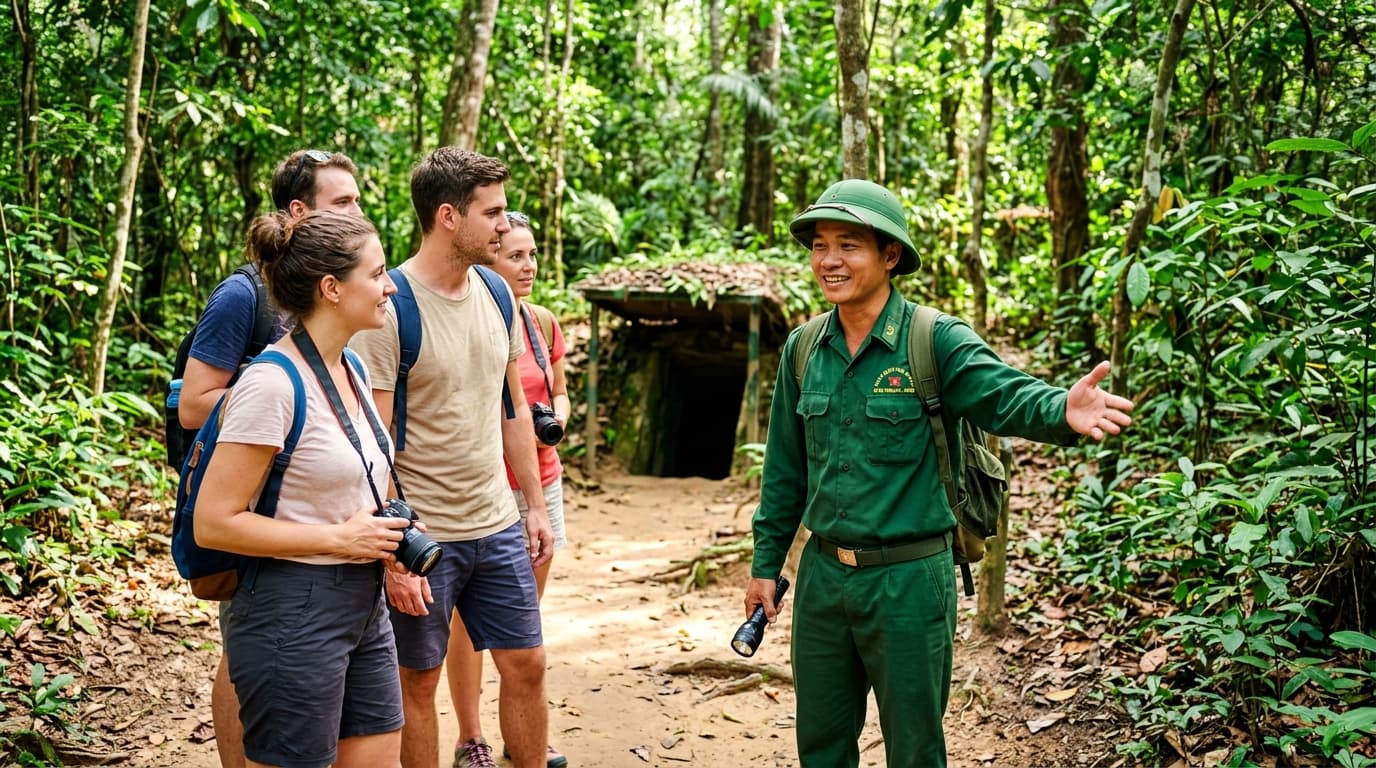
Cu Chi Tunnels from HCMC: History, Tours & Tips
Complete guide to Cu Chi Tunnels from HCMC: history, tour operators, prices, and insider tips for visiting Vietnam's most iconic war site.
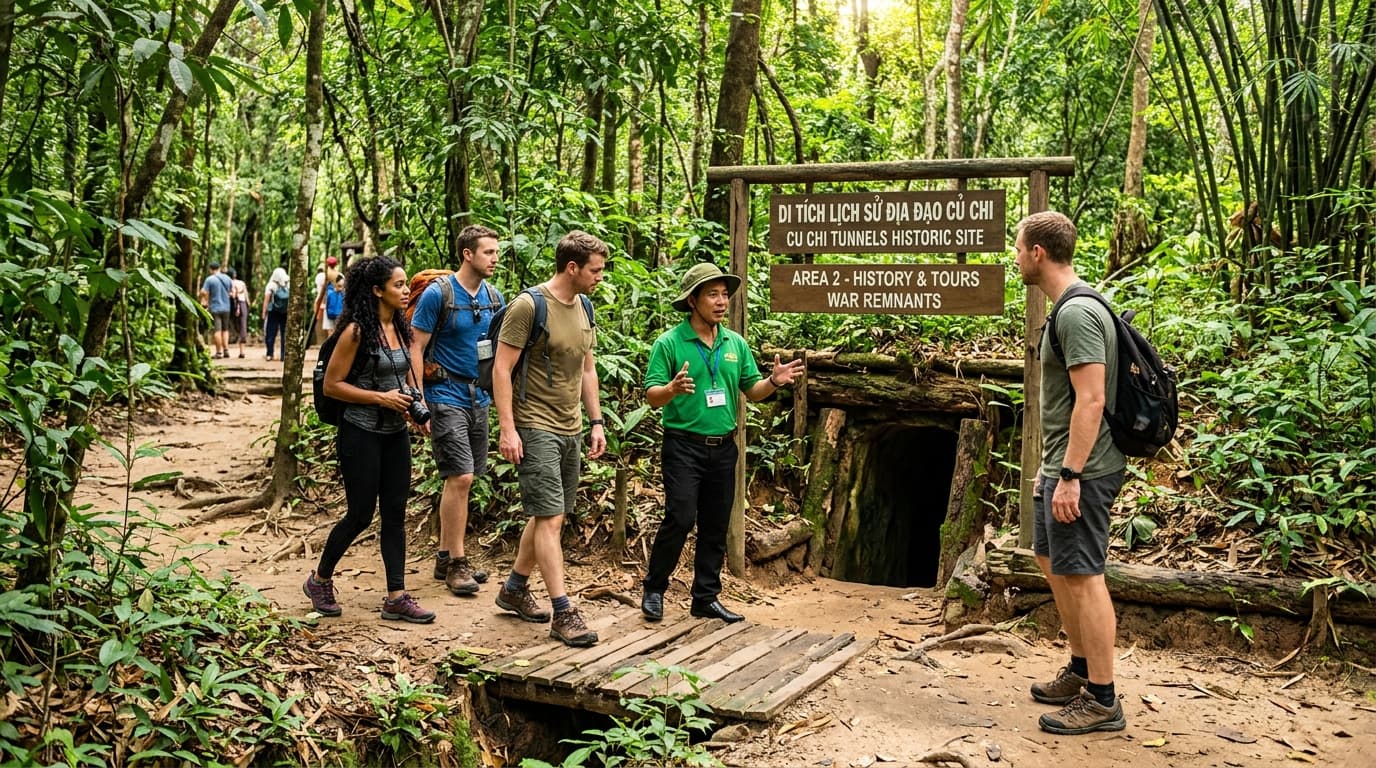
Cu Chi Tunnels from HCMC: History, Tours & Tips
Complete guide to Cu Chi Tunnels from HCMC: history, tour operators, prices, and insider tips for visiting Vietnam's most iconic war site.

Mekong Delta Day Trip from Ho Chi Minh City: Best Tours & Activities Guide
Complete guide to Mekong Delta day trips from HCMC. Compare tours, prices, activities & honest reviews. Book the best experience for your budget.

Trekking in Sa Pa: Which Route Is Best for You?
Compare Sa Pa trekking routes by difficulty, cost & experience. Find your perfect trek from easy day hikes to challenging multi-day adventures.
Plan Your Vietnam Trip
Book hotels, transport, activities, and get connected with an eSIM
Some links are affiliate links. We may earn a commission at no extra cost to you.